Genomic Validation of PERV‐C‐Free Pigs to Support Xenotransplantation
Neal R. Benjamin, Giovanni Madrigal, Yasuko Ishida, Julian Catchen, Kari L. Allen, Brent Pepin, Alfred L. Roca

TL;DR
Scientists found pigs without PERV-C, a virus that could infect humans, making them safer for xenotransplantation.
Contribution
The study confirms the existence of PERV-C-negative pigs through genomic screening and sequencing.
Findings
142 pigs were screened, and some were confirmed PERV-C-negative using PCR and sequencing.
PERV-C-negative pigs can be developed for safer xenotransplantation.
Long-read sequencing validated the PERV-C-negative status in selected pigs.
Abstract
Porcine endogenous retroviruses (PERVs) are present in the germ lines of domesticated pigs (Sus scrofa) and related suids. There are three types of PERVs, PERV‐A, ‐B, and ‐C, which differ in their host range. PERV‐A and ‐B can infect human and porcine cells, while PERV‐C only infects porcine cells. PERV‐A and ‐B are found in the genomes of all pigs, while PERV‐C is found in most but not all pigs. Although many PERV provirus insertions are defective, in vitro culture of porcine cells has produced infectious virions of all three types as well as PERV‐A/C recombinants, which show enhanced replication competence. Identifying pigs that are PERV‐C negative could help prevent such recombination events and would advance the development of porcine germplasm as a safer source of xenografts for humans. Here, we present the results of extensive screening involving 142 Landrace, Duroc, Large White,…
Genes, proteins, chemicals, diseases, species, mutations and cell lines named across the full text — each resolved to its canonical identifier and authoritative record.
Click any figure to enlarge with its caption.
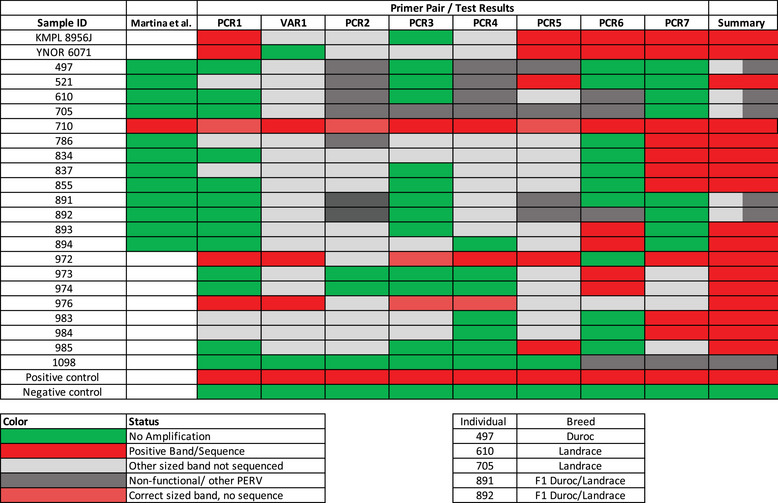 Figure 1
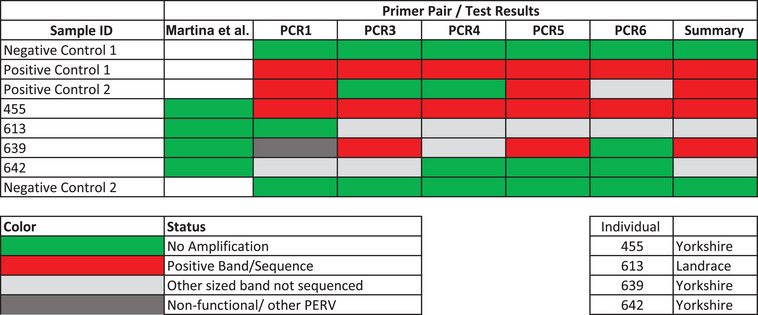 Figure 2
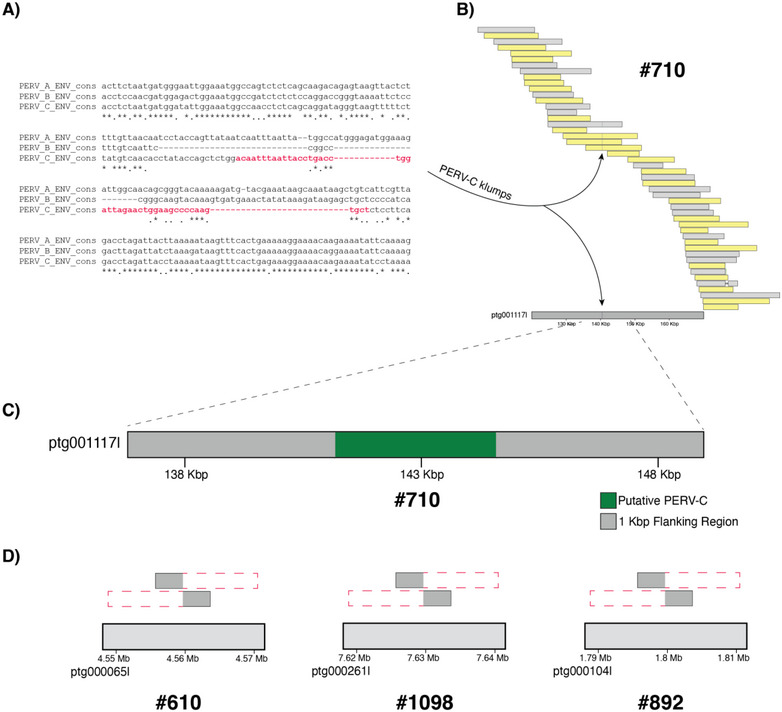 Figure 3
Peer Reviews
No public reviews on file for this paper yet. If you reviewed it on a platform where reviews are public (OpenReview, ICLR, NeurIPS, ICML), you can paste yours below so the community can read it here.
Videos
No videos yet. Explain this paper in a talk, walkthrough, or lecture? Add one.
Taxonomy
TopicsXenotransplantation and immune response · Animal Genetics and Reproduction · Virus-based gene therapy research