Enterococcus faecalis redox metabolism activates the unfolded protein response to impair wound healing
Aaron Ming Zhi Tan, Cenk Celik, Stella Yue Ting Lee, Mark Veleba, Caroline S. Manzano, Rahim M. K. Abdul, Guillaume Thibault, Kimberly A. Kline

TL;DR
This study shows how a bacteria called Enterococcus faecalis delays wound healing by producing harmful molecules that stress out skin cells.
Contribution
The study reveals extracellular electron transport as a new source of harmful molecules in E. faecalis that impairs wound healing.
Findings
E. faecalis extracellular electron transport generates reactive oxygen species that activate the unfolded protein response in epithelial cells.
Detoxifying reactive oxygen species with catalase rescues epithelial cell migration and suppresses the unfolded protein response.
Disrupting the unfolded protein response impairs epithelial cell migration, showing its importance in wound repair.
Abstract
Enterococcus faecalis is an opportunistic pathogen that thrives in biofilm-associated infections and delays wound healing, yet how it impairs host tissue responses is unclear. Here, we identified extracellular electron transport (EET) as a previously unrecognized source of reactive oxygen species (ROS) in E. faecalis and showed that this activity directly triggers the unfolded protein response (UPR) in epithelial cells and delays epithelial cell migration. ROS detoxification with catalase suppressed E. faecalis–induced UPR and rescued epithelial cell migration, while exogenous hydrogen peroxide was sufficient to restore UPR activation in EET-deficient strains. UPR disruption by pharmacological inhibition also impaired cell migration, highlighting a critical role for UPR homeostasis in wound repair. Our findings establish EET as a virulence mechanism that links bacterial redox metabolism…
Genes, proteins, chemicals, diseases, species, mutations and cell lines named across the full text — each resolved to its canonical identifier and authoritative record.
Click any figure to enlarge with its caption.
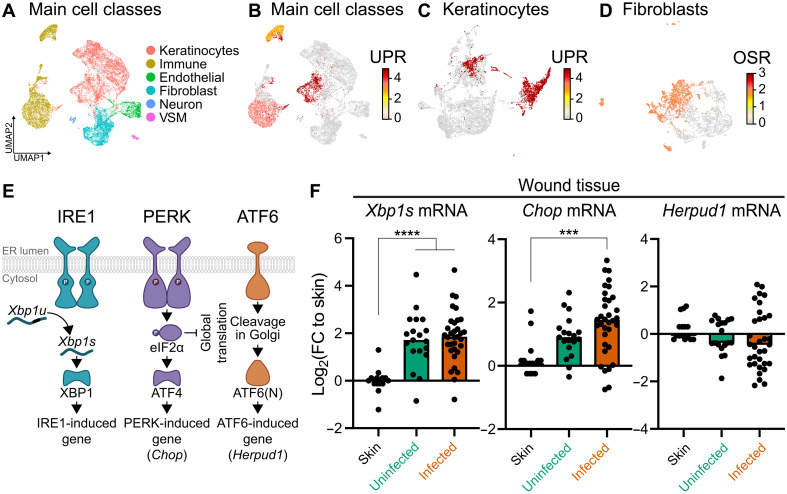 Figure 1
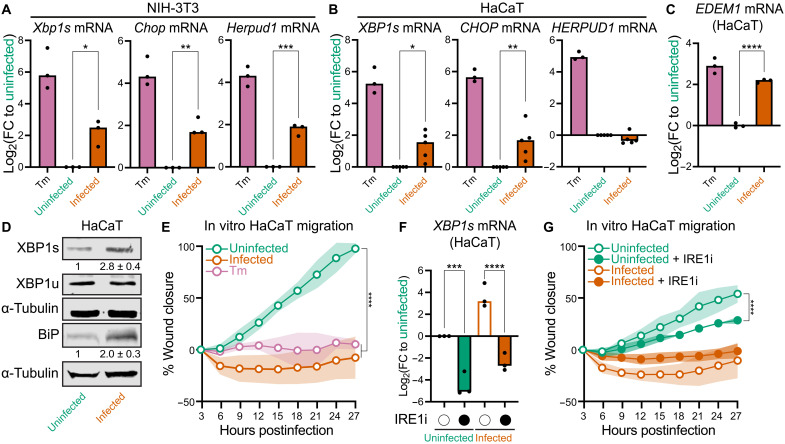 Figure 2
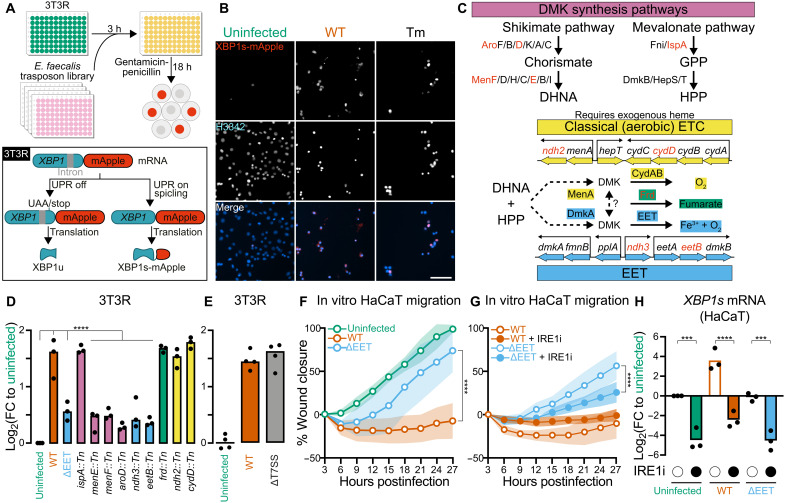 Figure 3
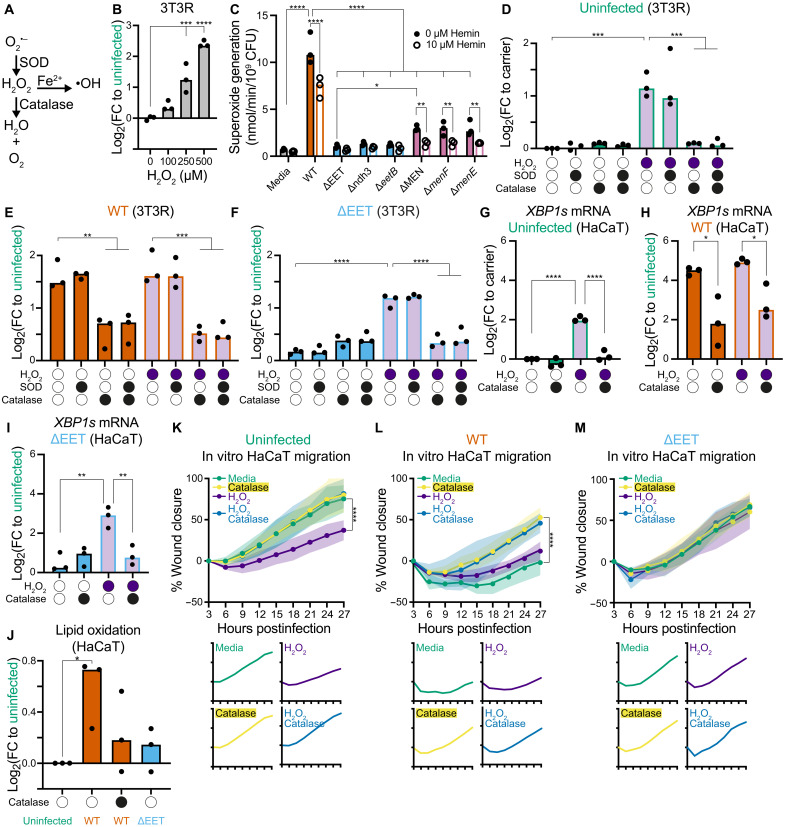 Figure 4
Peer Reviews
No public reviews on file for this paper yet. If you reviewed it on a platform where reviews are public (OpenReview, ICLR, NeurIPS, ICML), you can paste yours below so the community can read it here.
Videos
No videos yet. Explain this paper in a talk, walkthrough, or lecture? Add one.
Taxonomy
TopicsAntimicrobial Resistance in Staphylococcus · Clostridium difficile and Clostridium perfringens research · Bacterial biofilms and quorum sensing