Household SARS-CoV-2 transmission during Omicron wave in Chiang Mai, Thailand: a prospective observational study
Woottichai Khamduang, Pitaya Suebtam, Intira Jeannie Collins, Patumrat Sripan, Kittipan Chalom, Sayamon Hongjaisee, Nang Kham-Kjing, Nantawan Wangsaeng, Premmarin Inmonthian, Aphirak Pinasu, Napatsakorn Kohklang, Mathis Arnal, Moira Spyer, Ilse Steffens-Westerhof

TL;DR
This study examines how SARS-CoV-2 spreads within households in Thailand during the Omicron wave, finding that prior immunity and lower viral load reduce transmission risk.
Contribution
The study provides insights into household transmission dynamics of the Omicron variant in a post-vaccination setting, emphasizing the role of prior immunity and viral load.
Findings
Household SAR was 33% despite high vaccination coverage.
Prior anti-NCP IgG positivity in contacts reduced transmission risk.
Lower viral load in index cases was associated with reduced transmission.
Abstract
SARS-CoV-2 transmission studies involving children in Thailand have been relatively limited to the early waves with the alpha and delta variants. Our study aims to address these gaps by examining household transmission in Chiang Mai, northern Thailand, during the Omicron wave in a post vaccination period. This prospective observational study enrolled households comprising a confirmed COVID-19 index patient with at least one uninfected contact and a child (<18 years of age who maybe an index or contact). Participant data, nasopharyngeal swabs, and blood samples were collected at entry and final visit. Participants recorded daily symptoms for 21 days and self-administered SARS-CoV-2 antigen tests every other day for 14 days. Incident infections were confirmed by RT-PCR. Secondary attack rates (SARs) were calculated and associated factors were analyzed using multivariable generalized…
Genes, proteins, chemicals, diseases, species, mutations and cell lines named across the full text — each resolved to its canonical identifier and authoritative record.
Click any figure to enlarge with its caption.
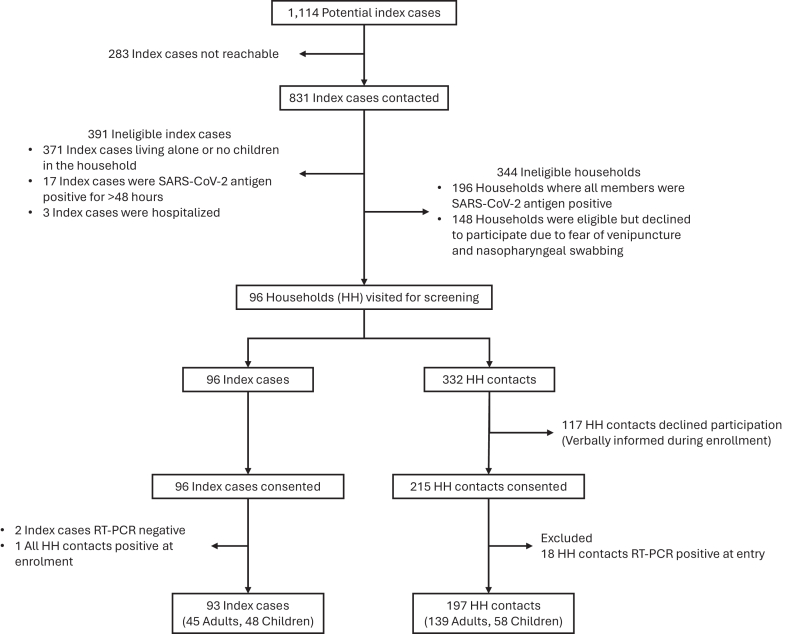 Figure 1
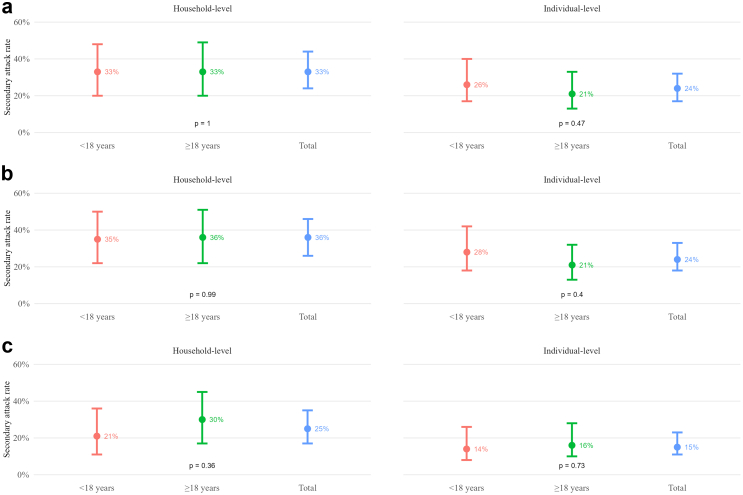 Figure 2
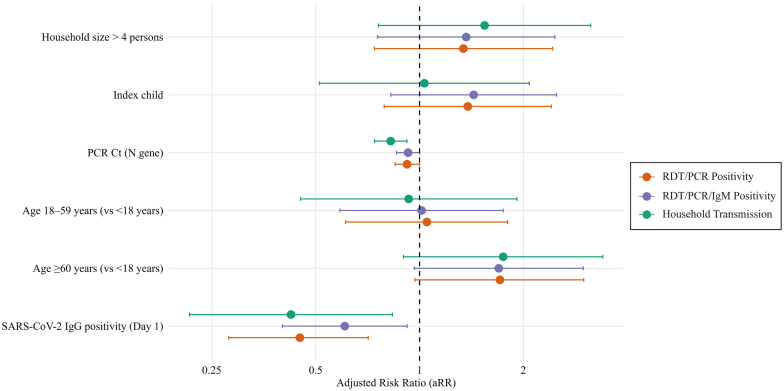 Figure 3
Peer Reviews
No public reviews on file for this paper yet. If you reviewed it on a platform where reviews are public (OpenReview, ICLR, NeurIPS, ICML), you can paste yours below so the community can read it here.
Videos
No videos yet. Explain this paper in a talk, walkthrough, or lecture? Add one.
Taxonomy
TopicsCOVID-19 epidemiological studies · COVID-19 and Mental Health · Infection Control and Ventilation