Blood-based Vienna 3P/5P risk models accurately predict first hepatic decompensation in compensated advanced chronic liver disease
Georg Kramer, Benedikt Simbrunner, Mathias Jachs, Lorenz Balcar, Benedikt Silvester Hofer, Nina Dominik, Lukas Hartl, Michael Schwarz, Georg Semmler, Christian Sebesta, Paul Thöne, Sophia Geisselbrecht, Benjamin Maasoumy, Eduardo Alvarez, Martin Sebastian McCoy

TL;DR
Blood-based 3P/5P models accurately predict liver decompensation in patients with chronic liver disease as well as invasive tests, offering a non-invasive alternative.
Contribution
The 3P/5P models are shown to be as effective as invasive HVPG for predicting decompensation in cACLD patients.
Findings
The 5P model achieved an AUROC of 0.800 for predicting severe portal hypertension.
The 5P model's time-dependent AUROC for decompensation prediction was comparable to HVPG.
3P and 5P models outperformed LSM and ANTICIPATE±NASH in decompensation prediction.
Abstract
Invasive measurement of hepatic venous pressure gradient (HVPG) is the gold standard for diagnosing clinically significant portal hypertension (CSPH, i.e. HVPG ≥10 mmHg), which indicates an increased risk of decompensation. We evaluated the blood-based Vienna 3P/5P models for non-invasive assessment of portal hypertension (PH) severity and their prognostic value. Their performance was compared to HVPG, liver stiffness measurement (LSM) and the ANTICIPATE±NASH model. Patients with compensated advanced chronic liver disease (cACLD) who underwent HVPG measurement and LSM within the prospective VICIS (Vienna Cirrhosis Study) were included. We assessed the ability of each model to detect CSPH and severe PH (HVPG ≥16 mmHg), predict decompensation, and stratify risk. Outcome prediction was further validated in an external cohort. Among 266 patients with diverse etiologies of cACLD, median…
Genes, proteins, chemicals, diseases, species, mutations and cell lines named across the full text — each resolved to its canonical identifier and authoritative record.
Click any figure to enlarge with its caption.
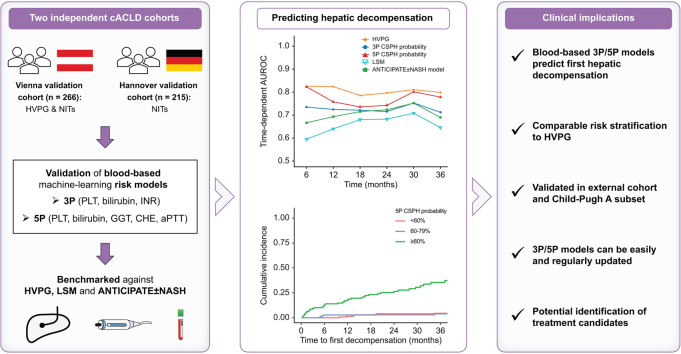 Figure 1
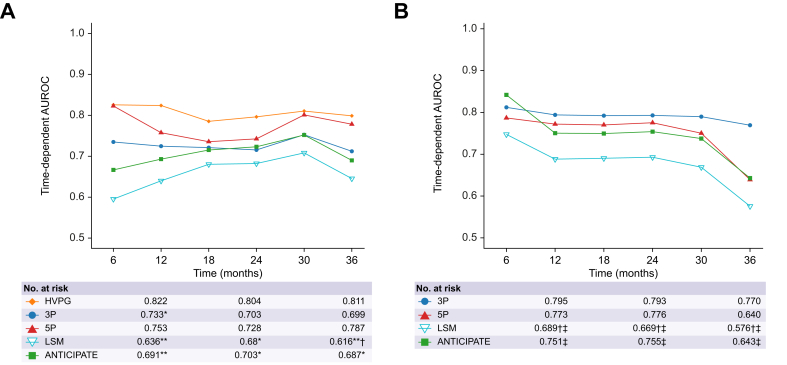 Figure 2
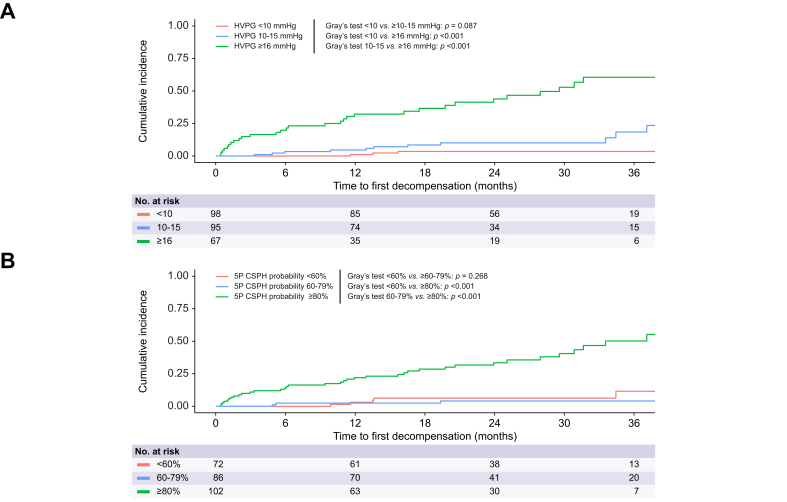 Figure 3
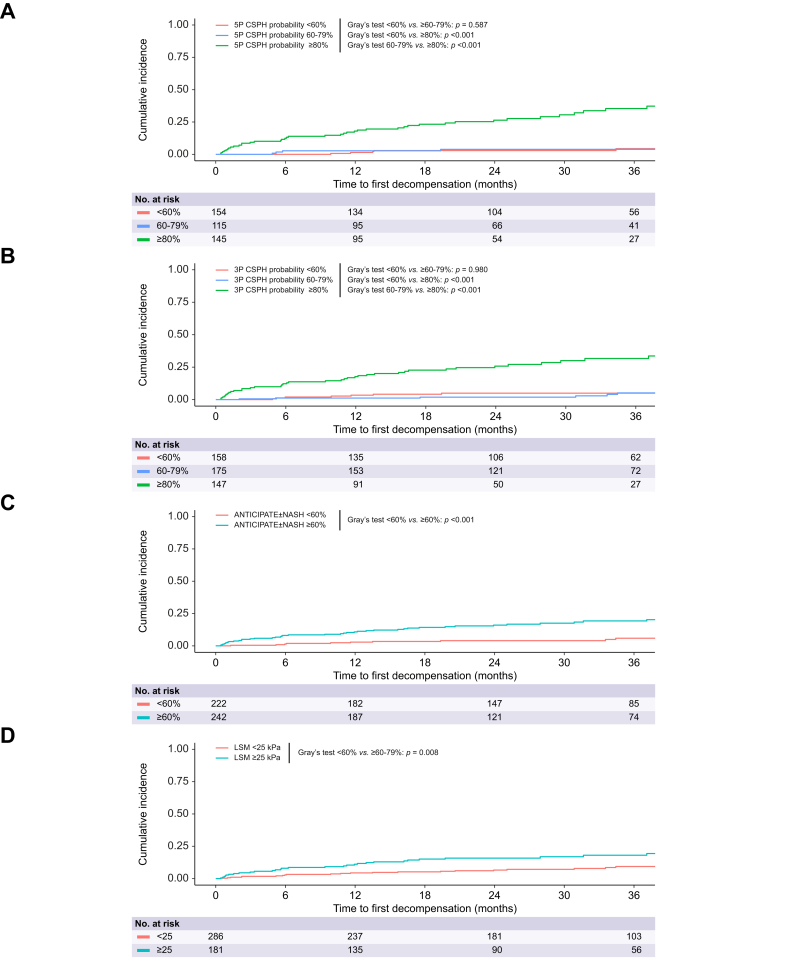 Figure 4
Peer Reviews
No public reviews on file for this paper yet. If you reviewed it on a platform where reviews are public (OpenReview, ICLR, NeurIPS, ICML), you can paste yours below so the community can read it here.
Videos
No videos yet. Explain this paper in a talk, walkthrough, or lecture? Add one.
Taxonomy
TopicsLiver Disease and Transplantation · Liver Disease Diagnosis and Treatment · Organ Transplantation Techniques and Outcomes