Alcian blue‐positive stromal phenotype in basal cell carcinoma is associated with progression on first‐line hedgehog inhibitors
Viola K DeTemple, Rudolf Stadler, Sabine Bredemeier, Sungyoung Chung, Katrin Schaper‐Gerhardt, Mareike Alter, Yenny Angela, Henner Stege, Ulrike Leiter, Jan Ohletz, Elisabeth Livingstone, Imke von Wasielewski, Jessica C Hassel, Julia Huynh, Christoffer Gebhardt, Claudia Pföhler

TL;DR
A specific stromal feature in basal cell carcinoma, identified through Alcian blue staining, is linked to faster disease progression during treatment with hedgehog inhibitors.
Contribution
Diffuse Alcian blue-positive stroma is proposed as a novel histopathological biomarker for predicting treatment response in basal cell carcinoma.
Findings
Diffuse Alcian blue-positive stroma correlates with advanced clinical stages of basal cell carcinoma.
AB-positive stroma is independently associated with shorter progression-free survival during HHI therapy.
Existing clinical or histological features do not predict treatment outcomes as effectively as AB staining.
Abstract
Basal cell carcinoma (BCC) is the most frequent malignancy in fair‐skinned populations. Although curable in most cases, approximately 4% of patients develop locally advanced or metastatic disease (advBCC) requiring systemic therapy. Hedgehog pathway inhibitors (HHIs; vismodegib/sonidegib) constitute standard first‐line treatment, yet individual responses vary and no histopathological biomarker predicting therapeutic outcome exists. We conducted a retrospective, multicenter analysis of 70 BCCs encompassing clinically common and advanced stages. Routine hematoxylin and eosin and Alcian blue (AB; pH 2.5) staining was evaluated using a 17‐parameter, numerically encoded histopathology matrix spanning tumor morphology, stromal composition, and immune contexture. Data were mapped by unsupervised hierarchical clustering. Distinct AB staining patterns were observed: superficial and nodular BCCs…
Genes, proteins, chemicals, diseases, species, mutations and cell lines named across the full text — each resolved to its canonical identifier and authoritative record.
Click any figure to enlarge with its caption.
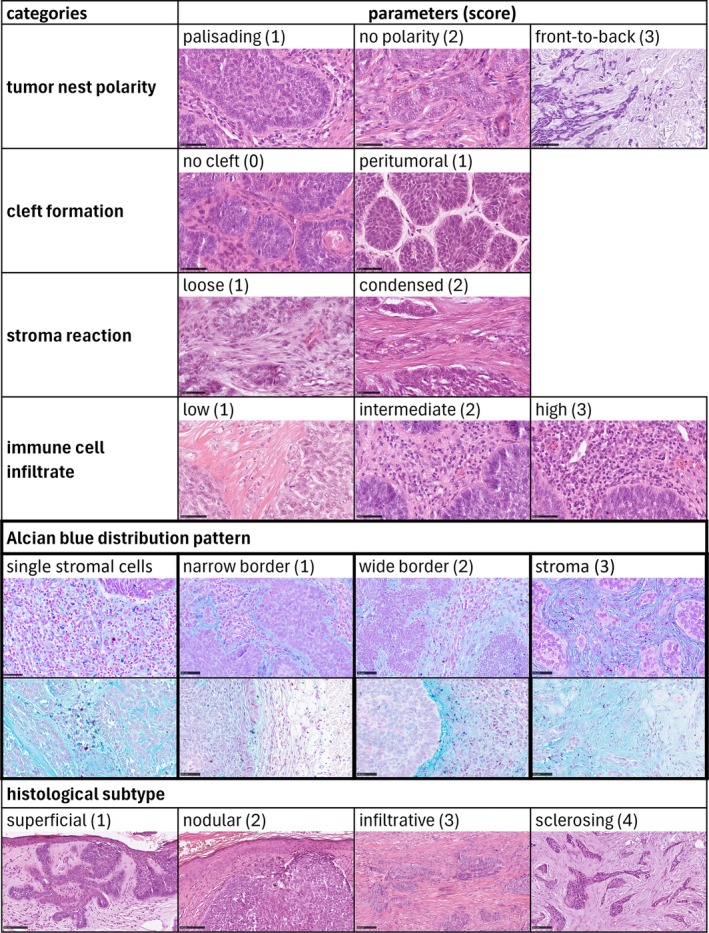 Figure 1
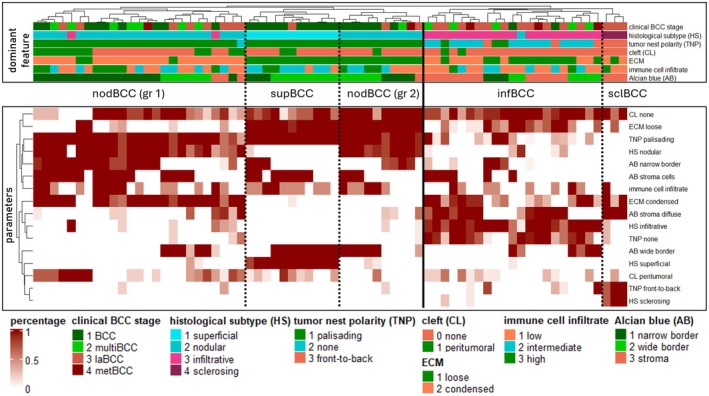 Figure 2
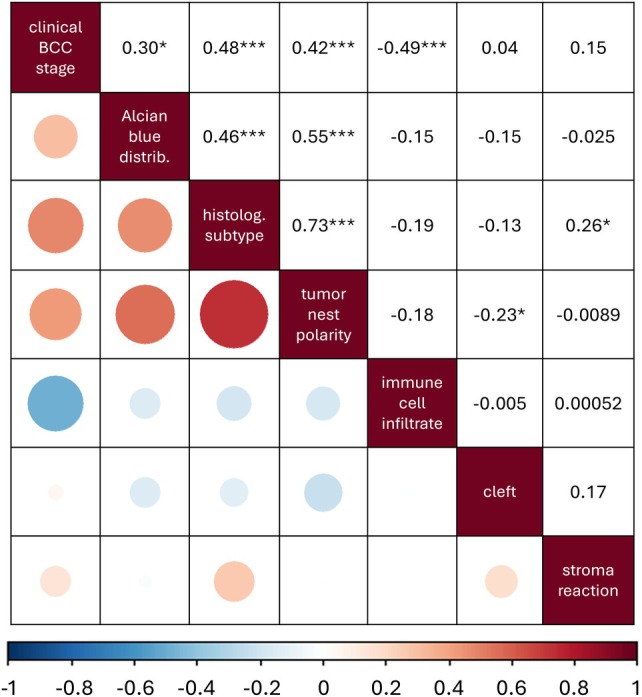 Figure 3
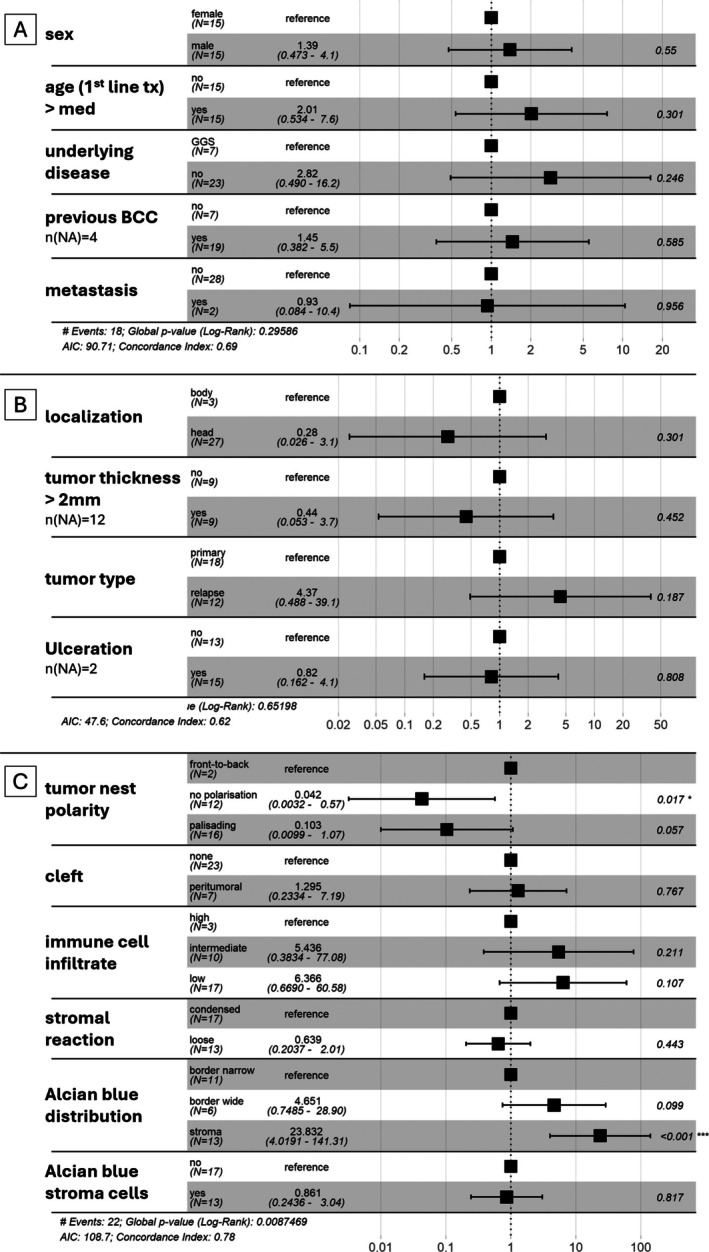 Figure 4
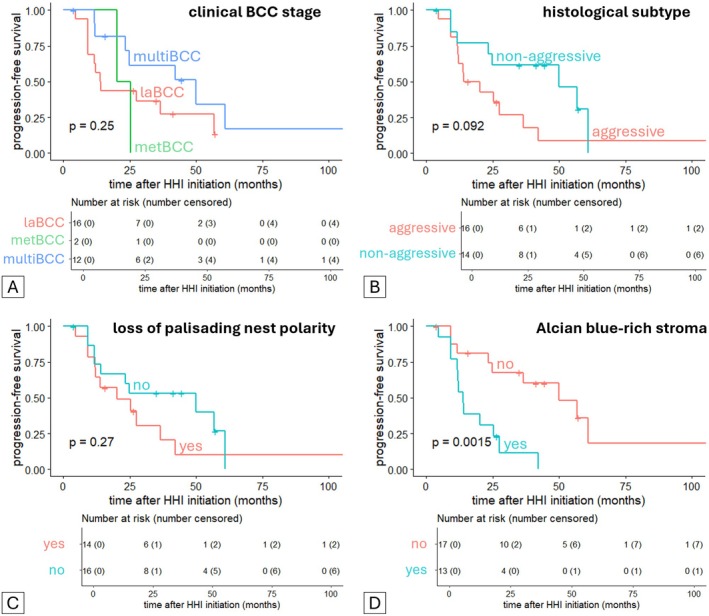 Figure 5
Peer Reviews
No public reviews on file for this paper yet. If you reviewed it on a platform where reviews are public (OpenReview, ICLR, NeurIPS, ICML), you can paste yours below so the community can read it here.
Videos
No videos yet. Explain this paper in a talk, walkthrough, or lecture? Add one.
Taxonomy
TopicsHedgehog Signaling Pathway Studies · Nonmelanoma Skin Cancer Studies · Cancer and Skin Lesions