An Analysis of Diagnostic Discrepancies in the Pathology Departments of Wigan and Salford
Amira Salem, Muhammad Abdulvahab, Hamza Ahmed, Amal Asar

TL;DR
This audit examines diagnostic errors in a pathology department to improve accuracy and patient care.
Contribution
The study identifies key areas and methods for reducing diagnostic discrepancies in pathology.
Findings
56% of discrepancies were in microscopy (category B).
Gastrointestinal and breast specialties had the most errors.
MDT reviews were most effective for error detection.
Abstract
Aim: The aim of this audit is to evaluate diagnostic discrepancies occurring between April 2022 and March 2024 within the Wigan and Salford pathology (PAWS) department. The audit measures the rate and category of errors, identifies the stages at which they occurred, assesses the methods by which they were detected, and considers their impact on patient care, comparing the results to national standards and published data to identify trends and areas of improvement. Materials and methods: This study was conducted through retrospective analysis of data extracted from the minutes of discrepancy meetings held during the specified two-year period. Each recorded discrepancy was reviewed and categorised according to error type, stage of occurrence, subspecialty and sample type, and method of identification. Results: This audit found that 56% of the identified discrepancies were of category B…
Genes, proteins, chemicals, diseases, species, mutations and cell lines named across the full text — each resolved to its canonical identifier and authoritative record.
Click any figure to enlarge with its caption.
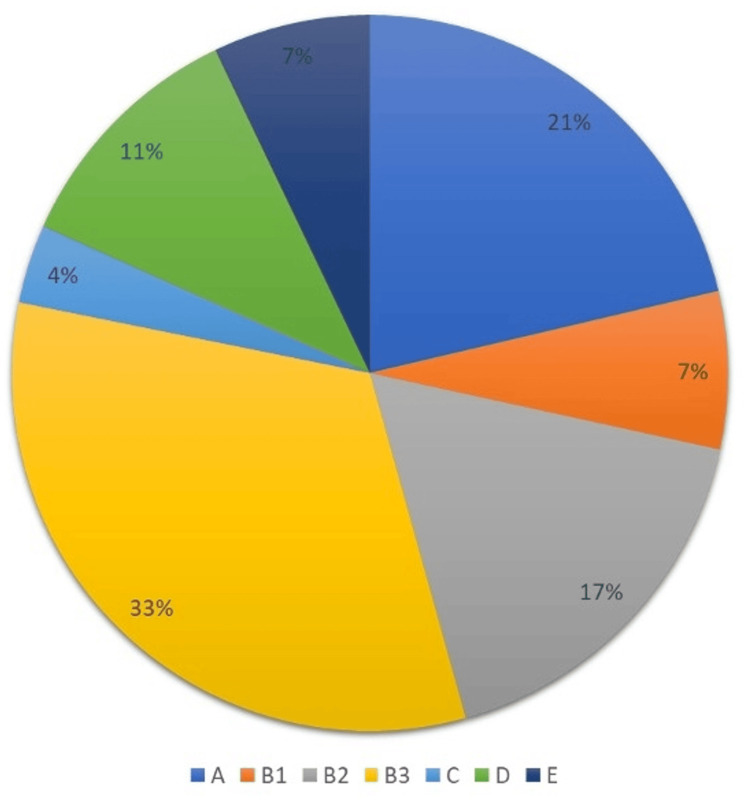 Figure 1
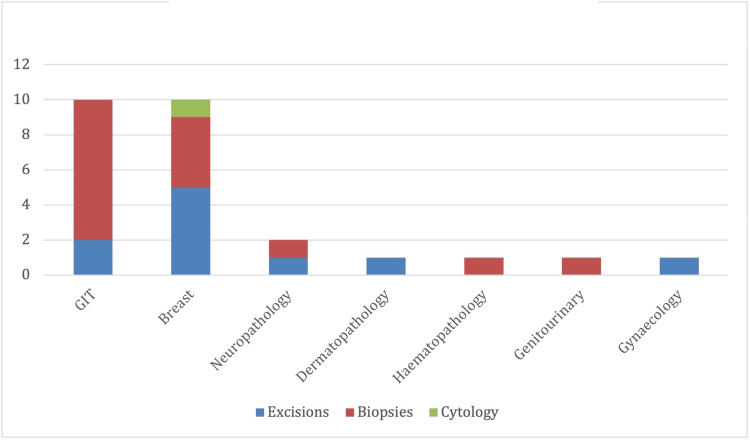 Figure 2
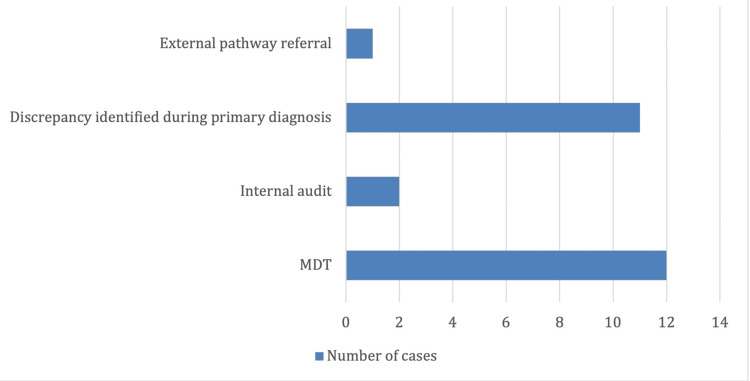 Figure 3
Peer Reviews
No public reviews on file for this paper yet. If you reviewed it on a platform where reviews are public (OpenReview, ICLR, NeurIPS, ICML), you can paste yours below so the community can read it here.
Videos
No videos yet. Explain this paper in a talk, walkthrough, or lecture? Add one.
Taxonomy
TopicsClinical Laboratory Practices and Quality Control · Radiology practices and education · Global Cancer Incidence and Screening