Generative Multiobjective Bayesian Optimization with Scalable Batch Evaluations for Sample-Efficient De Novo Molecular Design
Madhav R. Muthyala, Farshud Sorourifar, Tianhong Tan, You Peng, Joel A. Paulson

TL;DR
This paper introduces a new method for designing molecules that meet multiple goals efficiently, using a combination of generative models and optimization techniques.
Contribution
The paper presents a novel 'generate-then-optimize' framework with a scalable acquisition function for multiobjective molecular design.
Findings
The proposed method outperforms existing techniques on synthetic and real-world molecular design tasks.
The approach successfully identifies diverse and high-performing organic cathode materials for energy storage.
The qPMHI acquisition function enables efficient batch selection for Pareto front expansion.
Abstract
Designing molecules that must satisfy multiple, often conflicting, objectives is a central challenge in molecular discovery. The enormous size of the chemical space and the cost of high-fidelity simulations have driven the development of machine learning-guided strategies for accelerating design with limited data. Among these, Bayesian optimization (BO) offers a principled framework for sample-efficient search, while generative models provide a mechanism to propose novel, diverse candidates beyond fixed libraries. However, existing methods that couple the two often rely on continuous latent spaces, which introduce both architectural entanglement and scalability challenges. This work introduces an alternative, modular “generate-then-optimize” framework for de novo multiobjective molecular design/discovery. At each iteration, a generative model is used to construct a large, diverse pool…
Genes, proteins, chemicals, diseases, species, mutations and cell lines named across the full text — each resolved to its canonical identifier and authoritative record.
Click any figure to enlarge with its caption.
 Figure 1
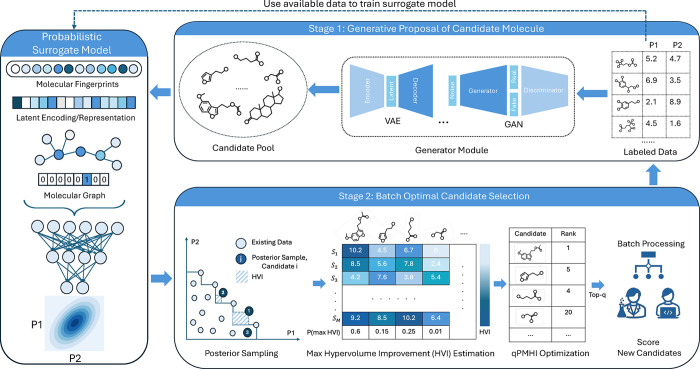 Figure 2
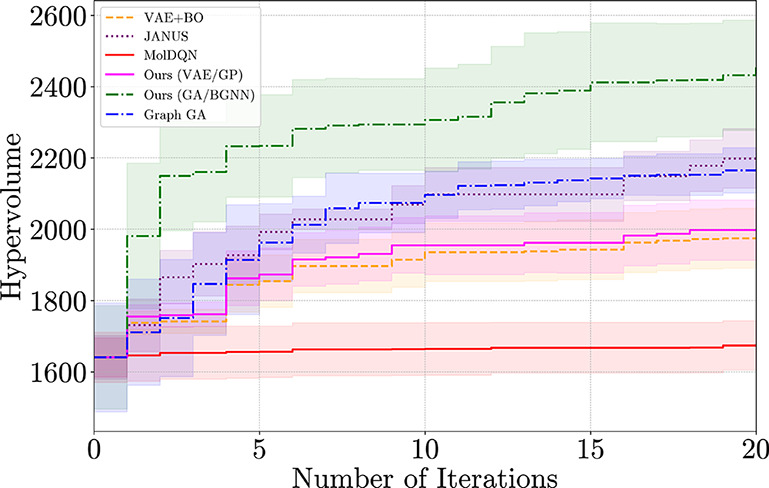 Figure 3
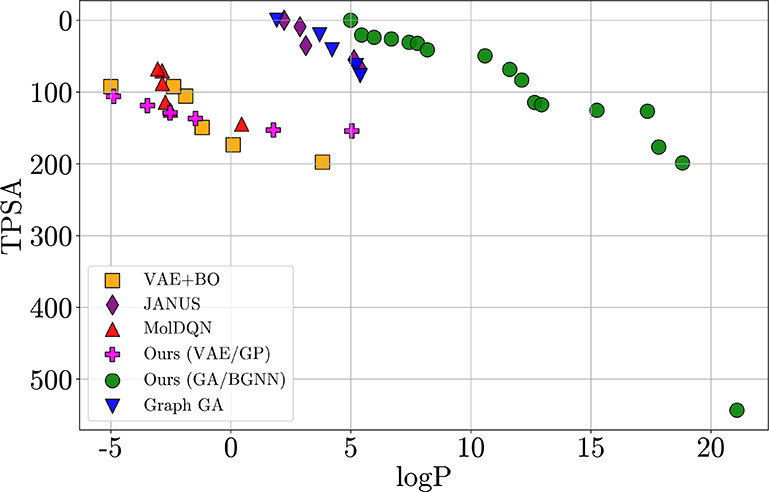 Figure 4
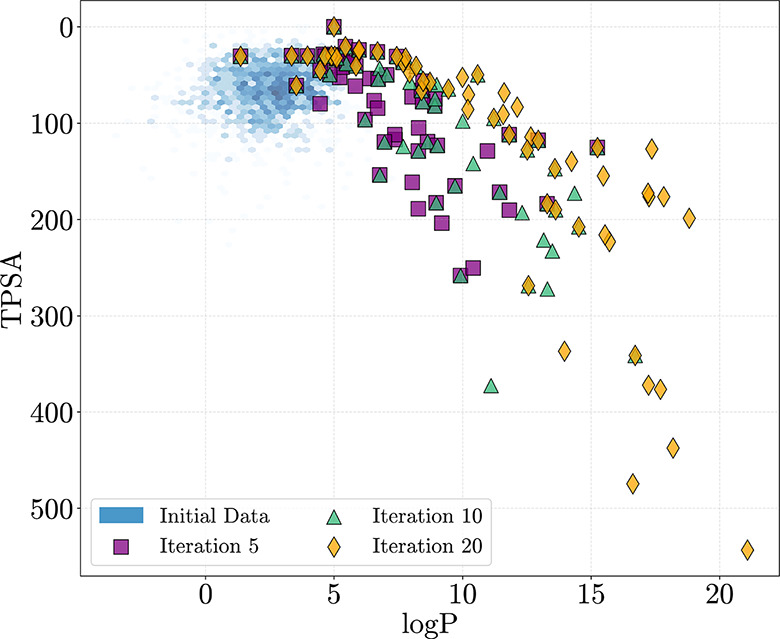 Figure 5
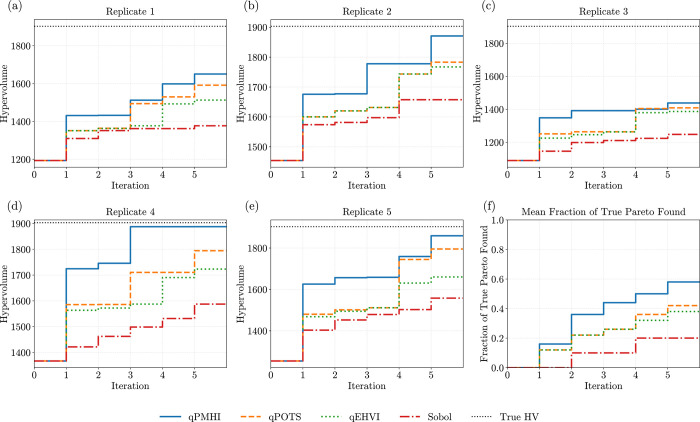 Figure 6
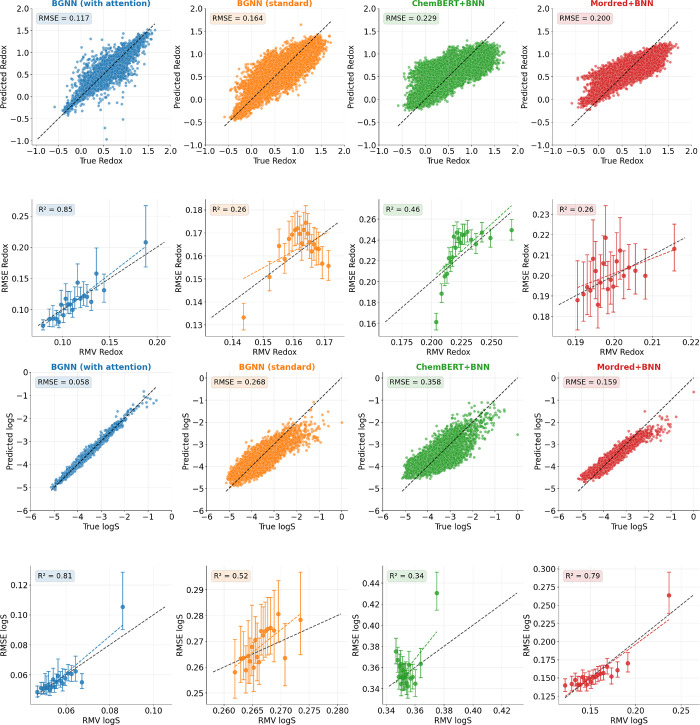 Figure 7
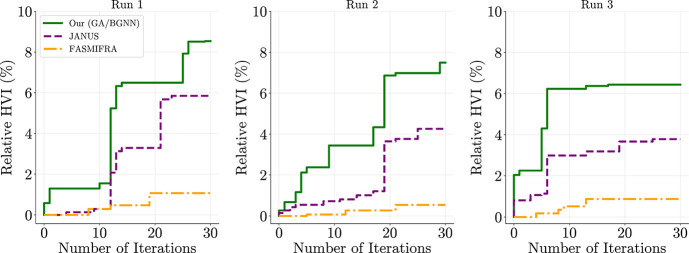 Figure 8
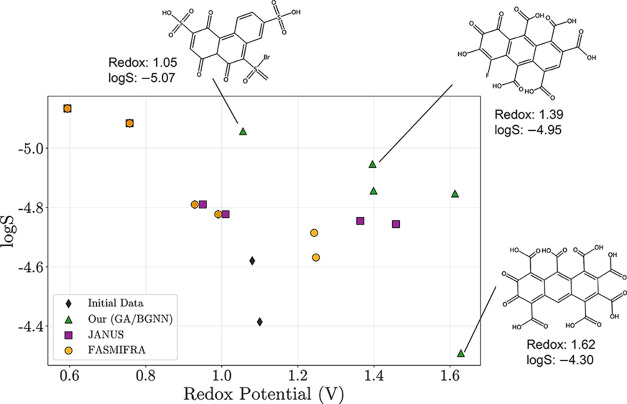 Figure 9
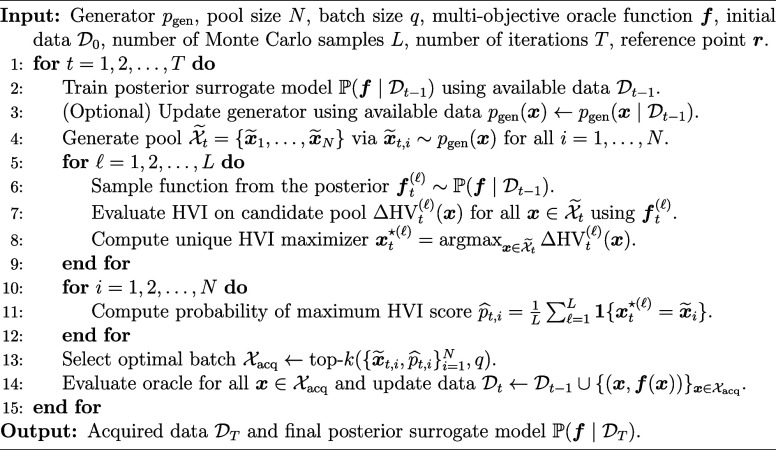 Figure 10
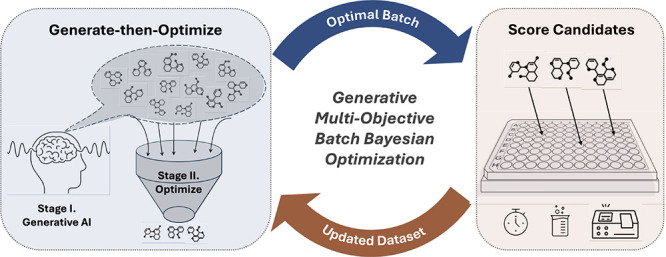 Figure 11
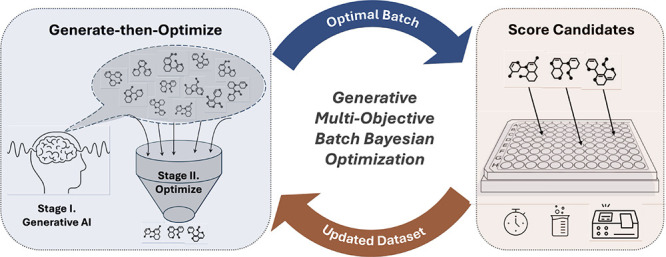 Figure 12
 Figure 13
 Figure 14
 Figure 15
 Figure 16
 Figure 17
 Figure 18
 Figure 19
 Figure 20
 Figure 21
 Figure 22
 Figure 23
 Figure 24
 Figure 25
 Figure 26
 Figure 27
 Figure 28
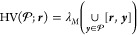 Figure 29
 Figure 30
 Figure 31
 Figure 32
 Figure 33
 Figure 34
 Figure 35
 Figure 36
 Figure 37
 Figure 38
 Figure 39
 Figure 40
 Figure 41
 Figure 42
 Figure 43
 Figure 44
 Figure 45
 Figure 46
 Figure 47
 Figure 48
 Figure 49
 Figure 50
Peer Reviews
No public reviews on file for this paper yet. If you reviewed it on a platform where reviews are public (OpenReview, ICLR, NeurIPS, ICML), you can paste yours below so the community can read it here.
Videos
No videos yet. Explain this paper in a talk, walkthrough, or lecture? Add one.
Taxonomy
TopicsMachine Learning in Materials Science · Advanced battery technologies research · Electrocatalysts for Energy Conversion