Exploring Lignin Conformation in Organic and Deep Eutectic Solvents Using Small-Angle Neutron Scattering
Subramee Sarkar, Maggie Kroon, Daniel Papp, Nicolas Martin, Charlotta Turner, Karen J. Edler

TL;DR
This paper explores how lignin's structure changes in different solvents using neutron scattering, revealing insights for sustainable material development.
Contribution
The study provides molecular-level insights into lignin conformation in organic and deep eutectic solvents using small-angle neutron scattering.
Findings
Lignin in THF shows loosely associated conformations, with Indulin AT swelling and organosolv lignin elongating.
DES-solvated lignin adopts dense cylindrical structures with resistance to D2O perturbation.
Cocoa bean lignin in diol-based DES exhibits fractal-like morphology sensitive to D2O and temperature.
Abstract
Lignin, a structurally intricate and heterogeneous phenolic biopolymer, holds considerable promise as a sustainable alternative to petrochemical-derived materials across diverse applications in the energy and materials sectors. However, precise lignin molecular weight and structure determination remains challenging due to its intrinsic tendency to aggregate in solution and the absence of chemically analogous polymer standards for chromatographic techniques. By employing small-angle neutron scattering, this study aims at precise measurement of lignin’s polymeric conformation, aggregation behavior, and radius of gyration in organic gel permeation chromatography/NMR solvent, tetrahydrofuran (THF), and in an emerging class of solvent systems known as deep eutectic solvents (DES). These “designer” solvents, formed from tailored hydrogen bond donors and acceptors, are gaining importance for…
Genes, proteins, chemicals, diseases, species, mutations and cell lines named across the full text — each resolved to its canonical identifier and authoritative record.
Click any figure to enlarge with its caption.
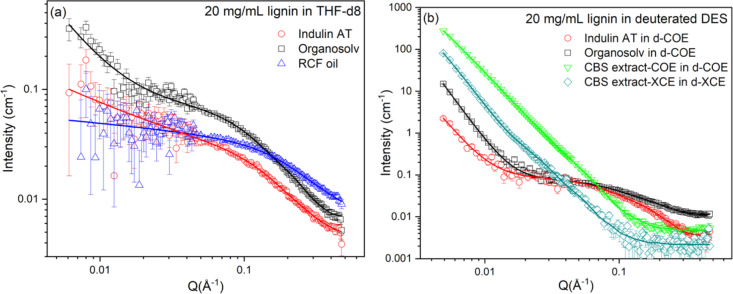 Figure 1
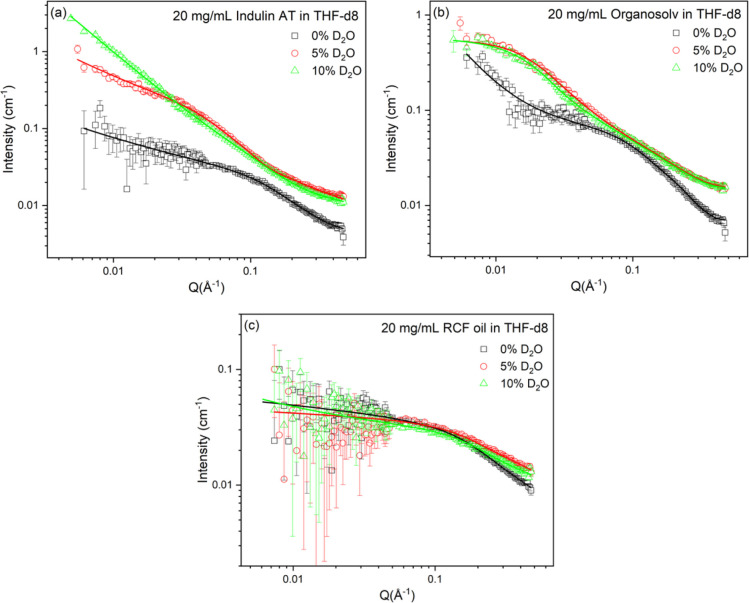 Figure 2
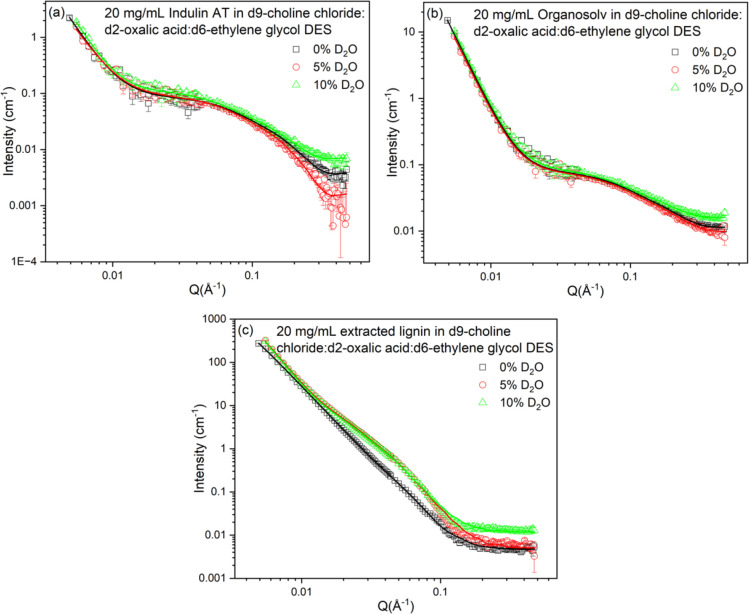 Figure 3
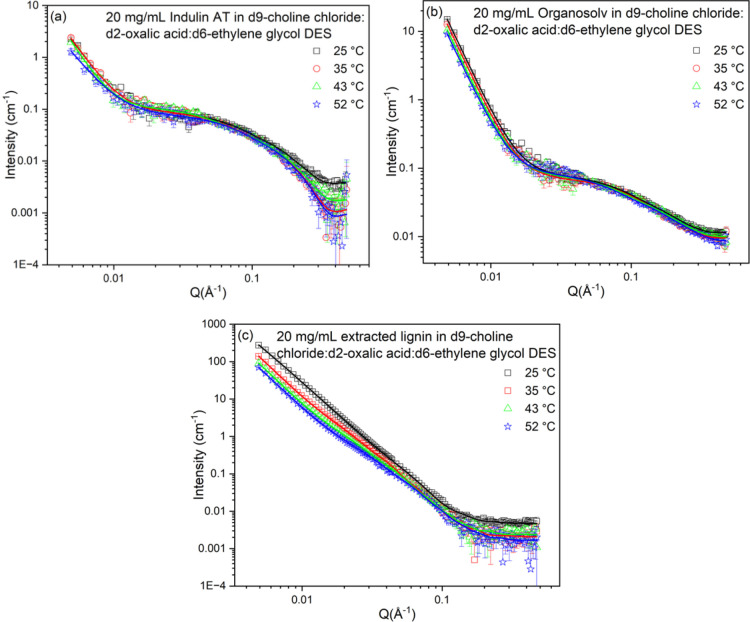 Figure 4
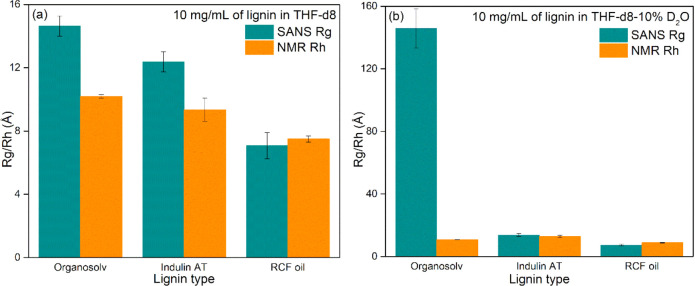 Figure 5
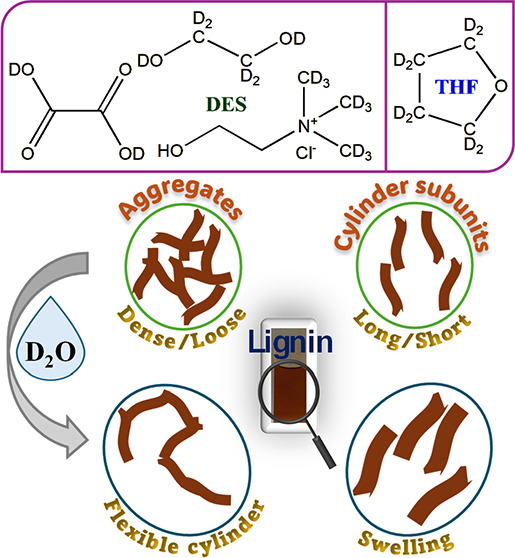 Figure 6
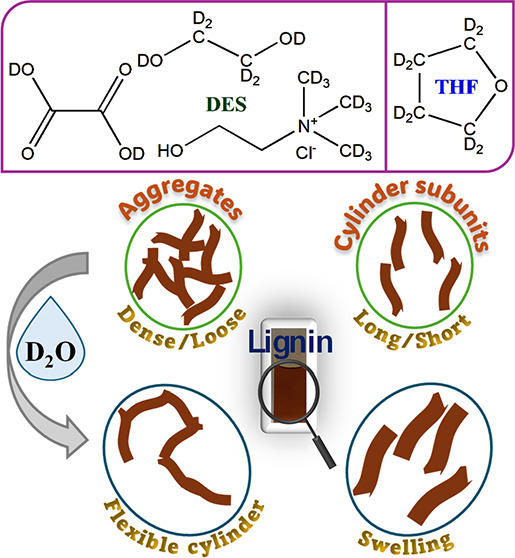 Figure 7
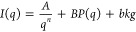 Figure 8
 Figure 9
 Figure 10
 Figure 11
 Figure 12
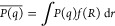 Figure 13
 Figure 14
 Figure 15
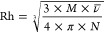 Figure 16
 Figure 17
Peer Reviews
No public reviews on file for this paper yet. If you reviewed it on a platform where reviews are public (OpenReview, ICLR, NeurIPS, ICML), you can paste yours below so the community can read it here.
Videos
No videos yet. Explain this paper in a talk, walkthrough, or lecture? Add one.
Taxonomy
TopicsLignin and Wood Chemistry · Ionic liquids properties and applications · Polymer composites and self-healing