Ion-Specific Effects of Alkaline Earth Metal Ion Binding to an Anionic Carboxylate Monolayer
Lacey LaBee, Kierra Parker, Audra Dempsey, Minh Tran, Gabby Delpleash, Ann Obiesie, Desirè Johnson, R. Sydney Williams, Makenzie Provorse Long

TL;DR
This paper investigates how different alkaline earth metal ions interact with an anionic carboxylate surface, reconciling conflicting experimental and simulation data.
Contribution
The study uses molecular dynamics simulations to explain ion-specific effects observed in AFM experiments at carboxylate interfaces.
Findings
Site-specific approaches align with dilute solution data, while collective approaches match AFM results.
Ca2+ and Ba2+ ions bind more efficiently to the carboxylate interface, forming contact ion pairs with multiple ligands.
Abstract
The ion-specific effects of alkaline earth metal ions binding to anionic carboxylate-terminated monolayers influence environmental chemistry, industrial processes, and nanotechnology. Experimental results obtained using interfacial techniques are often interpreted by using data from dilute aqueous solutions of carboxylate anions. However, atomic force microscopy (AFM) adhesion forces reported for alkaline earth metal ions binding at the aqueous interface of an anionic carboxylate-terminated monolayer contradict data reported for dilute solutions of aqueous carboxylate anions. To reconcile this data and provide molecular insight into the ion-specific trends observed in the AFM data, classical atomistic molecular dynamics (MD) simulations are used to model Mg2+, Ca2+, Sr2+, and Ba2+ ions at the aqueous interface of a deprotonated 11-mercaptoundecanoic acid (MUA) monolayer. We compare…
Genes, proteins, chemicals, diseases, species, mutations and cell lines named across the full text — each resolved to its canonical identifier and authoritative record.
Click any figure to enlarge with its caption.
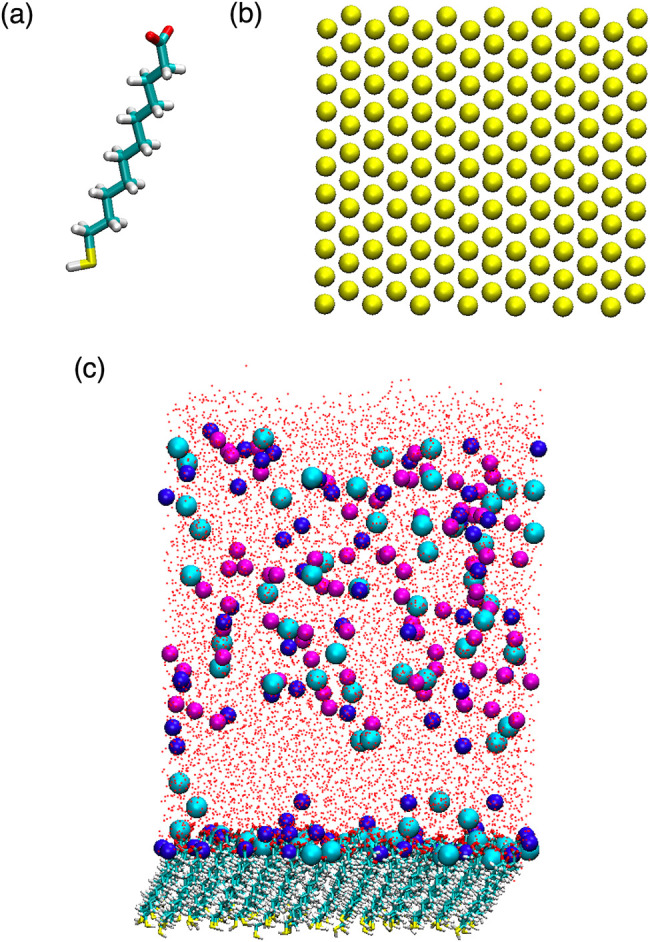 Figure 1
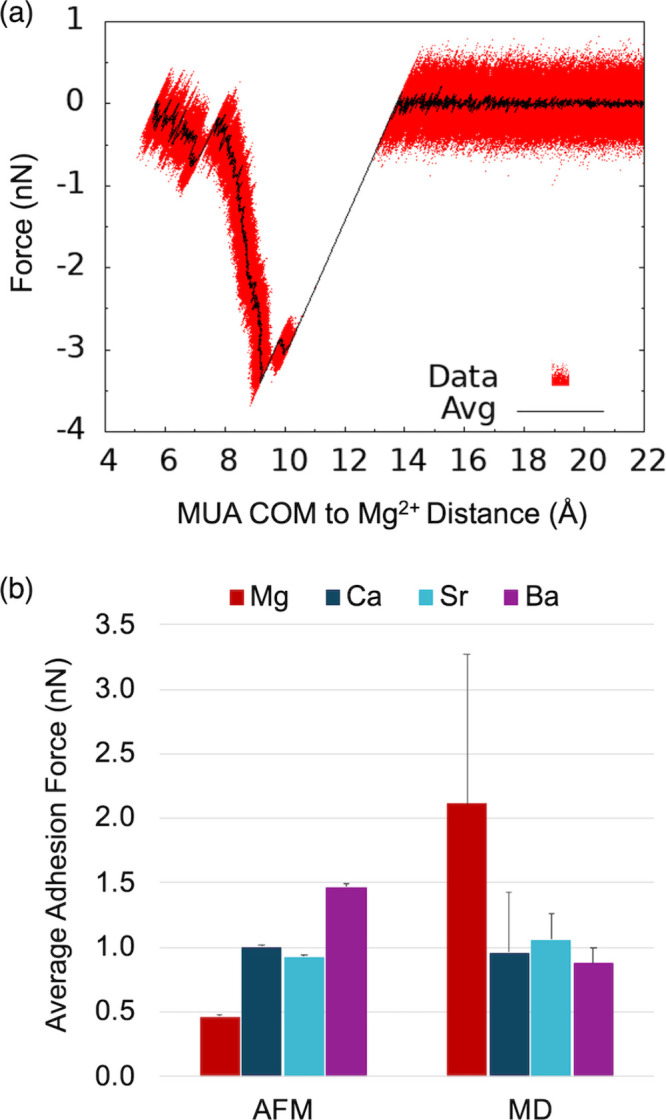 Figure 2
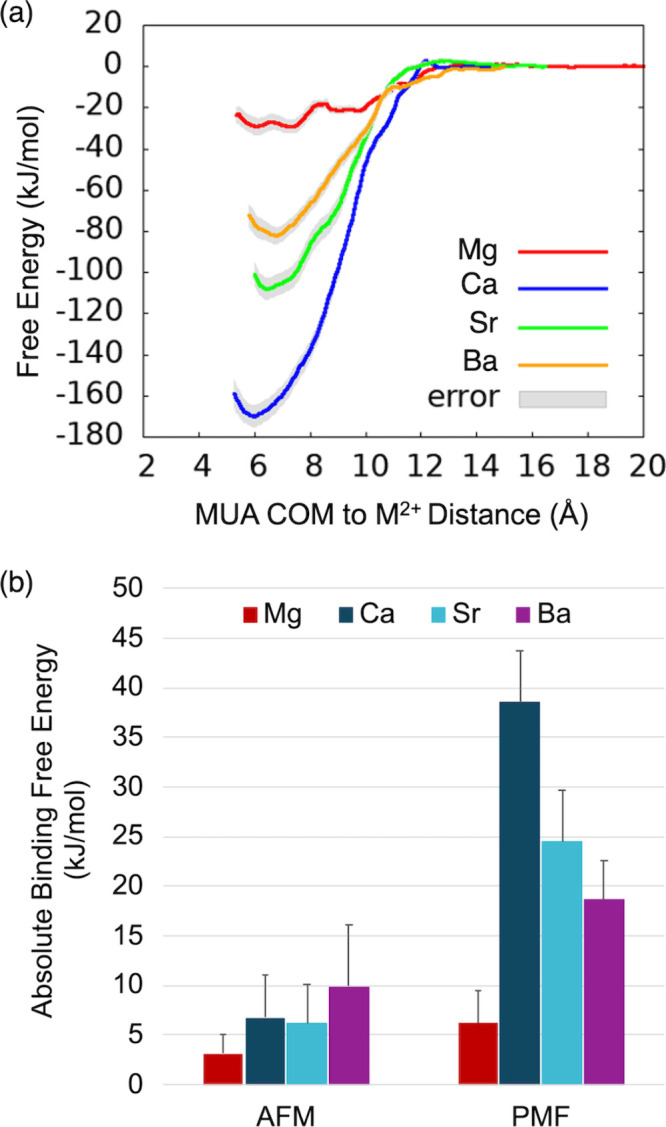 Figure 3
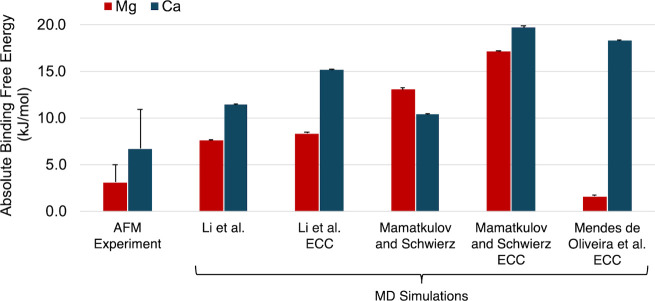 Figure 4
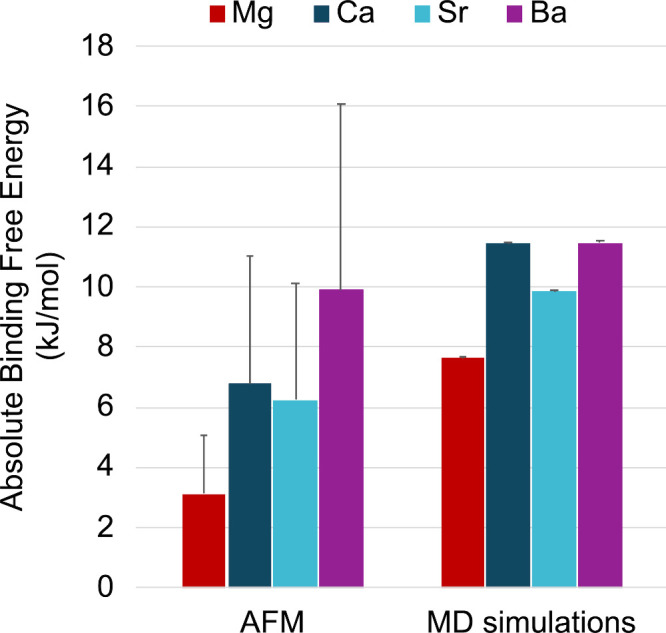 Figure 5
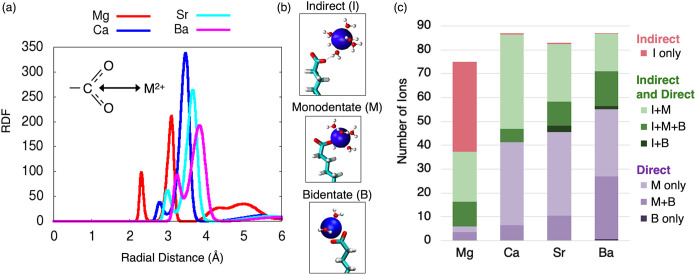 Figure 6
 Figure 7
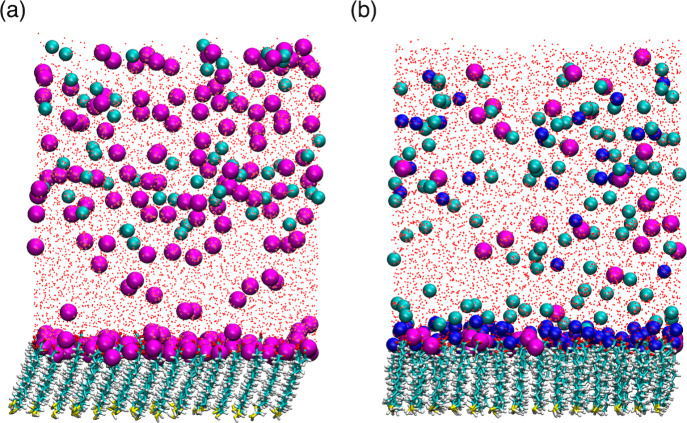 Figure 8
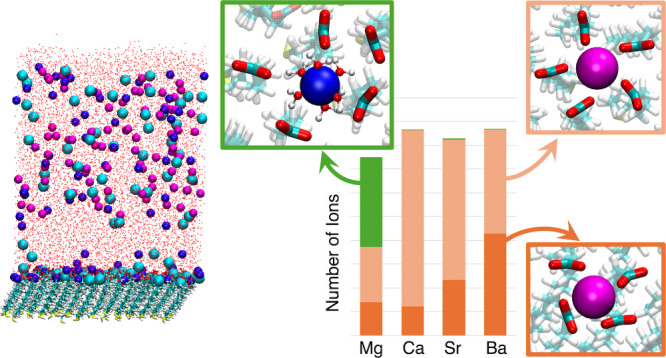 Figure 9
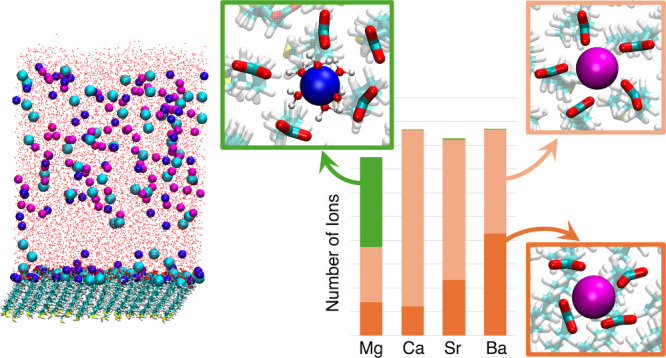 Figure 10
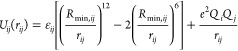 Figure 11
 Figure 12
 Figure 13
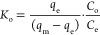 Figure 14
 Figure 15
 Figure 16
Peer Reviews
No public reviews on file for this paper yet. If you reviewed it on a platform where reviews are public (OpenReview, ICLR, NeurIPS, ICML), you can paste yours below so the community can read it here.
Videos
No videos yet. Explain this paper in a talk, walkthrough, or lecture? Add one.
Taxonomy
TopicsForce Microscopy Techniques and Applications · Spectroscopy and Quantum Chemical Studies · Molecular Junctions and Nanostructures