Genetic diversity and structure of the red squat lobster (Grimothea monodon) in the Humboldt Current Ecosystem using SNP markers
Marco Quispe-Machaca, Carlos Muñoz-Ramírez, Antonio Brante, Pepe Espinoza, Maximiliano Zilleruelo, Gabriela Torres, Ángel Urzúa

TL;DR
This study examines the genetic diversity and structure of the red squat lobster in the Humboldt Current Ecosystem using SNP markers to inform conservation and management.
Contribution
The study reveals that genetic differentiation in red squat lobsters is due to geographic distance and larval dispersal, not distinct populations.
Findings
Low heterozygosity and similar allelic richness were found across G. monodon populations.
Genetic structure analysis shows a single population unit despite pelagic and benthic morphotypes.
Inbreeding in Concepción is slight and likely due to isolation by distance.
Abstract
The Humboldt Current Ecosystem (HCE) presents a wide variability of environmental and geographic conditions that play an important role in marine invertebrates, modulating variations not only in their behavior, physiology and morphology; but also changes in their patterns of genetic differentiation. Therefore, it is necessary to characterize genetic diversity and structure to develop management and conservation strategies in commercially important invertebrates such as the red squat lobster Grimothea monodon, which in the HCE presents two highly contrasting morphotypes and/or lifestyles (pelagic vs. benthic). The objective of the present study was to evaluate the diversity, structure, and genetic connectivity of the G. monodon population along the latitudinal gradient in the HCE using single nucleotide polymorphism (SNP) markers. Low heterozygosity (0.05 ± 0.1) and similar allelic…
Genes, proteins, chemicals, diseases, species, mutations and cell lines named across the full text — each resolved to its canonical identifier and authoritative record.
Click any figure to enlarge with its caption.
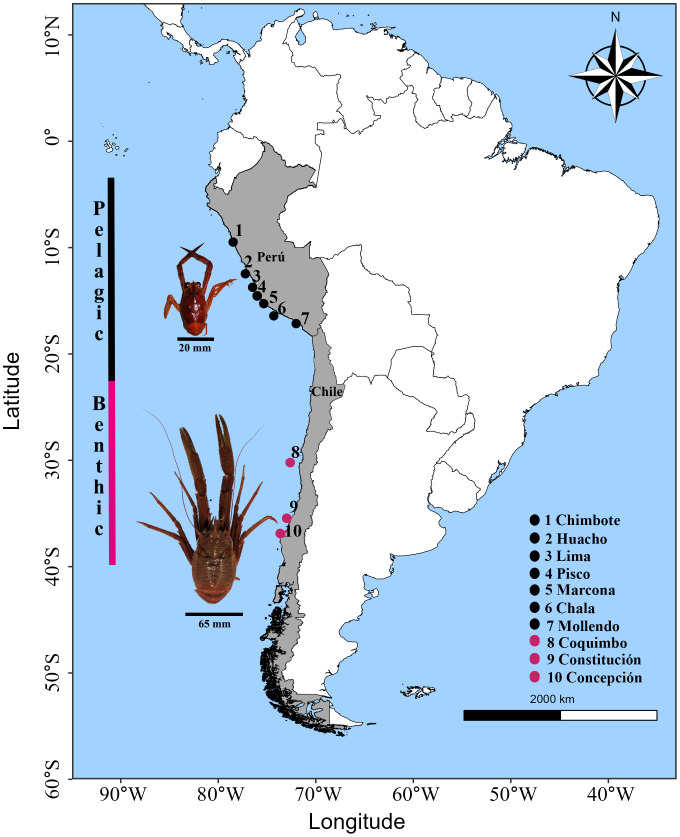 Figure 1
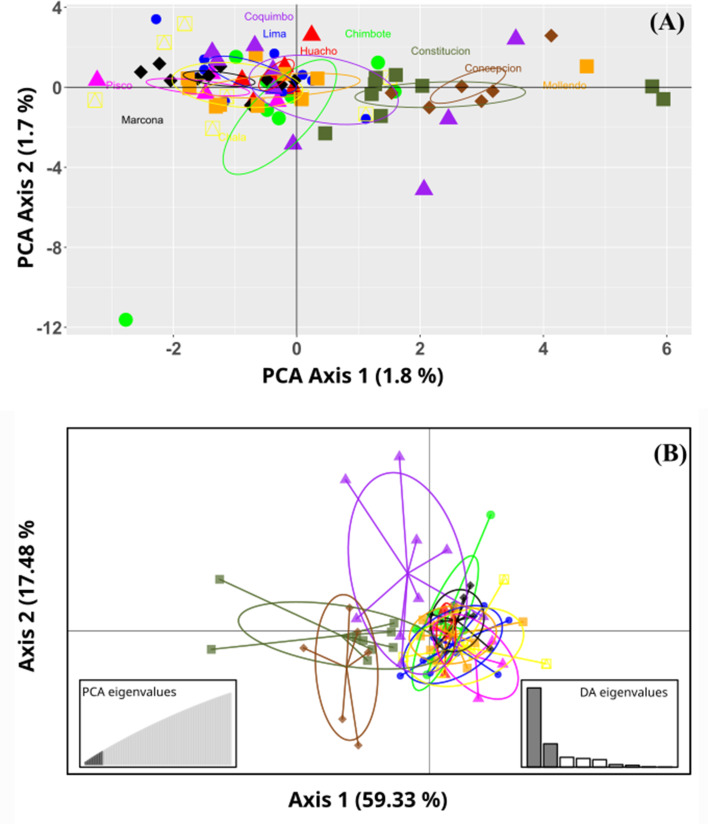 Figure 2
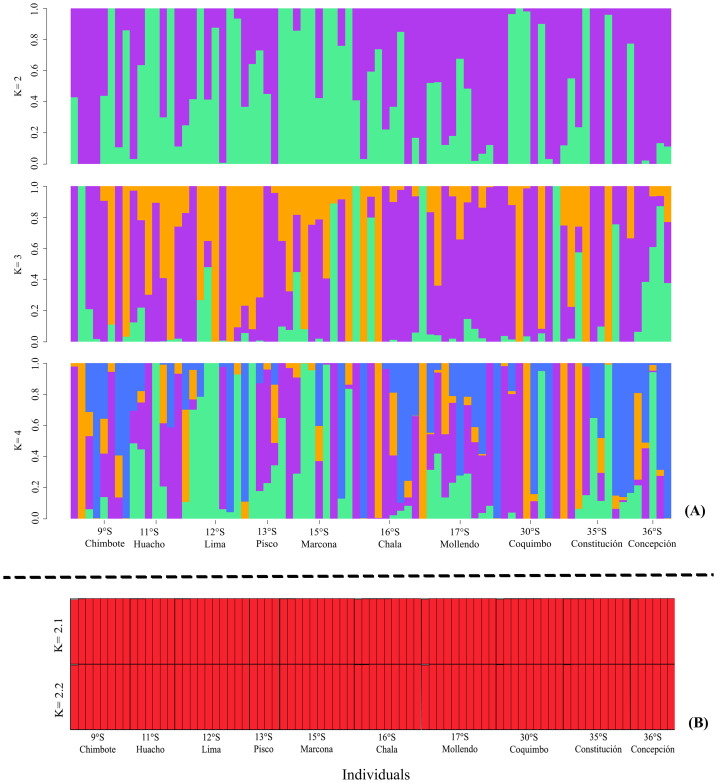 Figure 3
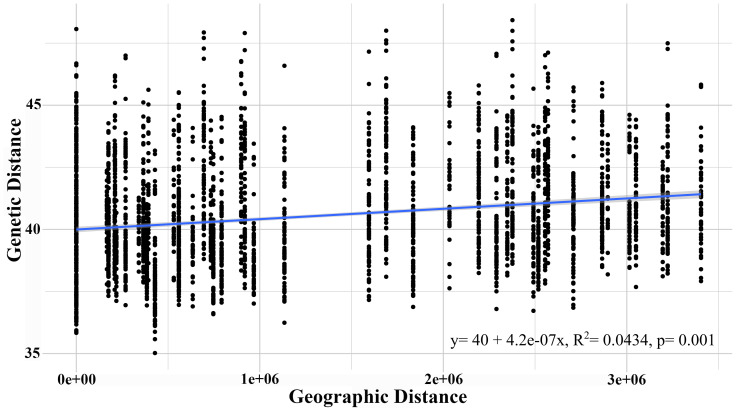 Figure 4
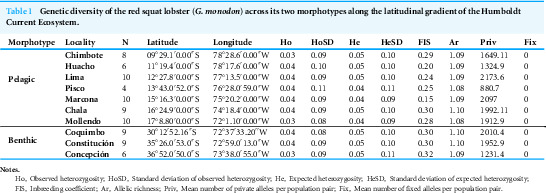 Figure 5
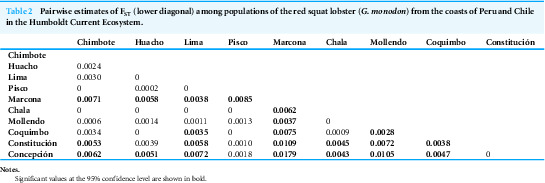 Figure 6
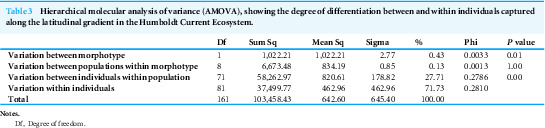 Figure 7
Peer Reviews
No public reviews on file for this paper yet. If you reviewed it on a platform where reviews are public (OpenReview, ICLR, NeurIPS, ICML), you can paste yours below so the community can read it here.
Videos
No videos yet. Explain this paper in a talk, walkthrough, or lecture? Add one.
Taxonomy
TopicsCrustacean biology and ecology · Genetic diversity and population structure · Invertebrate Immune Response Mechanisms