The potential of mycelium from mushroom-producing fungi in alternative protein production: a focus on fungal growth, metabolism, and nutrition
Jasper Zwinkels, Stef van Oorschot, Oscar van Mastrigt, Eddy J. Smid

TL;DR
This paper explores using mushroom-producing fungi to create alternative proteins by fermenting cereals and legumes, showing improved nutrition and reduced anti-nutritional factors.
Contribution
The study introduces a method to screen diverse basidiomycete fungi for solid-state fermentation, highlighting their potential in food production.
Findings
Basidiomycetes can fully colonize substrates like brown rice and lupin when given the right formulation.
Fungal fermentation increased protein content and reduced phytic acid by up to 80%.
Readily available carbon sources prevent protein loss during fermentation.
Abstract
The growing need for high-quality protein with minimal environmental impact necessitates the expansion of alternative proteins on the market. One area with great opportunity for expansion lies in the phylogenetic diversity of the fungal kingdom. Diversifying the use of fungal species, by assessing species from the phylum of mushroom-producing fungi (Basidiomycota) in solid-state fermentation, could open new avenues to foods with improved nutritional and sensorial properties. To assess these properties, we first determined the potential of basidiomycetes to ferment and colonize cereals and legumes. A phylogenetically diverse selection of eight species of basidiomycetes was analyzed on their radial growth speed and biomass yield. The best performing species were successfully fermented on brown rice (high starch), brewer's spent grain (high fiber, high protein), and lupin (high protein,…
Genes, proteins, chemicals, diseases, species, mutations and cell lines named across the full text — each resolved to its canonical identifier and authoritative record.
Click any figure to enlarge with its caption.
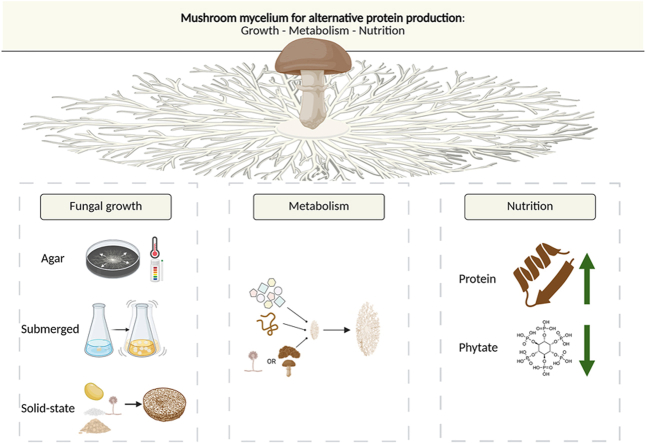 Figure 1
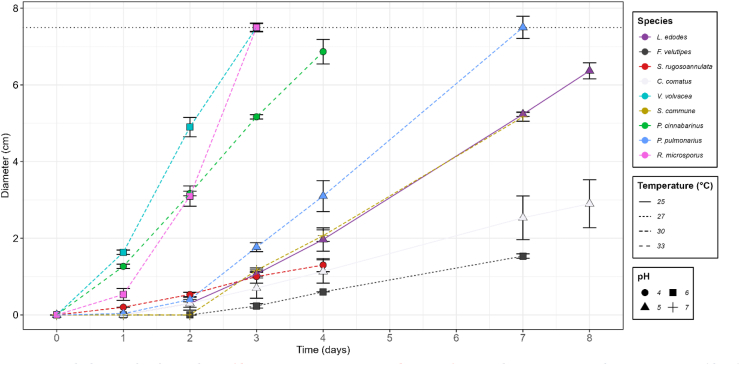 Figure 2
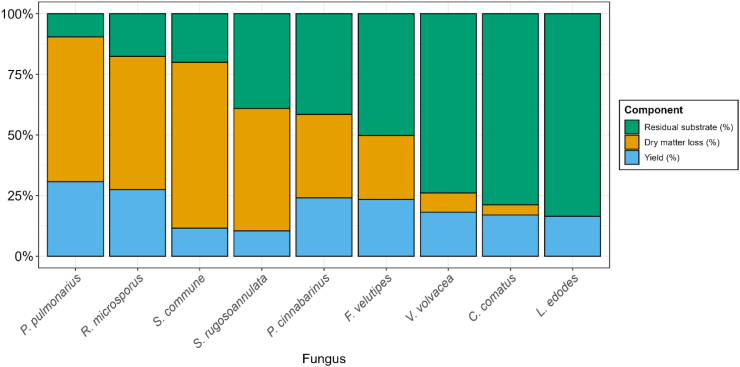 Figure 3
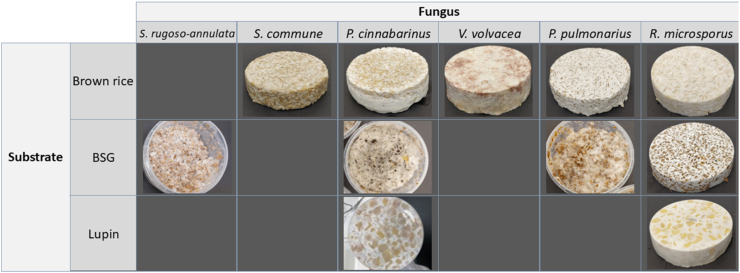 Figure 4
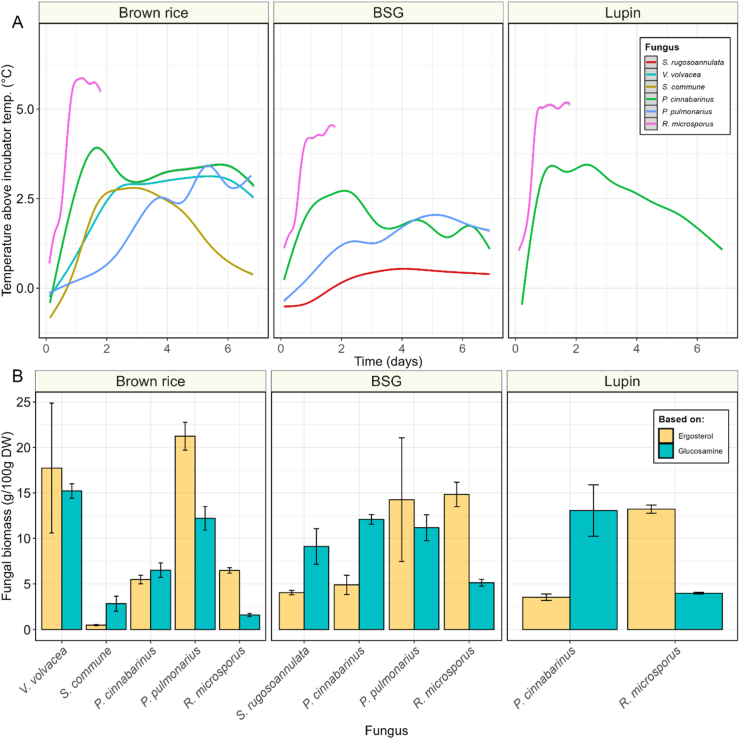 Figure 5
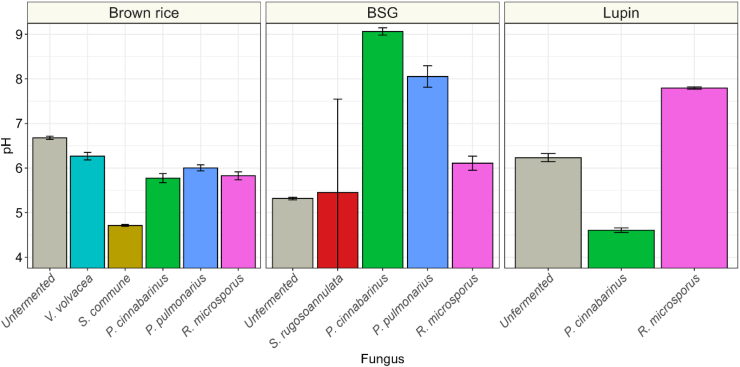 Figure 6
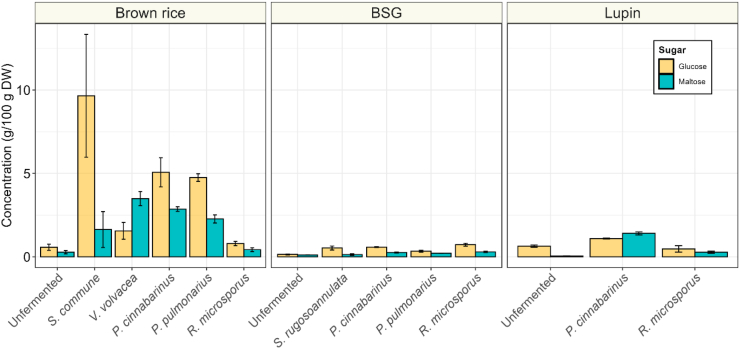 Figure 7
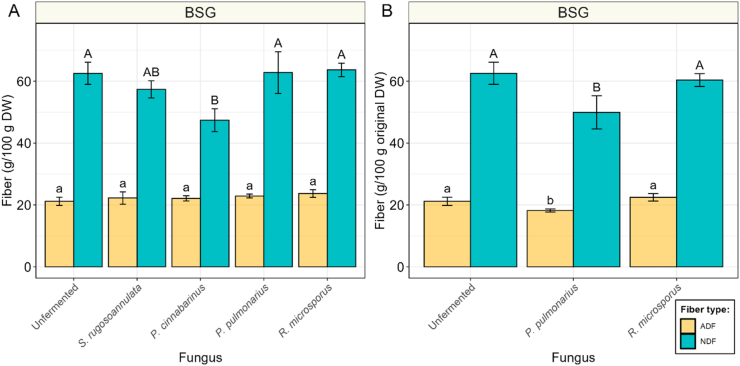 Figure 8
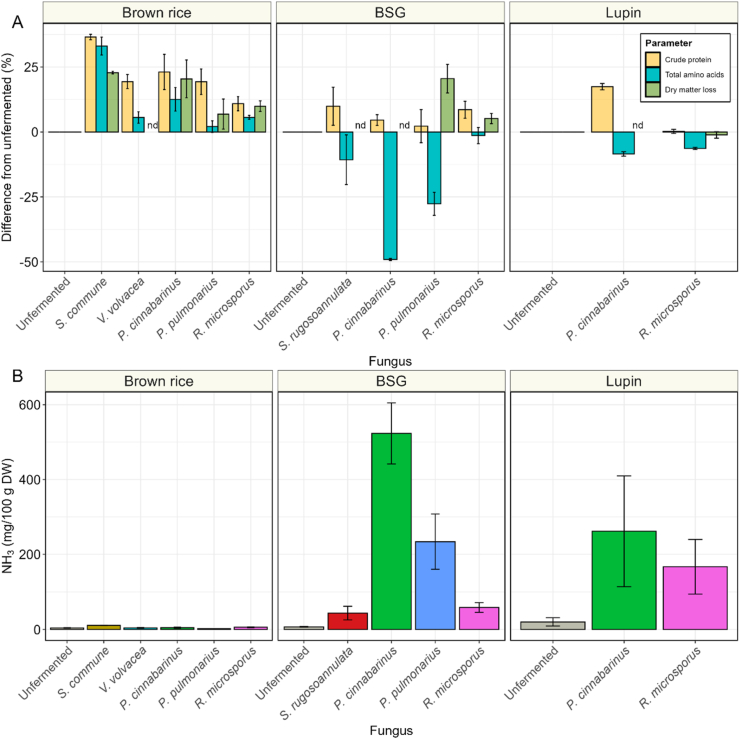 Figure 9
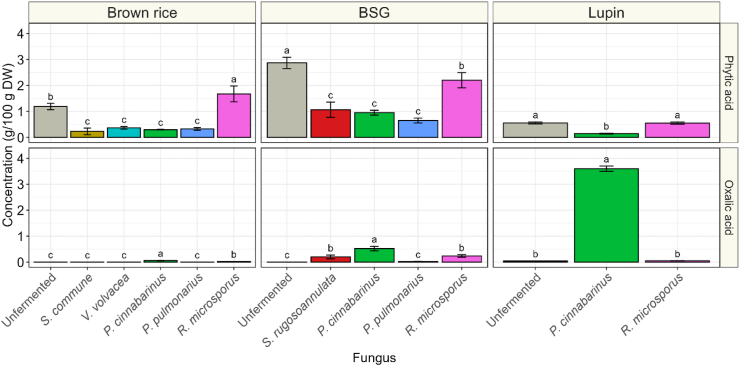 Figure 10
Peer Reviews
No public reviews on file for this paper yet. If you reviewed it on a platform where reviews are public (OpenReview, ICLR, NeurIPS, ICML), you can paste yours below so the community can read it here.
Videos
No videos yet. Explain this paper in a talk, walkthrough, or lecture? Add one.
Taxonomy
TopicsFungal Biology and Applications · Fungal and yeast genetics research · Plant and Biological Electrophysiology Studies