Bioinspired super-tough polyurethane elastomers with block modules using sacrificial bonds
Jian Li, Fubo Ma, Jintao Ji, Yuanzhi Qu, Xiaoxiao Ni

TL;DR
A bioinspired polyurethane material was developed that is highly stretchable, tough, and self-healing, suitable for use in soft robotics and electronic skin.
Contribution
The paper introduces a novel biomimetic strategy using synergistic dynamic bonds to create super-tough, self-healing polyurethane elastomers.
Findings
The elastomer achieved high tensile stress (∼30 MPa) and stretchability (∼4100%).
Exceptional toughness (∼470 MJ m−3) and self-healing ability were demonstrated.
The material combines multiple hydrogen bonds and metal coordination bonds for enhanced performance.
Abstract
Stretchable and self-healable elastomers with excellent mechanical properties can find attractive applications in electronic skin, soft robotics, and electrical devices. To date, it remains a huge challenge to synthesize self-healing elastomers that integrate extreme stretchability, relatively high toughness, and high self-recoverability. Herein, inspired by biological tissues and mussel byssus, we circumvent this dilemma by introducing multiple hydrogen bonds (UPy) and metal coordination bonds (DAP-Fe(iii)) into a linear polyurethane network. The self-complementary quadruple hydrogen-bond interactions between UPy dimers were incorporated as physical cross-linkages, with greatly enhanced mechanical strength and high stretchability. In addition, strong Fe-coordination bonds can readily break and re-form, a feature that facilitates energy dissipation during stretching, leading to…
Genes, proteins, chemicals, diseases, species, mutations and cell lines named across the full text — each resolved to its canonical identifier and authoritative record.
Click any figure to enlarge with its caption.
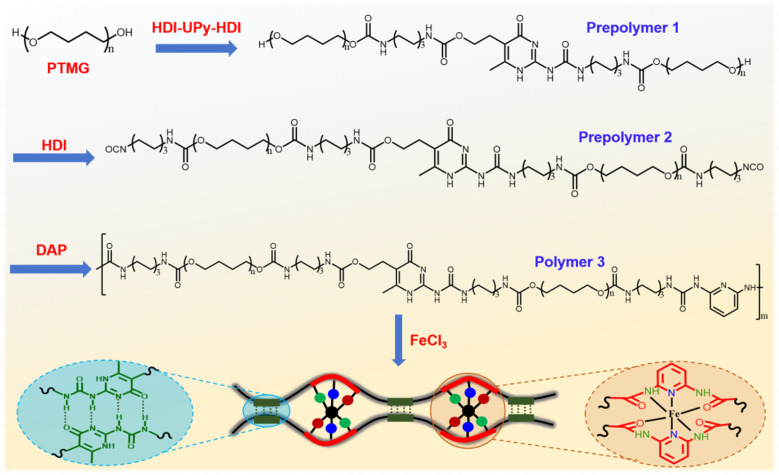 Figure 1
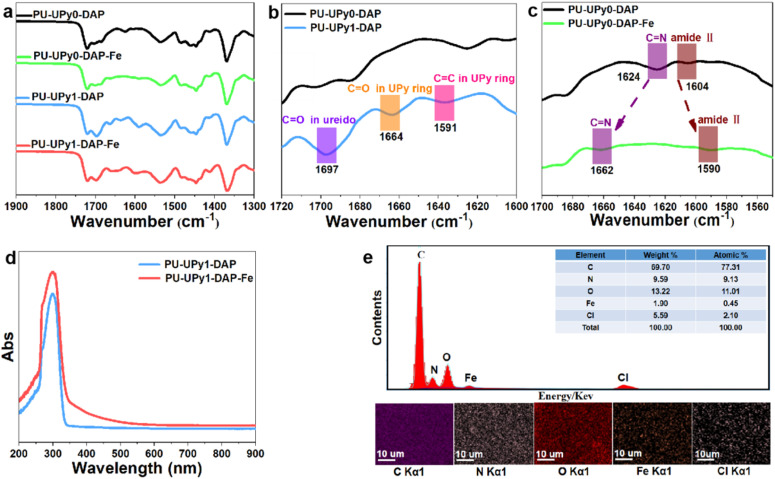 Figure 2
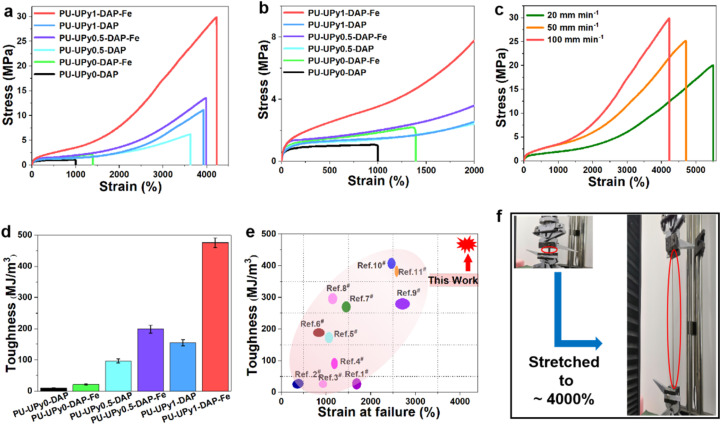 Figure 3
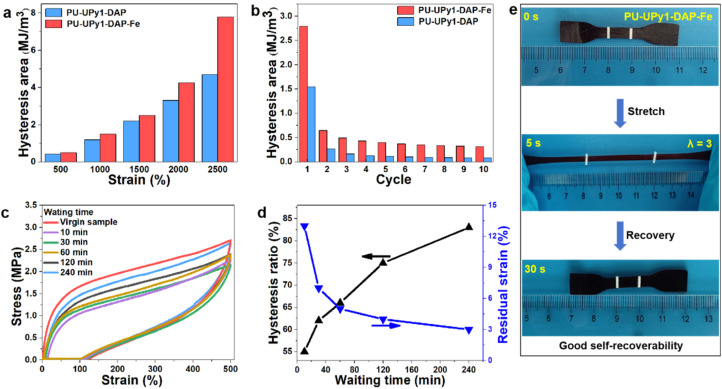 Figure 4
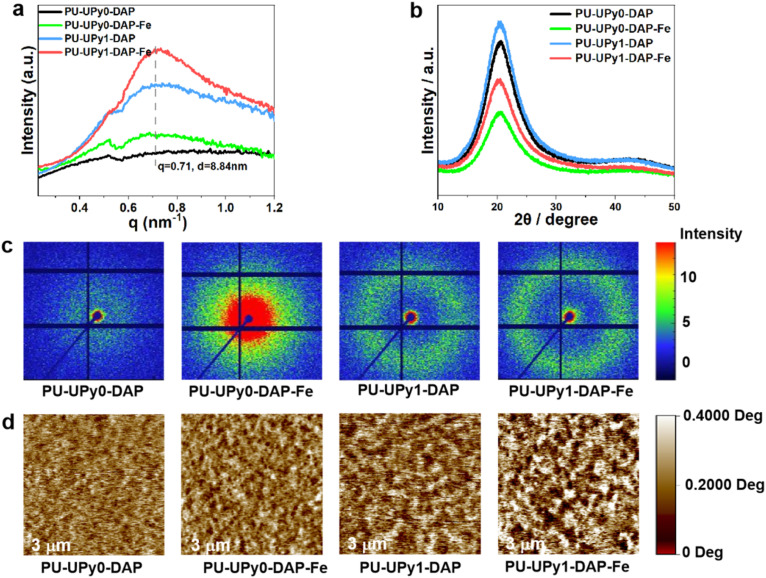 Figure 5
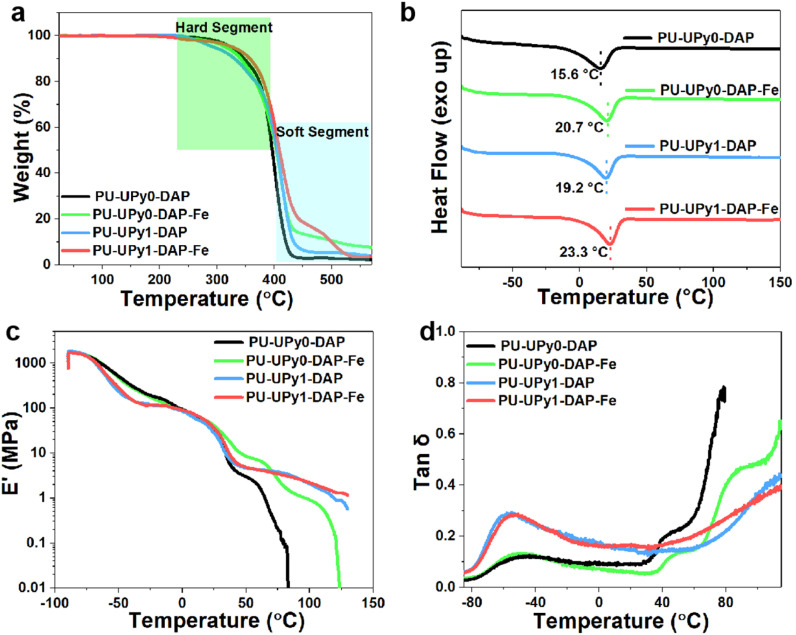 Figure 6
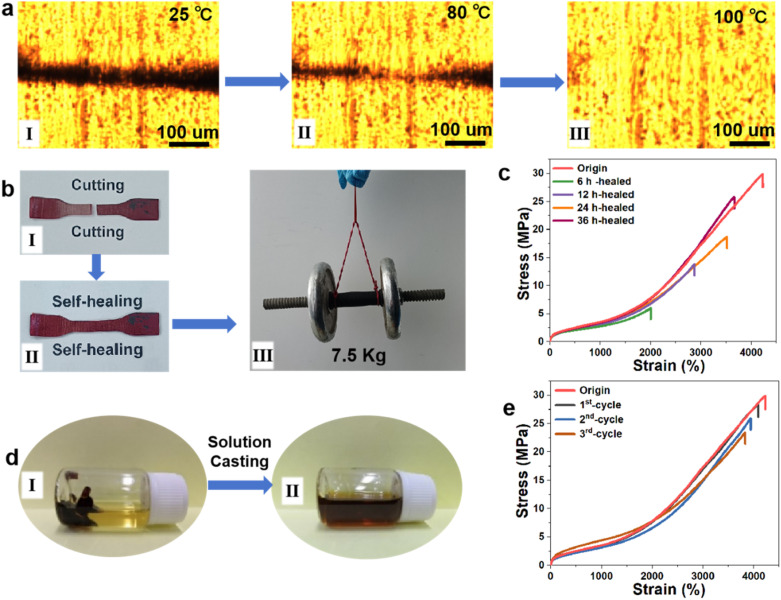 Figure 7
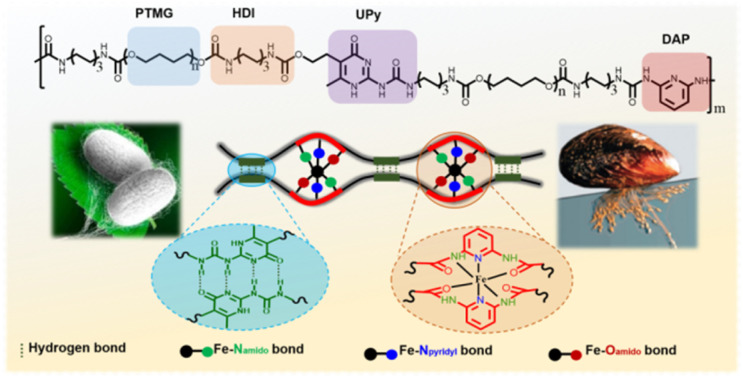 Figure 8
Peer Reviews
No public reviews on file for this paper yet. If you reviewed it on a platform where reviews are public (OpenReview, ICLR, NeurIPS, ICML), you can paste yours below so the community can read it here.
Videos
No videos yet. Explain this paper in a talk, walkthrough, or lecture? Add one.
Taxonomy
TopicsPolymer composites and self-healing · Calcium Carbonate Crystallization and Inhibition · Advanced Materials and Mechanics