Developmental Toxicity of Photolithography-Relevant Per- and Polyfluoroalkyl Substances (PFAS) Reveals Concerns for Less-Studied Functional Groups
Yuexin Cao, Hajar Smaili, Hazel Q. Shanks, Brooke E. Tvermoes, Shan Niu, Ruiwen Chen, Neil A. Hukriede, Carla A. Ng

TL;DR
This study shows that some PFAS used in semiconductor manufacturing harm zebrafish embryos and alter gene activity, suggesting they may be more toxic than previously known PFAS.
Contribution
The study identifies new toxicological concerns for less-studied PFAS functional groups used in photolithography.
Findings
Certain PFAS caused increased embryo death and malformations like yolk sac edema.
Some PFAS significantly downregulated key genes (pparg and mttp) at low concentrations.
Less-studied PFAS functional groups appear more toxic than traditional ones.
Abstract
Per- and polyfluoroalkyl substances (PFAS) are used throughout semiconductor manufacturing, including photolithography, yet many remain toxicologically uncharacterized. This study used the zebrafish embryo assay to assess developmental toxicity and gene expression changes (fgf10a, igf1, fabp10a, pparg, and mttp) linked to growth and lipid metabolism for nine legacy and emerging photolithography-relevant PFAS. Exposure induced increased lethality and common malformations, including failure of swim bladder inflation and yolk sac edema. Transcriptional analysis revealed that certain PFAS, especially triphenylsulfonium perfluoro-1-butanesulfonate, 1H,1H,2H,2H-perfluorooctane sulfonic acid, perfluorooctanoic acid, and bis(1,1,2,2,3,3,4,4,4-nonafluoro-1-butanesulfonyl)imid, significantly downregulated pparg and mttp expression, even at environmentally relevant concentrations. Our findings…
Genes, proteins, chemicals, diseases, species, mutations and cell lines named across the full text — each resolved to its canonical identifier and authoritative record.
Click any figure to enlarge with its caption.
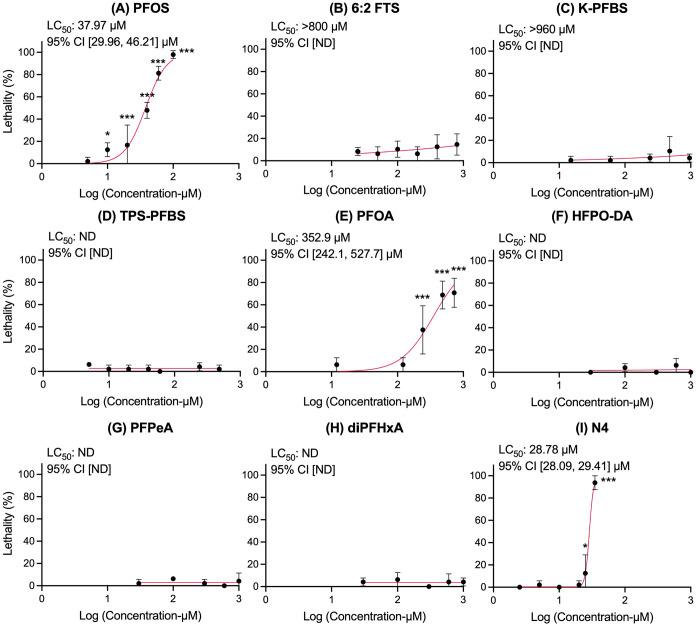 Figure 1
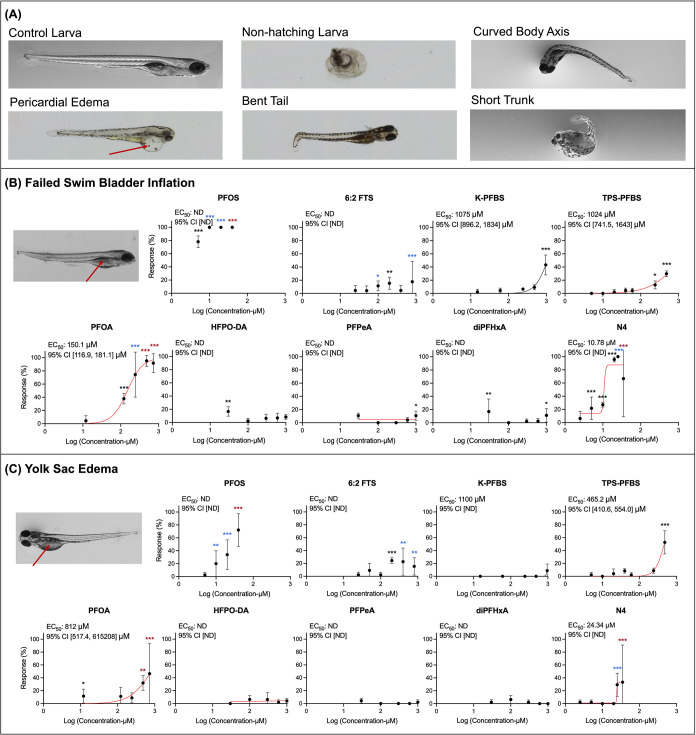 Figure 2
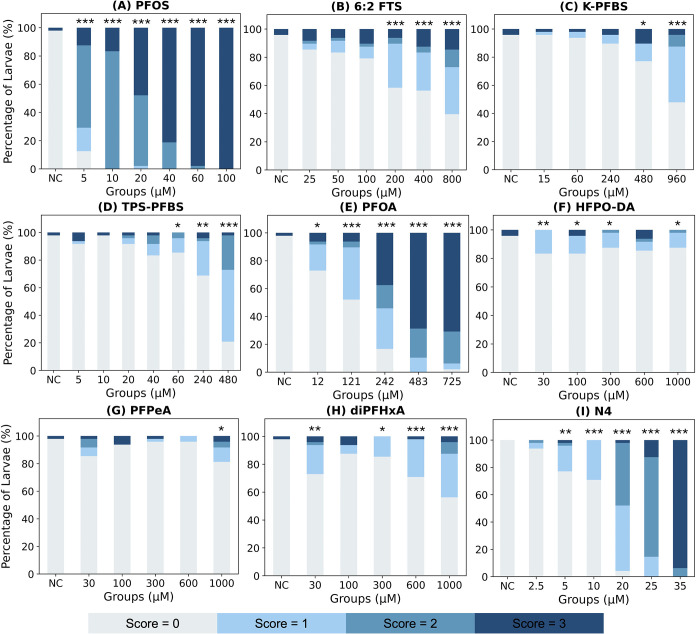 Figure 3
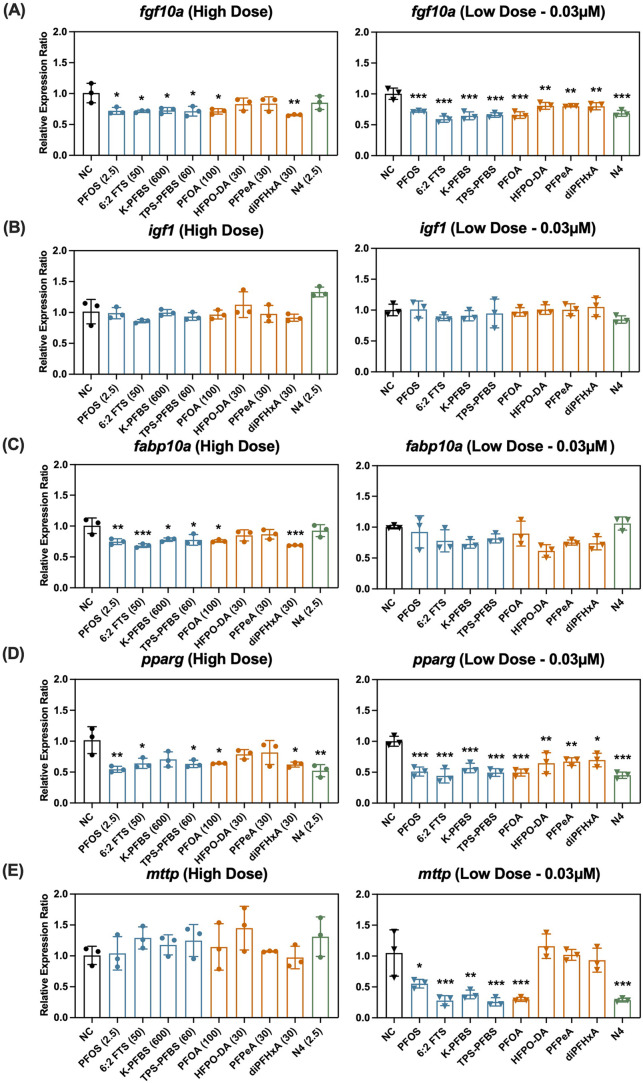 Figure 4
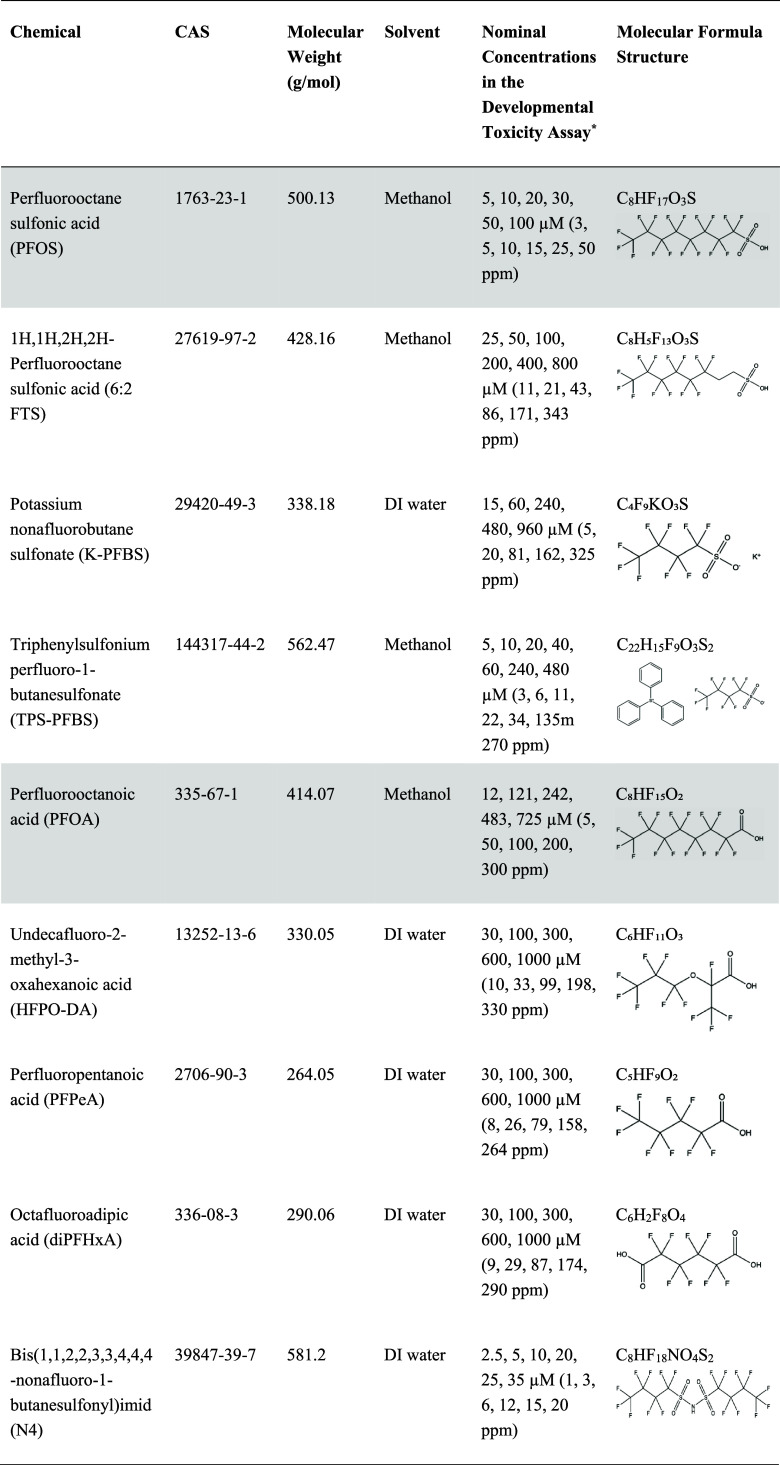 Figure 5
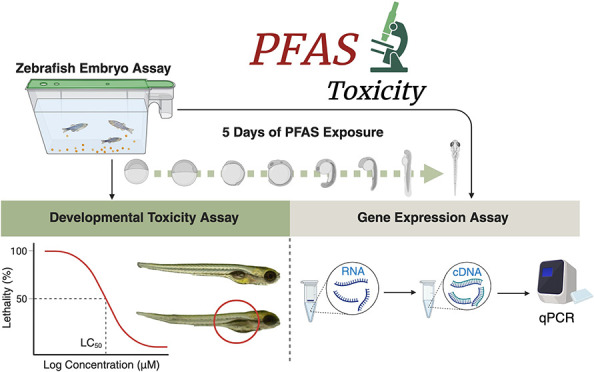 Figure 6
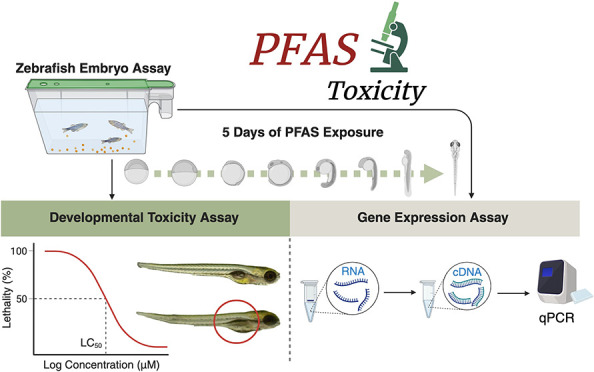 Figure 7
Peer Reviews
No public reviews on file for this paper yet. If you reviewed it on a platform where reviews are public (OpenReview, ICLR, NeurIPS, ICML), you can paste yours below so the community can read it here.
Videos
No videos yet. Explain this paper in a talk, walkthrough, or lecture? Add one.
Taxonomy
TopicsPer- and polyfluoroalkyl substances research · Fluorine in Organic Chemistry · Adhesion, Friction, and Surface Interactions