Elucidation of Sulforaphane‐Mediated Effects on the Cellular Human Metabolome Using Metabolic Profiling
Nadine Bieß, Hans‐Ulrich Humpf, Matthias Behrens, Andrea Gerdemann

TL;DR
This study explores how sulforaphane, a compound from broccoli, affects human cell metabolism, revealing its impact on key metabolic pathways and antioxidant activity.
Contribution
The paper provides a comprehensive metabolic profiling of sulforaphane's effects on primary metabolic pathways in human cells.
Findings
Sulforaphane affects the tricarboxylic acid cycle, urea cycle, and related amino acids.
It influences glycolysis, the pentose phosphate pathway, and increases glutathione levels.
The compound shows a broad impact on primary metabolic pathways, highlighting its bioactive potential.
Abstract
Sulforaphane (SFN) is an isothiocyanate derived from glucoraphanin, which occurs in broccoli. Several human health‐promoting effects are attributed to the consumption of cruciferous vegetables or food supplements containing SFN. Its described cancer‐preventive, chemoprotective, and antioxidant properties made SFN an increasingly important research topic. The antioxidant properties have previously been connected to stimulation of the Nuclear factor erythroid‐2‐related factor 2 (Nrf2)/Kelch‐like ECH‐associated protein 1 (Keap1) signaling pathway. However, the global effects of SFN on the primary metabolic pathways have yet to be fully unraveled. Therefore metabolic profiling was used to elucidate the effects of SFN on the cellular metabolome. For this purpose, human hepatoblastoma cells (HepG2) were incubated with SFN and the changes of primary metabolite levels were determined by…
Genes, proteins, chemicals, diseases, species, mutations and cell lines named across the full text — each resolved to its canonical identifier and authoritative record.
Click any figure to enlarge with its caption.
 Figure 1
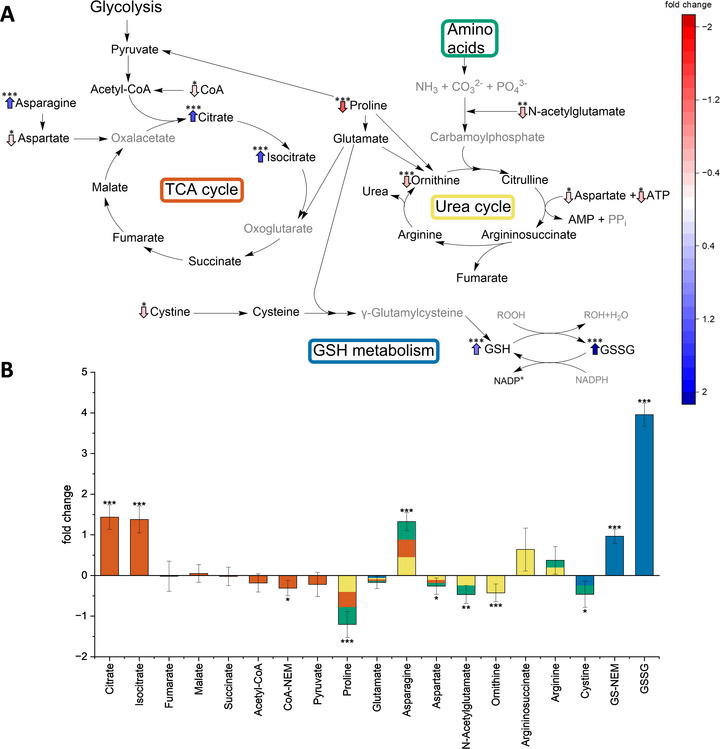 Figure 2
 Figure 3
 Figure 4
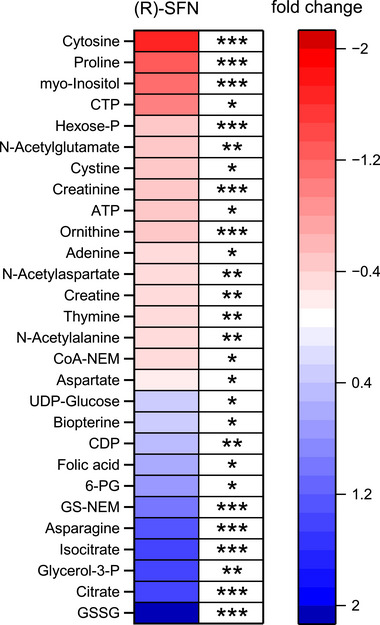 Figure 5
 Figure 6
 Figure 7
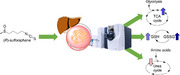 Figure 8
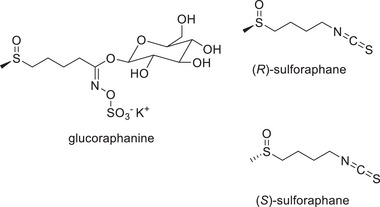 Figure 9
Peer Reviews
No public reviews on file for this paper yet. If you reviewed it on a platform where reviews are public (OpenReview, ICLR, NeurIPS, ICML), you can paste yours below so the community can read it here.
Videos
No videos yet. Explain this paper in a talk, walkthrough, or lecture? Add one.
Taxonomy
TopicsGenomics, phytochemicals, and oxidative stress · Phytochemicals and Antioxidant Activities · Curcumin's Biomedical Applications