Shared HLA‐E and Mamu‐E Peptide Repertoires With Subtle Peptide Binding Differences Revealed by Combined nDSF‐ and Fluorescence Polarisation‐Based Methods
Max N. Quastel, Sashini A. Ranawana, Bas W. A. Peeters, Andy van Hateren, Andrew J. McMichael, Geraldine M. Gillespie

TL;DR
This study compares how human and rhesus macaque MHC-E proteins bind peptides, revealing shared repertoires and subtle differences in binding strength using two new methods.
Contribution
The paper introduces and combines two novel high-throughput methods to analyze MHC-E peptide binding differences between human and rhesus macaque subtypes.
Findings
HLA-E*01:03 and Mamu-E*02:04 share peptide repertoires but show subtype-specific binding hierarchies.
nDSF and FP methods correlate thermal stability with binding strength, showing small Tm changes lead to large IC50 differences.
The combined methods provide scalable, detailed insights into MHC-E peptide binding for both human and rhesus macaque allotypes.
Abstract
The primary function of MHC‐E—human leukocyte antigen (HLA)‐E in humans and Mamu‐E in rhesus macaques—relates to immune surveillance via CD94/NKG2x receptors expressed on NK cells. However, a secondary role where MHC‐E presents immunogenic peptides to CD8+ T cells that provide protective immunity in specific settings has also been described. Given the high sequence homologies between HLA‐E and Mamu‐E molecules, peptide binding similarities are assumed but not systematically explored, with most studies prioritising HLA‐E. Here, we have optimised and developed two complementary techniques to explore the peptide repertoires of specific HLA‐E and Mamu‐E subtypes. We established a label‐free, high‐throughput nano‐differential scanning fluorimetry (nDSF)‐based method, where peptide binding strength is measured through thermal stability (Tm). This method revealed shared repertoires with…
Genes, proteins, chemicals, diseases, species, mutations and cell lines named across the full text — each resolved to its canonical identifier and authoritative record.
Click any figure to enlarge with its caption.
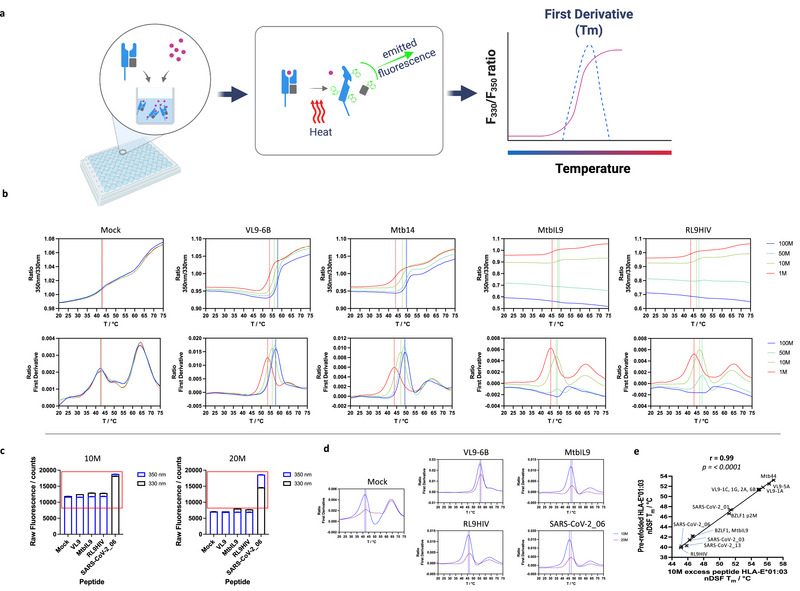 Figure 1
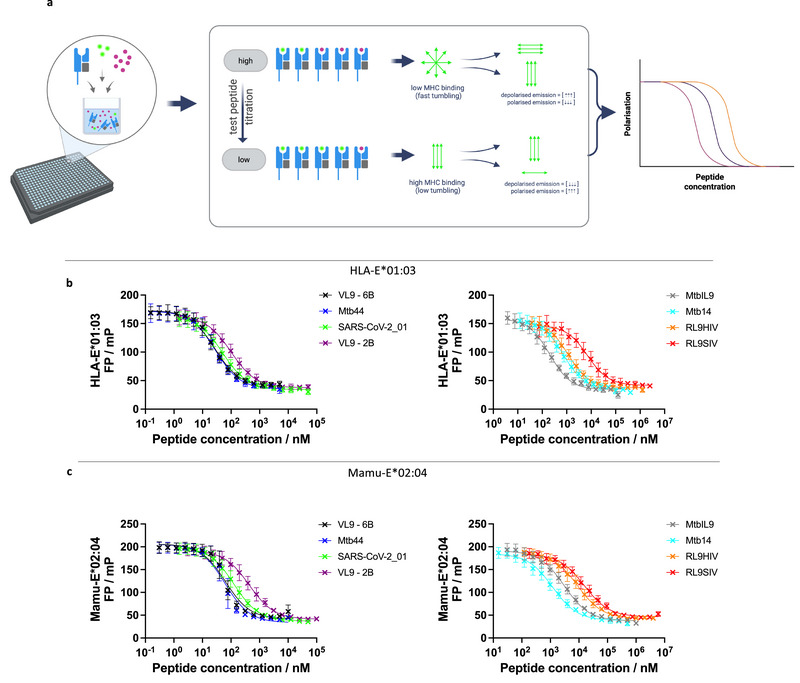 Figure 2
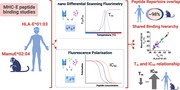 Figure 3
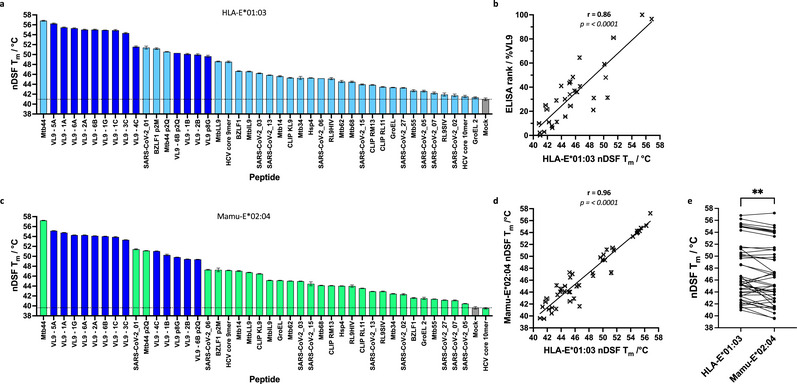 Figure 4
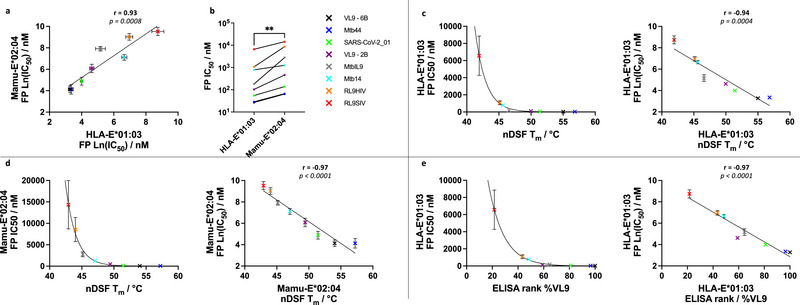 Figure 5
Peer Reviews
No public reviews on file for this paper yet. If you reviewed it on a platform where reviews are public (OpenReview, ICLR, NeurIPS, ICML), you can paste yours below so the community can read it here.
Videos
No videos yet. Explain this paper in a talk, walkthrough, or lecture? Add one.
Taxonomy
TopicsMonoclonal and Polyclonal Antibodies Research · Immunotherapy and Immune Responses · vaccines and immunoinformatics approaches