Ratiometric Mechano-Fluorescent Elastomers Dually Promoted via Effective Force-Triggered Radicals and Preeminent Toughnesses/Stretchabilities by Unconventional Shuttling Dimensions of Tetraphenylethylene-Suspended [c2] Daisy Chain Rotaxanes
Tu Thi Kim Cuc, Ting-Chi Wu, Pham Quoc Nhien, Trang Manh Khang, Shunmuga Nathan Shunmuga Nainar, Bui Thi Buu Hue, Wei-Tsung Chuang, Hsiu-Hui Chen, Michal Kohout, Hong-Cheu Lin

TL;DR
Scientists created a new type of stretchy material that changes color when stretched, using special molecular structures to make it tough and responsive.
Contribution
The paper introduces a novel method of enhancing polymer toughness and stretchability using daisy chain rotaxanes with unconventional shuttling dimensions.
Findings
PU films with daisy chain structures showed a record toughness of 1363 MJ/m³, 6.3 times tougher than standard PU films.
The material exhibited ratiometric fluorescent responses under stretching, enabling reversible dual fluorescent switching.
Thermal treatments enabled shape memory and reversible fluorescence behaviors in the material.
Abstract
Innovative radical-type mechano-fluorescent polyurethane (PU) elastomers were developed by integrating axle- and macrocycle-exerted force modes of tetraphenylethylene (TPE)-functionalized daisy chain rotaxanes with expanded/contracted conformations into polymer matrices, revealing distinct mechanical and optical performances under external tensile forces. Surprisingly, the designed PU films containing negligible amounts (0.02% molar ratio of all monomers) of daisy chain structures with unconventional shuttling dimensions (as artificial molecular muscle tougheners) exhibited ultrastretchable capabilities and preeminent toughnesses, possessing a record-high toughness of 1363 MJ/m3 at the strain rate of 20 mm/s, approximately 6.3 times tougher than the standard PU films, along with a significant loading weight ratio of 150,000. Additionally, appealing ratiometric fluorescent responses…
Genes, proteins, chemicals, diseases, species, mutations and cell lines named across the full text — each resolved to its canonical identifier and authoritative record.
Click any figure to enlarge with its caption.
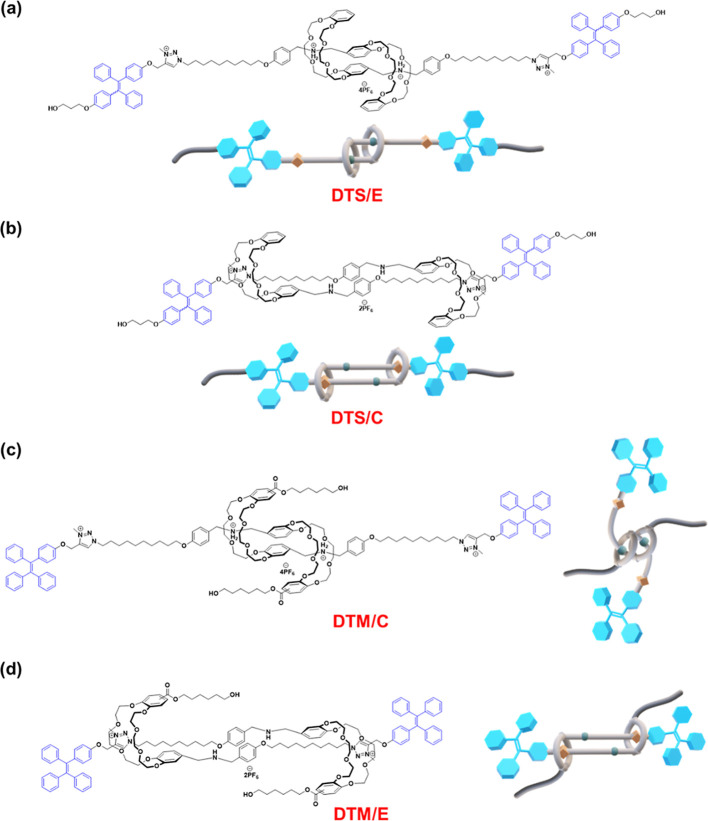 Figure 1
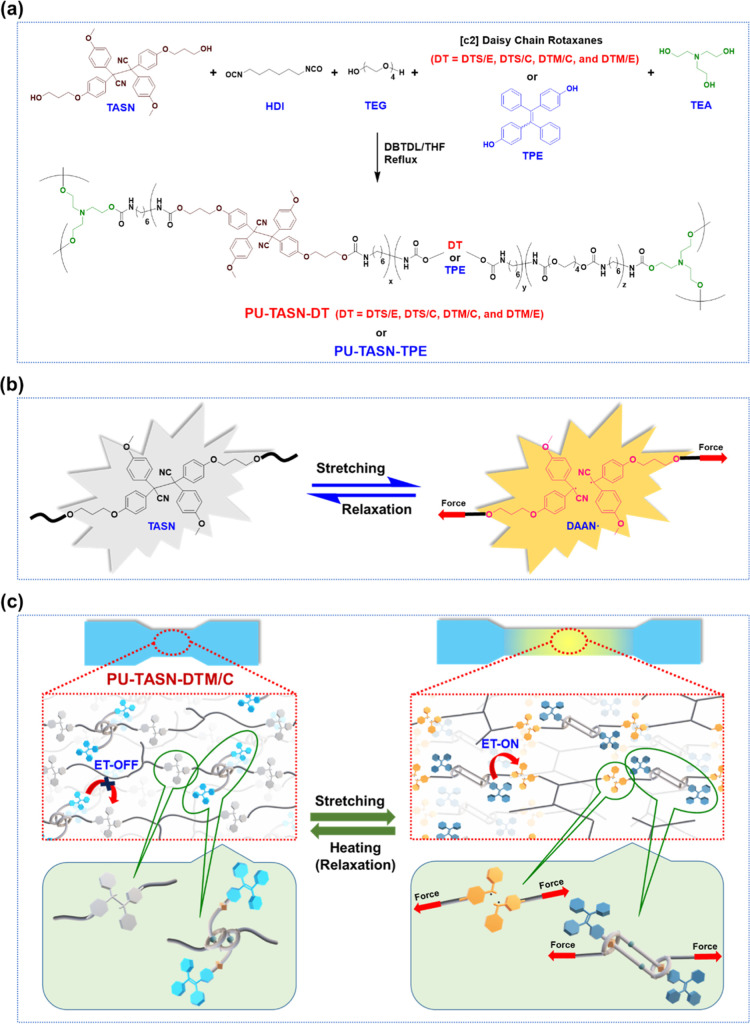 Figure 2
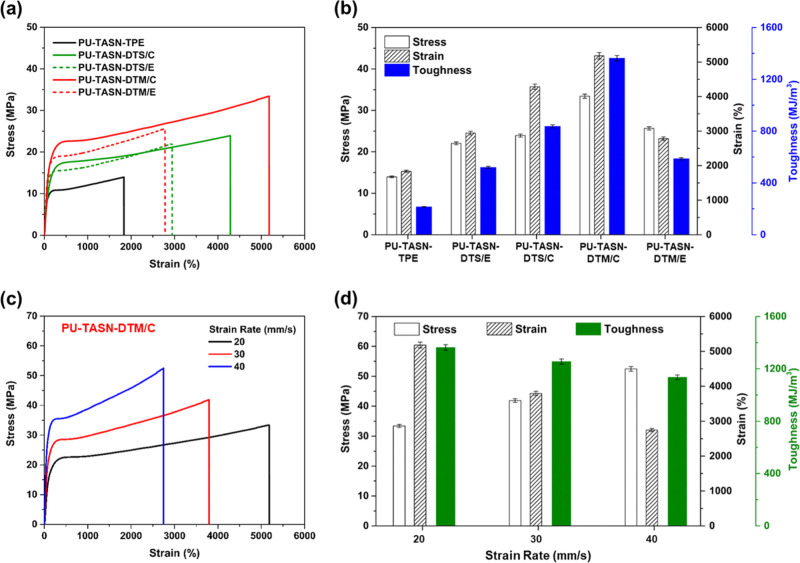 Figure 3
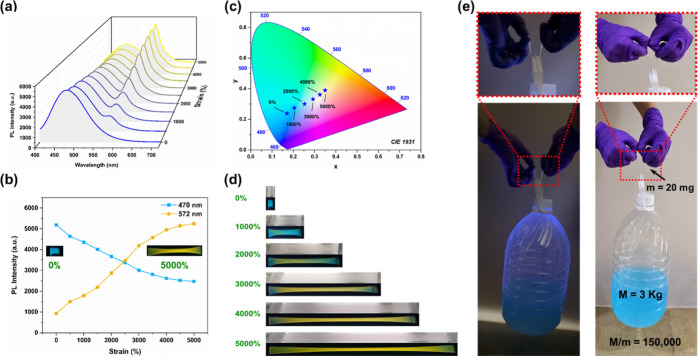 Figure 4
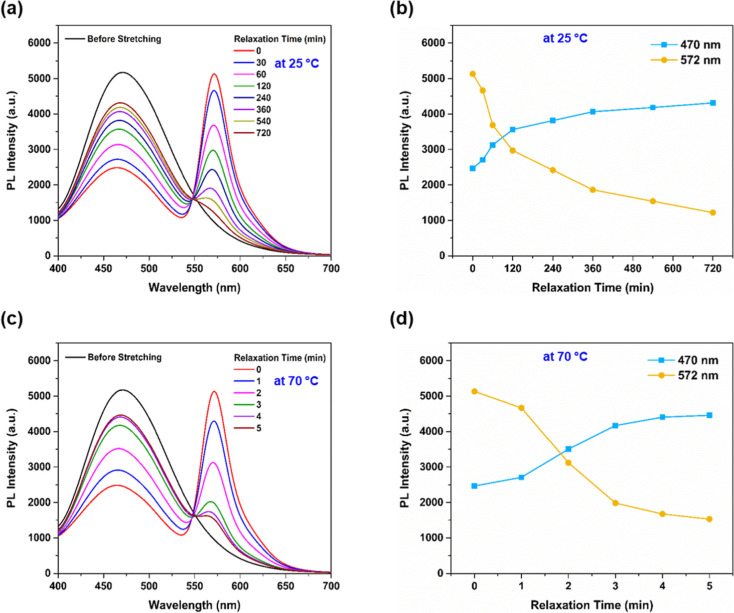 Figure 5
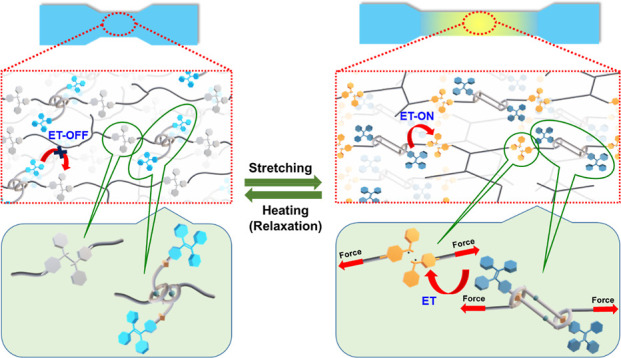 Figure 6
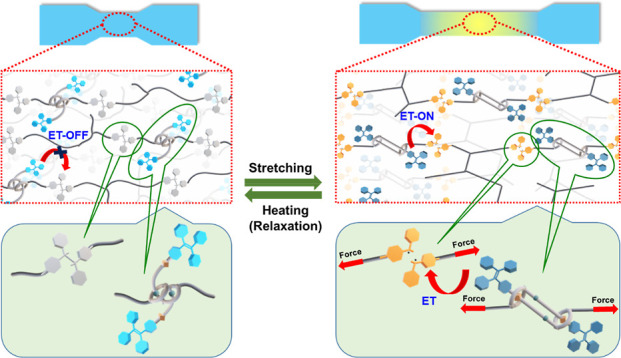 Figure 7
Peer Reviews
No public reviews on file for this paper yet. If you reviewed it on a platform where reviews are public (OpenReview, ICLR, NeurIPS, ICML), you can paste yours below so the community can read it here.
Videos
No videos yet. Explain this paper in a talk, walkthrough, or lecture? Add one.
Taxonomy
TopicsSupramolecular Chemistry and Complexes · Luminescence and Fluorescent Materials · Polymer composites and self-healing