Multiple myeloma risk linked to DNA damage response genes
Michael Conry, Irina Ostrovnaya, Yelena Kemel, Saloni Sinha, Linda B. Baughn, Brian Avery, Kylee Maclachlan, Victoria Groner, Lauren Banaszak, Aaron Norman, Nicholas J. Boddicker, Alyssa Clay-Gilmour, Shaji Kumar, Ellen Kim, Sita Dandiker, Mitul Waghmare, Susan Slager

TL;DR
This study finds that inherited DNA damage response gene mutations increase the risk of multiple myeloma, especially in those with early onset or family history.
Contribution
The study identifies new germline risk genes for multiple myeloma and suggests targeted screening for high-risk individuals.
Findings
Rare pathogenic mutations in TP53, ATM, CHEK2, KDM1A, and ARID1A are linked to increased multiple myeloma risk.
TP53 or ATM germline mutations are associated with worse overall survival in multiple myeloma patients.
These DDRG mutations are enriched in individuals with early-onset or familial multiple myeloma.
Abstract
DNA damage response genes (DDRG), implicated in several cancers as both predisposing risk factors as well as biomarkers for aggressiveness, have not been fully explored in multiple myeloma (MM). Herein, we analyzed disease associations of pathogenic variations in nine putative candidate genes using 3 446 MM cases and 323 233 cancer-free controls. Increased MM risk was found to be associated with inherited rare pathogenic mutations in TP53, ATM, CHEK2, KDM1A, and ARID1A, with an enrichment of these variants among individuals with early onset or family history of MM. Individuals with TP53 or ATM germline mutations are also likely to have worse overall survival. Our results suggest expansion of the phenotypic spectrum of some of these DDRG to include MM. The identification of these germline predisposition genes opens the avenue for targeted screening of higher risk individuals…
Genes, proteins, chemicals, diseases, species, mutations and cell lines named across the full text — each resolved to its canonical identifier and authoritative record.
Click any figure to enlarge with its caption.
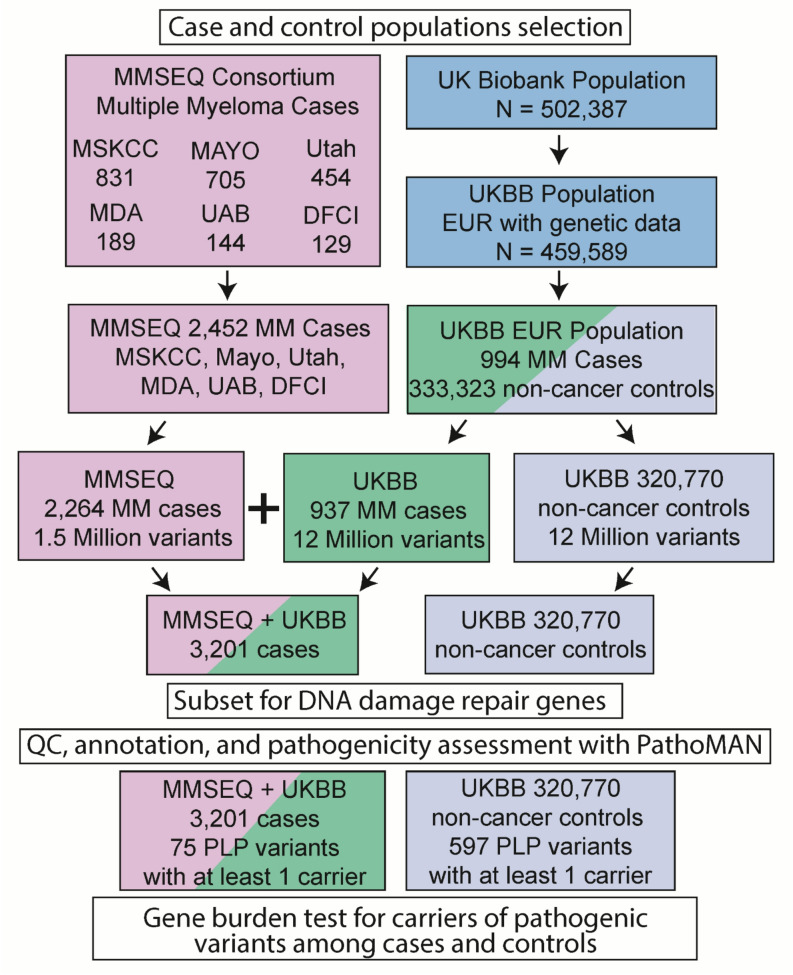 Figure 1
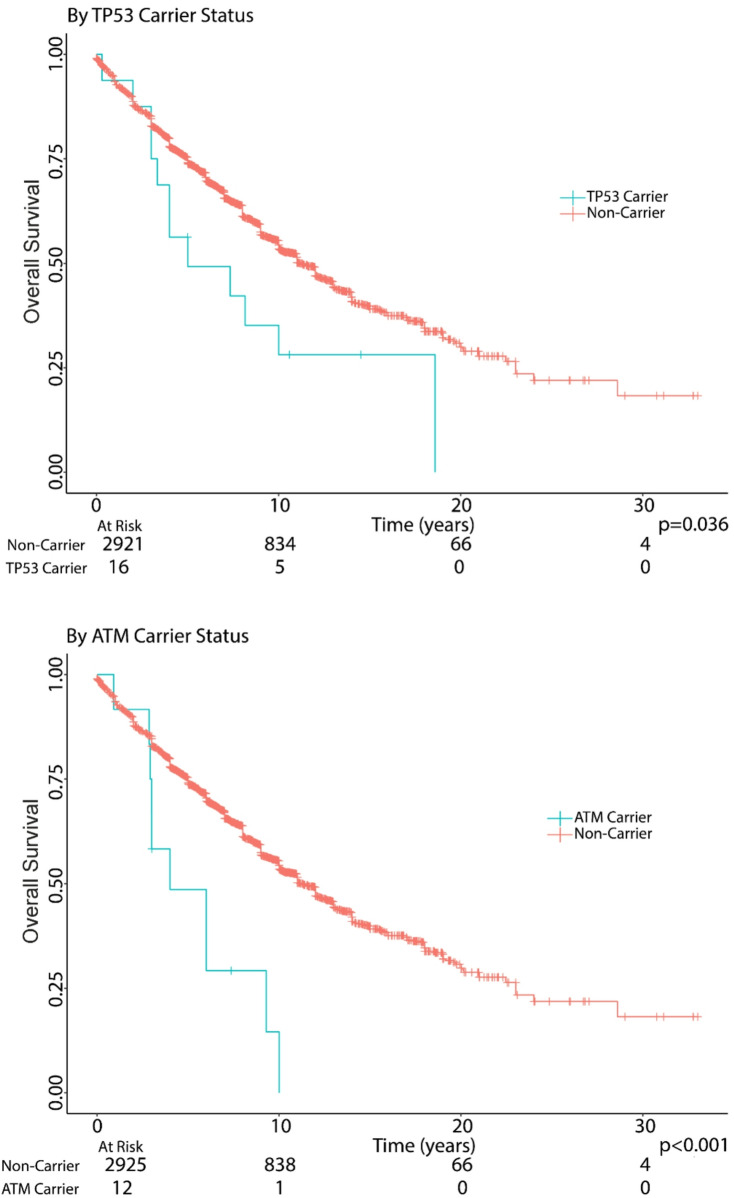 Figure 2
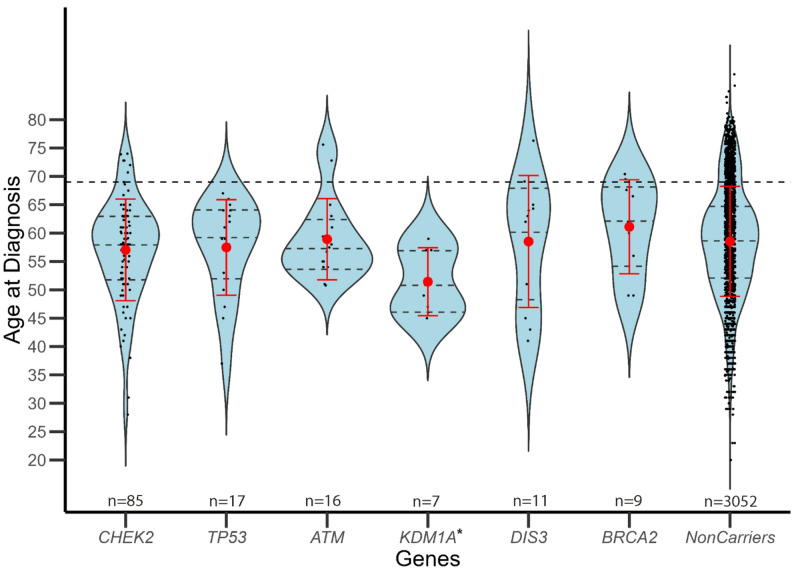 Figure 3
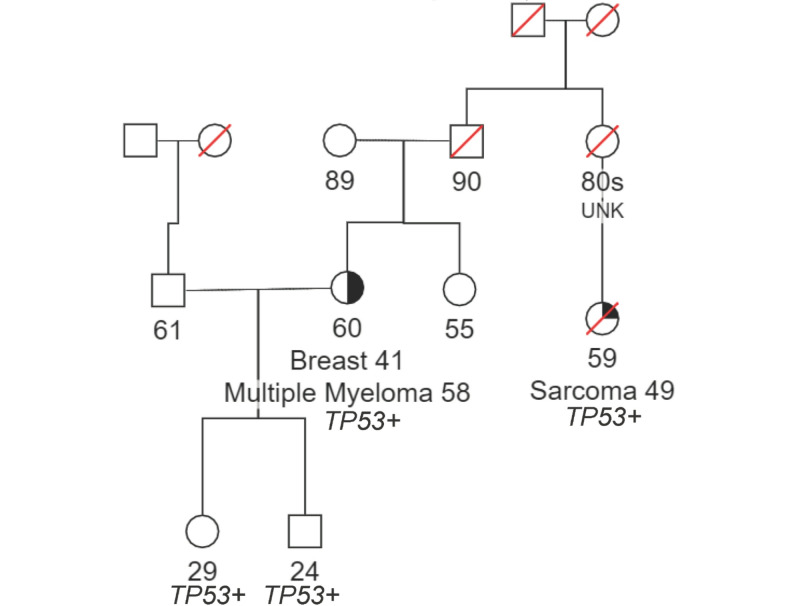 Figure 4
Peer Reviews
No public reviews on file for this paper yet. If you reviewed it on a platform where reviews are public (OpenReview, ICLR, NeurIPS, ICML), you can paste yours below so the community can read it here.
Videos
No videos yet. Explain this paper in a talk, walkthrough, or lecture? Add one.
Taxonomy
TopicsMultiple Myeloma Research and Treatments · Melanoma and MAPK Pathways · Cancer-related Molecular Pathways