From Nature to Nanotech: Customizing Essential Oil Delivery for a Reduced Fungicide in Agriculture
Michele Caroline Terra, Estefânia Vangelie Ramos Campos, Ana Cristina Preisler, Anderson do Espírito Santo Pereira, Jhones Luiz de Oliveira, Leonardo Fernandes Fraceto

TL;DR
This review explores how nanotechnology can improve the use of essential oils as a sustainable alternative to synthetic fungicides in agriculture.
Contribution
The paper provides a comprehensive synthesis of lipid-based nanoencapsulation methods for essential oils, emphasizing the role of NLCs in sustainable agriculture.
Findings
Lipid-based nanoparticles like NLCs enhance the stability and controlled release of essential oils.
Nanoencapsulation supports integrated pest management by enabling codelivery with biocontrol agents.
The review identifies challenges in large-scale production and ecological safety assessment.
Abstract
Modern agriculture is increasingly challenged by climate change, soil degradation, and the growing incidence of fungal diseases, which significantly reduce crop yields and quality. To mitigate these problems, the increased use of synthetic pesticides has become common; however, their overuse has led to environmental contamination, human health risks, and the emergence of resistant pathogens. Essential oils (EOs) have shown promise as a sustainable alternative due to their natural antifungal, antioxidant, and antimicrobial properties. Despite their potential, direct agricultural application of EOs is limited by volatility, poor water solubility, and instability under environmental conditions. Nanotechnology offers an innovative approach through the nanoencapsulation of EOs, enhancing their stability, bioavailability, and controlled release while minimizing volatilization losses. Among…
Genes, proteins, chemicals, diseases, species, mutations and cell lines named across the full text — each resolved to its canonical identifier and authoritative record.
Click any figure to enlarge with its caption.
 1
1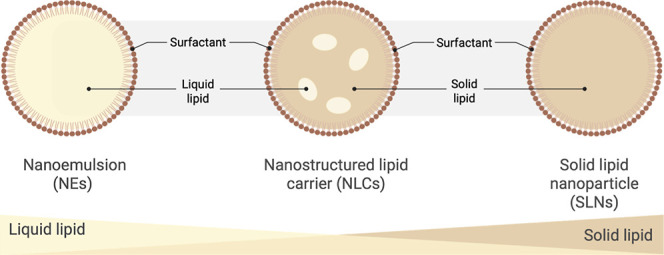 2
2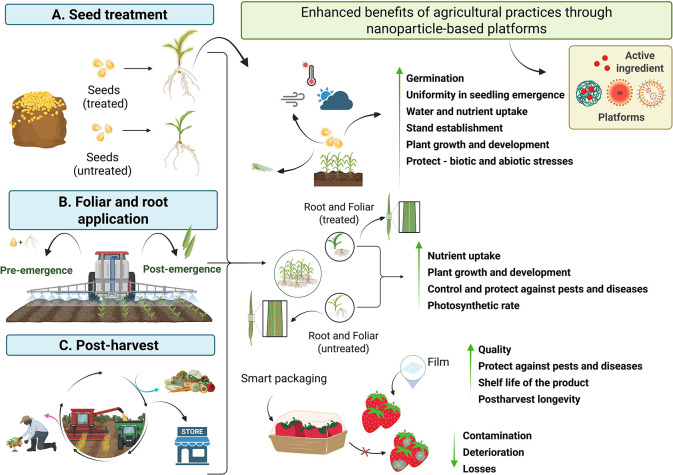 3
3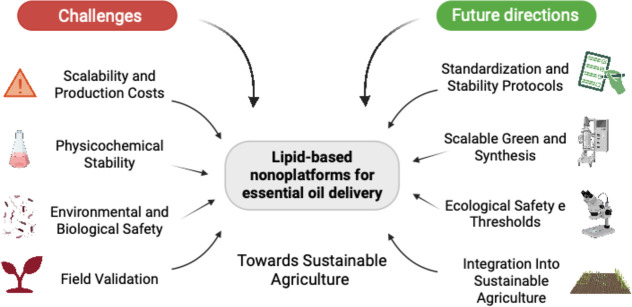 4
4| bioactive compound | essential oil | main antifungal mechanism of action | references |
|---|---|---|---|
| 1,8Cineole/eucalyptol | Eucalyptus oil, Rosemary oil, Cardamom oil | Affects cell membrane integrity and ion permeability in fungi. Can inhibit enzymes and essential metabolic pathways, impacting fungal proliferation |
|
| Alpha-pinene | Pine oil, Rosemary oil, Cypress oil | May interact with the fungal cell membrane, altering its structure and function. Has been associated with inhibition of hyphal growth and reduction of cell viability |
|
| β-Caryophyllene | Clove oil, Black Pepper oil, Rosemary oil, Lavender oil | Disrupts fungal cell membrane integrity, leading to increased permeability and leakage of cellular contents. Can also inhibit ergosterol biosynthesis and induce oxidative stress within fungal cells |
|
| Carvacrol | Oregano oil, Thyme oil | It causes the disintegration of the fungal cell membrane, leading to cell lysis and death. Affects ergosterol biosynthesis and inhibits hyphal and spore formation |
|
| Cinnamaldehyde | Cinnamon oil (bark) | Compromises fungal cell membrane integrity, inhibits ergosterol biosynthesis, affects the respiratory chain, and alters the activity of carbohydrate metabolism-related enzymes. Can inhibit mycelial growth and spore germination |
|
| Citral | Lemongrass oil, Litsea cubeba oil, Lemon verbena oil | Disrupts the fungal cell membrane structure and function, leading to increased permeability, leakage of intracellular components (e.g., K+ ions, proteins), and inhibition of metabolic enzymes. Can also inhibit spore germination and hyphal growth |
|
| Eugenol | Clove oil, Cinnamon oil (leaf), Basil oil | Increases fungal cell membrane permeability, causing leakage of intracellular constituents (ions, ATP, proteins), disrupting the electron transport chain, and inhibiting crucial metabolic enzymes. May also inhibit biofilm formation |
|
| Geraniol | Palmarosa oil, Geranium oil, Rose oil | Induces oxidative stress, damages the fungal cell membrane, affects ergosterol biosynthesis, and can cause DNA fragmentation, leading to programmed cell death |
|
| Limonene | Orange oil (Citrus sinensis), Lemon oil, Grapefruit oil | Disrupts the fungal cell membrane by interacting with lipid components, leading to increased permeability, loss of cellular contents, and inhibition of critical enzyme activities. Can also interfere with mitochondrial function and induce oxidative stress |
|
| Linalool | Lavender oil, Coriander oil, Basil oil | Increases fungal cell membrane permeability, resulting in the loss of ions and other intracellular components. Interferes with cell wall morphology and can inhibit biofilm formation |
|
| Menthol | Peppermint oil | Disrupts fungal cell membranes, interferes with energy metabolism, ion homeostasis, and can cause oxidative stress. Affects cellular morphology and inhibits mycelial growth |
|
| Pulegone | . Pennyroyal oil, Peppermint oil, Ziziphora clinopodioides oil | Disrupts fungal cell membranes, leading to loss of cellular integrity and leakage of intracellular components. Interferes with metabolic enzymes and can inhibit fungal growth and reproduction |
|
| Terpinen-4-ol | Tea Tree Oil | Causes loss of cell membrane integrity, leading to leakage of intracellular constituents. Inhibits spore germination and mycelial growth |
|
| Thymol | Thyme oil, Oregano oil | Disrupts the fungal cytoplasmic membrane, altering its fluidity and permeability, leading to the loss of ions (especially K+) and macromolecules. Inhibits ATPase activity and other energy-related cellular enzymes |
|
| carrier system | essential oil | composition | physicochemical parameters (size, PDI, ζ-potential) | fungal target | crops | dose | potency parameter | Efectiveness | Study type | technology Readiness Level (TRL) | ref |
|---|---|---|---|---|---|---|---|---|---|---|---|
| SLN | Zataria multiflora EO | Thymol, Carvacrol, | 255.5 nm, 0.369, –37.8 mV | Alternaria solani,
Rhizoctonia
solani, Rhizopus stolonifer, | Tomato (Solanum lycopersicum) | 100–1000 ppm | MIC = 200–50 ppm | High fungal inhibition, greater stability | in vitro | TRL 4 |
|
| NLC | Cinnamomum zeylanicum EO | Cinnamaldehyde | 94 nm PDI and ζ not reported | Penicillium
citrinum | Citrus reticulata | 0.3 and 0.6 mg/mL | MIC = 1.0 mg/mL (NLC) vs 0.425 mg/mL (free EO); MFC = 1.5 mg/mL (NLC) vs 0.675 mg/mL (free EO) | Infection reduced, lower weight loss and no adverse effect on flavor; maintained color and texture | in vitro, in vivo | TRL 5 |
|
| NE | Clove, Black seed, (Syzygium aromaticum, Nigella sativa) OE | Eugenol, Thymoquinon, p-cymene, Carvacrol | 82.6–131.9 nm, PDI and ζ not reported | Botrytis cinerea | Cucumber (Cucumis sativus) | 5000 ppm (1%) | * | Complete suppression of seed rot and mortality, gray mold reduction on fruits (postspray) comparable to fungicide with no phytotoxicity | In vitro; In vivo (foliar application under natural infestation) | TRL 4 |
|
| SLN | Oreganum vulgare and Thymus vulgaris EO | Thymol,
(γ-terpinene),γ-terpinene,
Endoborneol, | 180–188 nm 0.21–33 mV | Botrytis cinerea, Penicillium expansum | Not crop-specific | 1000 μL L (0.1%) | * | Reduced mycelial growth, spore germination and more stable release | in vitro; | TRL 4 |
|
| NE | Nigella sativa EO | - | 168–350 nm 0.181–0.350 –48.8 mV | Penicillium verrucosum | Maize (Zea mays L.) | 25–100% | * | Complete inhibition of P. verrucosum at 100%; improve seed germination | in vitro; in vivo | TRL 4 |
|
| NE | Cymbopogon citratus, EO | Neral, Geraniale, Estragole, Geraniol | 74.2 nm 0.19 –38.4 | Penicillium digitatum, P. expansum | Citrus sinensis | 4%–0.01% v/v | MIC = 0.03% (P. digitatum), 0.12% (P. expansum); MFC = 0.03–0.12% | Complete inhibition of A. niger and P. digitatum; strong reduction of fungal spread on coated fruits | in vitro, in vivo | TRL 5 |
|
| NE | Citrus limon EO | Neral, Geranial, Linalool | 103 nm | Penicilium digitatum, P. expansum | Citrus sinensis | 4%–0.01% v/v | MIC = 0.03% (P. digitatum), 0.12% (P. expansum); MFC = 0.03–0.12% | Significant reduction of decay and weight loss; no sensory alteration | in vitro, in vivo | TRL 5 |
|
| NLC | Lippia origanoides EO | Glyceryl distearate, Oleic acid, Thymol | 156–190 nm, 0.2, 30| mV | Malassezia furfur, Aspergillus flavus, Fusarium keratoplasticum, Trichophyton rubrum | Not crop-specific | 1–2% | MIC range = 24–1500 μg mL–1; thymol equivalent 3.9–142.6 μg mL–1 | Strong antifungal activity | in vitro | TRL 4 |
|
| Microemulsion (BLEO-ME) | Betel ( | Chavibetol, Estragole, β-Cubebene, Chavicol, Caryophyllene | 23.96 nm (oil:surfactant = 1:3 v/v, 5% oil); 0.482 | Aspergillus flavus (MTCC 6750) | Tomato (Solanum lycopersicum) | 0.2–3.0 ppm (corrected to mg/g per corrigendum) |
| Complete inhibition of A. flavus at ≥2.0 mg/g; extended lag time and reduced growth rate; higher activity | in vitro; in situ | TRL 4 |
|
| NE | Satureja hortensis L. EO | Carvacrol, Thymol | 41.72 nm, 0.291, –39.4 mV | Aspergillus parasiticus and Penicillium verrucosum | Not crop-specific | 1% | MFC = 0.71 ± 0.05 mg L–1 (MF-ASHEO) vs 1.21 ± 0.15 mg L–1 (ASHEO) | Inhibited the growth of the fungal target | In vitro | TRL 4 |
|
| NE | Syzygium aromaticum EO | Eugenol, Phenylpropanoid | 80 – 110 nm | Fusarium oxysporum | Cotton ( | 1%, 2%, and 5% (v/v) | * | Higher inhibition of | in vitro | TRL 5 |
|
| NE | Lemongrass (Cymbopogon schoenanthus) EO | Citral, α-citral,
β-citral, | 19.2 nm, 0.63, –34 mV | Aspergillus flavus | Not crop-specific | 0.03–0.1% (v/v) | MFC ≈ 1 mg/mL (vs pure EO = 2 mg/mL); MGI up to 100% | Higher antifungal activity, inhibiting mycelial growth and reducing colony pigmentation | in vitro | TRL 4 |
|
| NE | Thymus vulgaris | Thymol | 61.45, 0.53, ζ not reported) | Botytis cinérea | Strawberry
( | 0.5% (v/v) | MIC = 0.021%; MFC = 0.021% | Reduced decay, preserved firmness, increased vitamin C content, antioxidant activity | in vitro, in vivo | TRL 5 |
|
| NE | Menta longifolia | 4-methyl-2-(3-methyl-2-butenyl)-furan, Piperitenone oxide | 60.51 0.51 ζ not reported) | Botytis cinerea | Strawberry ( | 0.5% (v/v) | MIC = 0.021%; MFC = 0.021% | Reduced deterioration; lower microbial load; firmness | in vitro, in vivo | TRL 5} |
- —Fundação de Amparo à Pesquisa do Estado de São Paulo10.13039/501100001807
- —Fundação de Amparo à Pesquisa do Estado de São Paulo10.13039/501100001807
- —Coordenação de Aperfeiçoamento de Pessoal de Nível Superior10.13039/501100002322
- —Coordenação de Aperfeiçoamento de Pessoal de Nível Superior10.13039/501100002322
- —Conselho Nacional de Desenvolvimento Científico e Tecnológico10.13039/501100003593
- —Conselho Nacional de Desenvolvimento Científico e Tecnológico10.13039/501100003593
Peer Reviews
No public reviews on file for this paper yet. If you reviewed it on a platform where reviews are public (OpenReview, ICLR, NeurIPS, ICML), you can paste yours below so the community can read it here.
Videos
No videos yet. Explain this paper in a talk, walkthrough, or lecture? Add one.
Taxonomy
TopicsAdvancements in Transdermal Drug Delivery · Polymer-Based Agricultural Enhancements · Insect Pest Control Strategies
Introduction
1
Modern agriculture faces multiple challenges that threaten global food security and sustainability. Climate change, soil degradation, and water scarcity are key factors that compromise agricultural productivity. ?,? Rising temperatures and changes in precipitation patterns affect crop growth and influence the spread and severity of plant diseases. Among these, fungal diseases pose a significant threat, substantially reducing yield and quality. ?,? Phytopathogenic fungi cause severe agricultural losses, affecting food production and increasing economic risks for farmers. According to the FAO (2019), pests and diseases cause 20% to 40% losses in global agricultural production, resulting in estimated economic damages of USD 290 billion annually.?
To mitigate these losses, there has been a significant increase in the global use of synthetic pesticides, reaching approximately 3.69 million tons in 2022. However, excessive reliance on these chemicals has contributed to pathogen resistance, environmental contamination, and concerns for human health.? In Brazil, soybean production, a cornerstone of the national economy, reached 166.1 million tons in the 2024/25 harvest.? Like other crops, soybeans face persistent disease challenges that require effective control strategies. While synthetic fungicides offer rapid action and broad-spectrum effects, their overuse accelerates pathogen adaptation, reducing long-term efficacy and necessitating higher doses or frequent product replacements.?
Additionally, pesticide residues accumulate in soils and aquatic environments, impacting nontarget species and increasing environmental risks. According to Leoci,? synthetic pesticide use in agriculture amounts to approximately 4.1 million tons per year, with more than 2000 active ingredients categorized into 60 chemical classes worldwide.? Their widespread application has been linked to several adverse health effects, these include harms such as neurotoxic and endocrine effects, organ damage (liver and kidney), increased susceptibility to cancer, and reproductive disorders.?
Given these concerns, sustainable alternatives are being explored, and essential oils (EOs) have gained prominence as potential natural antifungal agents. Extracted from aromatic plants, these compounds exhibit antimicrobial, antifungal, and insect-repellent properties, making them a promising option for disease management in agriculture.? Monoterpenes, such as citral, geraniol, eugenol, and thymol, have demonstrated vigorous antifungal activity and a favorable biodegradability profile, thereby reducing environmental impacts. However, their direct agricultural application is limited due to high volatility, limited stability, and susceptibility to environmental conditions such as light and temperature.
The application of essential oils in technical agricultural settings poses significant challenges regarding consistency and efficacy. Their properties can vary widely depending on agronomic factors and processing methods, undermining the standardization required for more demanding uses. Furthermore, the current production and supply infrastructure remains limited and poorly equipped to support large-scale demand, particularly in terms of sustainability criteria. In terms of performance, although essential oils have bioactive potential, many used in isolation still fall short of the effectiveness seen in conventional chemical inputs, particularly in biological control applications. ?,?
To address these limitations, nanotechnology has emerged as a novel approach to improve the stability and sustained release of EOs through nanoencapsulation.? Among the various technological platforms available, lipid-based nanoparticles such as solid lipid nanoparticles (SLNs) and NLCs, stand out as effective delivery systems for bioactive compounds. These nanosystems combine solid and liquid lipids, forming a flexible matrix that protects active ingredients from degradation, enhances their absorption by plants, and prolongs their biological activity.?
Additionally, the application of biodegradable substances, such as vegetable butters (coca, shea, and palm), natural waxes (beeswax), and vegetable oils (coconut), not only offers environmental benefits but also aligns with circular economy principles. Prioritizing byproducts of plant and animal origin for nanoparticle formulation reduces waste and promotes the efficient use of natural resources. Natural lipids provide advantages over synthetic and semisynthetic lipids, such as greater biocompatibility and lower in vivo toxicity, making them safer and more sustainable for agricultural applications.? These systems also facilitate the controlled release of nutrients and agrochemicals, reducing chemical input use and minimizing environmental impacts.?
Thus, combining nanotechnology, lipid-based formulations, and essential oils represents an innovative approach to fungal control in agriculture. The development of versatile nanoplatforms can reduce reliance on synthetic pesticides and support more sustainable, efficient agricultural practices. This review aims to address the significant advances in the nanoencapsulation of essential oils, with a particular focus on lipid-based formulations, especially NLCs, for controlling agriculturally essential fungi.
Method for Literature Review
2
The literature search was conducted between January and September 2025 using the electronic databases Web of Science, Scopus, PubMed, ScienceDirect, and Google Scholar. The search aimed to identify peer-reviewed studies reporting the use of lipid-based nanocarriersincluding solid lipid nanoparticles (SLNs), nanostructured lipid carriers (NLCs), and nanoemulsionsfor the encapsulation of essential oils or their derivatives to control phytopathogenic fungi of agricultural relevance. The main keywords and boolean combinations used were: (“essential oil” OR “volatile compound” OR “terpene”) AND (“solid lipid nanoparticle” OR “nanostructured lipid carrier” OR “nanoemulsion” OR “lipid nanocarrier”) AND (“fungal control” OR “antifungal” OR “plant disease” OR “agriculture”). Studies were included if they (i) evaluated antifungal activity either in vitro, in vivo, or in planta; (ii) used a lipid-based nanosystem as the carrier matrix; and (iii) provided physicochemical characterization data (particle size, polydispersity index, zeta potential). Reviews, studies using nonlipidic carriers (e.g., polymeric nanoparticles, chitosan, silica), or those unrelated to agricultural pathogens were excluded.
Essential Oils as Antifungal Agents
3
Essential oils (EOs) exhibit various biological activities and serve as sustainable alternatives for controlling fungi in agriculture, offering significant advantages over synthetic fungicides, including biodegradability, lower environmental toxicity, and the absence of widespread fungal resistance. These plant-derived bioactive compounds, obtained from leaves, flowers, bark, and roots, are well-known for their fragrance and therapeutic potential. In agriculture, they have gained prominence as alternatives to conventional pesticides. Their antimicrobial, antifungal, antioxidant, and insect-repellent properties make them highly relevant for managing agricultural pests and diseases.? EOs are not composed of a single compound but instead contain a wide variety of substances, with dozens or even hundreds of different compounds at varying concentrations. These include alcohols, terpenoids, esters, acids, epoxides, ketones, aldehydes, sulfides, and amines. ?,?
The biological activities of secondary metabolites found in crude extracts, essential oils, or isolated active ingredients from various plant species can provide an effective method for alternative pest and disease control in food production. These alternatives result in higher quality, more functional foods while ensuring safer consumption by reducing health risks associated with fungicide residues and other synthetic substances.?
The antifungal activity of EOs is directly correlated to their chemical composition. Substances such as citral, eugenol, and isoeugenol exhibit antifungal activity in both liquid and vapor states, preventing mycelial germination and spore development of spores.? For instance, eugenol can irreparably damage cell membranes, leading to cellular collapse. The phenolic components of EOs make the phospholipid bilayer of cell membranes more vulnerable, increasing permeability, causing the leakage of essential intracellular elements, and impairing microbial enzymatic systems. ?,?
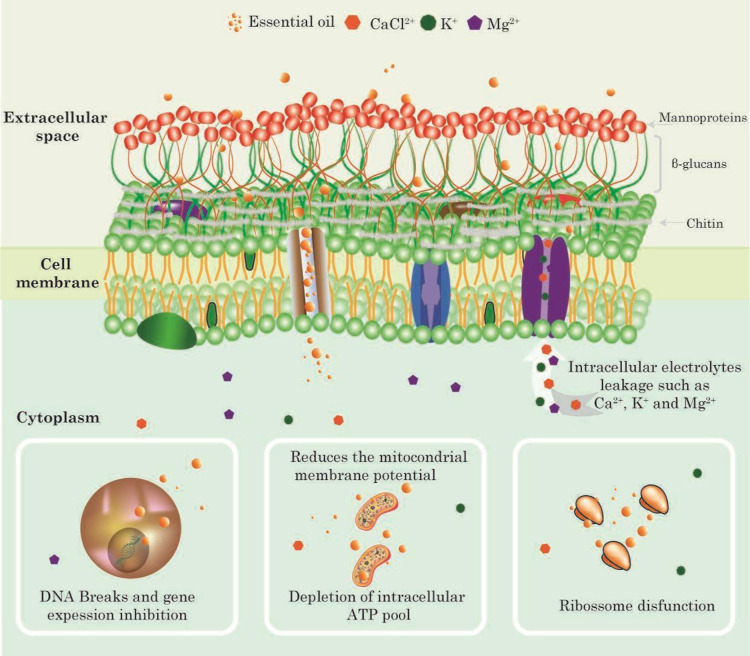
Various bioactive compounds in EOs exhibit potent antifungal activity through mechanisms such as membrane destabilization and rupture, enzymatic inhibition, generation of reactive oxygen species (ROS), and interference with fungal morphogenesis and reproduction. These different mechanisms are illustrated in Figure. Among the most studied compounds are thymol, eugenol, citral, carvacrol and cinnamaldehyde, each possessing specific characteristics that contribute to their antifungal action. In addition to these well-known molecules, other bioactive constituents, including linalool, geraniol, menthol, terpinen-4-ol, and anethole, have shown broad-spectrum antifungal effects, acting synergistically with major phenol compounds.
Mechanism of action of essential oils as fungicides. Once the cell absorbs, essential oils can cause DNA alterations or inhibit gene expression, induce mitochondrial changes, and disrupt ribosome function, ultimately leading to cell death.
The major components, their sources of EOs, and their mechanism of action are summarized in Table.
1: Main Bioactive Components of Essential Oils with Antifungal Activity, the Oils in Which They are Found, Their Reported Mechanisms of Antifungal Action, and Corresponding References
Table highlights not only the diversity of active constituents but also the complexity of their mechanism, which often involves multifactorial interactions rather than single-target effects. Phenolic compounds, such as eugenol, thymol, and carvacrol, predominantly disrupt fungal cell membranes and ion homeostasis, while aldehydes like citral and cinnamaldehyde interfere with ergosterol biosynthesis and mitochondrial respiration. Monoterpenes, such as linalool and geraniol, tend to impair cell wall synthesis and enzyme activity, and compounds like menthol and terpinen-4-ol increase membrane fluidity and oxidative stress. This diversity of biochemical targets is advantageous for agricultural use, as it minimizes the risk of fungal resistance and supports synergistic formulations combining different EO constituents.
Thymol, a phenolic compound classified as a monoterpene, present in thyme essential oil (Thymus vulgaris) and oregano (Origanum vulgare), interacts with fungal cell membranes, damaging the cellular structure, causing loss of ions, and leading to growth inhibition and cell death. A study by Martins et al. (2020)? investigated the antifungal properties of oregano and thyme EOs against Fusarium species. The results indicated a high antifungal potential, with minimum inhibitory concentrations ranging from 0.078 to 0.313 μL/mL. Additionally, the combination of these oils exhibited synergistic interactions, enhancing environmental efficacy against pathogenic fungi.
Eugenol, a key component of clove EO, is widely studied for its fungicidal effects, including membrane permeabilization, inhibition of essential fungal metabolic enzymes, and disruption of mitochondrial respiration. A study by Milićević et al. (2022)? examined the encapsulation of clove EO in various formulations and carriers, demonstrating high antifungal efficacy against Botrytis cinerea.
Citral, a monoterpenic aldehyde found in lemongrass (Cymbopogon citratus), is highly volatile and exhibits significant antifungal activity. Its primary mode of action involves interference with ergosterol synthesis, an essential component of fungal plasma membranes, leading to cellular disintegration and reduced pathogen viability. A study by Zhang et al. demonstrated citral’s potent antifungal effects against Fusarium avenaceum, where lemongrass EO at 0.3 μL/mL inhibited fungal growth through disruption of the plasma membrane and reducing pathogenicity by suppressing pectin methyl galacturonase activity.?
Carvacrol, a thymol isomer found in oregano and thyme EOs, disrupts the fungal lipid bilayer and impairs ion transport essential for cellular homeostasis. Its antioxidant activity also contributes to oxidative stress in pathogens, enhancing its antifungal action. Studies also suggest that carvacrol downregulates genes involved in ergosterol biosynthesis. ?,?
Cinnamaldehyde, found in cinnamon EO (Cinnamomum zeylanicum), exhibits vigorous antifungal activity by inhibiting mitochondrial respiration and inducing oxidative stress in fungal cells. Wang et al. observed that cinnamaldehyde had a significant inhibitory effect on both mycelial growth and spore germination of Fusarium solani. Electron microscopy and propidium iodide staining revealed that cinnamaldehyde disrupted mycelial morphology, damaged plasma membranes, and interfered with ergosterol biosynthesis. Additionally, it increased ROS generation, leading to oxidative damage and compromising the integrity of pathogen cells. When applied in greenhouse conditions, cinnamaldehyde suppressed root rot in Astragalus membranaceus with 92% efficacy, highlighting its potential.?
Among EO constituents, the hydroxyl group (phenols) interacts with cell membranes, leading to the release of cellular components, modifying fatty acids and phospholipids, and interfering with energy metabolism, and influencing genetic material synthesis. The phenolic compounds such as eugenol, thymol, and carvacrol penetrate membranes, causing swelling, inhibiting respiratory enzymes, and dissipating the proton gradient and membrane potential.?
Overall, the antifungal mechanism summarized in Table demonstrates that EO components act through complementary biochemical pathways, providing a rational basis for developing synergistic combinations or nanoencapsulated formulations that enhance stability and bioefficacy in agricultural environments. Despite their promising applications in agriculture, EOs have limitations due to their physical-chemical characteristics, including hydrophobicity, volatility, degradation, and sensitivity to light, heat, and oxygen.? Carrier systems, including nanocapsules, nanoemulsions, and nanoparticles, have emerged as efficient strategies to optimize EO delivery, enhance stability, and minimize environmental impacts.? Nanoencapsulation has been studied to protect EOs from premature degradation, thereby prolonging their biological activity through sustained and/or controlled release. Additionally, understanding the mechanism of action of key EOs components and the development of innovative delivery systems can significantly contribute to safer and more sustainable agricultural practices, reducing environmental impact and health risks associated with synthetic chemicals?
Nanotechnology for Enhancing Essential Oil Stability
and Efficacy
4
EOs play essential roles in plant–arthropod interactions, including attracting pollinators and mediating the trophic activity of insect pests and their natural enemies. Additionally, they exhibit antimicrobial and insecticidal properties. ?−? ? Given these attributes, EOs have gained attention as environmentally friendly alternatives to conventional pest management strategies, reducing their ecological footprint. ?−? ?
Despite their advantages, the practical application of EOs is hindered by intrinsic physicochemical limitations.? EOs may exhibit phytotoxicity at high concentrations, and their efficacy in field applications is compromised by rapid degradation. Furthermore, their poor water solubility complicates the preparation of homogeneous aqueous solutions, further limiting their stability.? However, nanotechnology can effectively address these challenges, which have emerged as a promising tool for developing bioactive formulations that enhance EO stability, sustained release, and efficacy. ?,?
Among the different types of lipid-based formulations, nanoemulsions (NEs), nanostructured lipid carriers (NLCs), and solid lipid nanoparticles (SLNs) represent the main systems used for nanoencapsulation. As illustrated in Figure, these systems primarily differ in their internal structure and the ratio of liquid to solid lipids. Nanoemulsions are composed exclusively of liquid lipids, whereas SLNs are formed from solid lipids, resulting in a more crystalline matrix. In contrast, NLCs combine both solid and liquid lipids, forming a less-ordered core structure that allows higher loading of bioactive compounds and minimizes premature expulsion, while maintaining good colloidal stability and performance.
Schematic illustration of lipid-based nanocarriers: nanoemulsions (NEs), nanostructured lipid carriers (NLCs), and solid lipid nanoparticles (SLNs). The diagram highlights the fundamental structural differences in their lipid cores: NEs have a liquid lipid core, NLCs have a solid lipid matrix interspersed with liquid lipid pockets, and SLNs have an entirely solid lipid core. All three systems are stabilized by an outer layer of surfactant molecules. The gradient bar at the bottom conceptually illustrates the transition from a purely liquid lipid core (NEs) to a purely solid lipid core (SLNs), with NLCs representing an intermediate and more structured system. Created in Biorender.
The potential of lipid nanoformulations for EO encapsulation has earned considerable interest, particularly in the agri-food sector, due to their ability to stabilize volatile compounds, modulate release kinetics, and reduce the toxic effects on plants.? Numerous studies have highlighted the effectiveness of EO-loaded lipid formulations in pharmaceuticals, cosmetics, and the food sector. ?−? ? Their application in crop preservation is especially promising (Table), as it could help reduce pesticide use and environmental contamination. However, additional research is needed to optimize lipid formulations for large-scale agricultural applications. ?−? ? Specifically, the transition from laboratory-scale proof-of-concept studies to commercially viable and environmentally robust formulations for widespread agricultural adoption presents significant hurdles, including scalability, cost-effectiveness, long-term shelf life, and sustained efficacy under variable field conditions.
2: Overview of Studies on Essential Oil-Loaded Lipid-Based Nanocarriers to Control Fungi in Agriculture ,
For example, Tortorici et al. developed a bioinsecticide formulation using NLCs loaded with EOs from rosemary, lavender, and peppermint. NLCs were prepared using Softisan 100 as the solid lipid, combined with a surfactant mixture of Kolliphor RH40 and Labrafil, both chosen for their environmentally friendly properties. The study evaluated the efficacy of the formulations against pests with different feeding strategies: Aphis gossypii (a sap-sucking aphid), Spodoptera littoralis (a leaf-chewing caterpillar), and Tuta absoluta (a leaf-mining moth). All formulations have a nanoparticle size of approximately 200 nm, a polydispersity index of less than 0.3, and exhibit colloidal stability for over 30 days. Bioassay results demonstrated that all EO-loaded formulations caused high mortality in A. gossypii and significantly reduced its reproductive capacity upon topical application. For S. littoralis, lavender- and rosemary-loaded NCLs reduced feeding without affecting survival. In contrast, none of the EO-loaded NCLs affected the survival or feeding behavior of T. absoluta. ?,? While demonstrating promising in vitro efficacy against specific pests and stable colloidal properties, inconsistent activity across different feeding strategies highlights a challenge for broad-spectrum application. Furthermore, the 30 day stability, while acceptable for some applications, may be insufficient for the extended shelf life often required in agricultural supply chains. The environmental friendliness of surfactants, while noted, also warrants further economic and scalable evaluation for large-scale production, especially considering the variability in raw material costs and availability.
Similarly, Hosseinpour Jajarm et al. developed SLNs using glyceryl palmitostearate (5% w/v) as the lipid phase, loaded with Ziziphora clinopodioides EO using combined homogenization and ultrasound techniques. The optimized formulation (2.5% EO) had a particle size of 241 nm, a zeta potential of −22.6 mV, and an encapsulation efficiency of 93%. Fumigant toxicity tests against Tribolium castaneum showed that EO-loaded SLN (LC_50_ 30.6 μL/L air) was more effective than pure oil (LC_50_ 68.3 μL/L air) and remained active for 14 days, while the pure oil lost toxicity after 8 days. Chemical analysis identified pulegone (51.78%) as the primary component.? This study effectively demonstrates the potential for enhanced, prolonged pest control through nanoencapsulation, extending activity from 8 to 14 days. However, the application against a stored-product pest (T. castaneum) in fumigant tests limits direct extrapolation to open-field agricultural scenarios, where factors such as rapid volatilization, UV degradation, and rainfastness are more critical. Additionally, the combined homogenization and ultrasound technique, while effective for laboratory scale, presents notable challenges regarding energy consumption and batch consistency for industrial-scale production.
Polymeric coatings have been explored as an additional protective strategy to further improve the stability and functionality of EO-loaded NLCs. For example, Bashiri et al. successfully developed chitosan-coated NLCs via hot homogenization for the encapsulation of cinnamon EO. These coated nanoparticles demonstrated enhanced resistance to aggregation and oxidative degradation, maintaining an encapsulation efficiency above 84% even after 30 days of storage. The presence of chitosan provided a positive surface charge, stabilizing the system and facilitating interactions with negatively charged EO components, thereby enhancing oxidant activity for up to 21 days.? While the use of chitosan coating offers improved colloidal stability and antioxidant activity, the economic viability and scalability of hot homogenization, coupled with the potential cost of high-purity chitosan for large-scale agricultural applications, are significant practical considerations. Moreover, the enhanced antioxidant activity, while beneficial for preserving EOs, does not directly translate into sustained antifungal efficacy and would require separate, rigorous evaluation in relevant agricultural models.
Plant-derived lipids include a variety of compounds, such as fatty acids, waxes, and isoprenoids.? The composition and properties of these lipids can vary significantly and are influenced by genetic traits and environmental factors. Due to their natural origin, plant-based lipids present distinct advantages as they are biocompatible, nontoxic, and biodegradable, making them a safer alternative to synthetic lipids.? Additionally, these lipids offer multiple benefits, including their ability to be functionalized for targeted delivery, their protective role in shielding bioactive compounds from environmental degradation, and the potential to increase sustainable production. Compared to lipids derived from animal sources, plant-based lipids enable the development of more eco-friendly lipid nanoparticles.? Furthermore, their unique composition enhances NLC performance by providing lipid matrices with lower melting points, thereby enhancing drug loading capacity and modulating the release profile of encapsulated compounds. However, the inherent variability in the composition and properties of plant-derived lipids, driven by genetic and environmental factors, poses a significant challenge to achieving batch-to-batch consistency and reproducibility in large-scale industrial production. This variability necessitates stringent quality control measures and can complicate regulatory approval for agricultural applications. While promising for sustainable production, the actual scalability and consistent supply of specific high-quality plant lipids also require more comprehensive assessment.
For instance, Keivani Nahr et al. developed NLCs loading cardamom EO using cocoa butter as a solid lipid and olive oil as a liquid lipid, stabilized with Tween 80. The formulation was synthesized using low-energy emulsification, combined with high-shear homogenization and sonication. The nanoparticles size was below 150 nm, and the encapsulation efficiency was above 90%. Despite demonstrating improved stability of antimicrobial activity against model bacterial pathogens over 30 days, the relevance of these specific test organisms (E. coli and S. aureus) to agricultural fungal disease control is limited, highlighting a gap in directly applicable antifungal data. The synthesis method involving high-shear homogenization and sonication, while yielding well-characterized nanoparticles, also presents scalability and energy intensity challenges for agricultural applications.?
In another study, Pirouzifard et al. focused on encapsulating Cuminum cyminum EO in cocoa butter and cocoa butter substitute to improve its solubility, bioavailability, and stability. The NLCs were prepared via sonication-assisted homogenization, yielding particles <150 nm and an encapsulation efficiency >80%. The formulation showed good stability over one month, with minimal changes in particle size and the physical properties of the essential oil.? While this study demonstrated formulation stability and effective encapsulation of hydrophobic EO, it did not address scalability or cost-efficiency, which are key barriers for agricultural translations. The use of food-grade lipids, such as cocoa butter, is advantageous for safety, but their cost and melting points may not be optimal for outdoor conditions.
Sivalingam et al. developed a biofungicide using NLCs loaded with clove essential oil, prepared via a hot-melt ultrasonication technique, formulated with glycerol monostearate as the solid lipid and coconut oil as the liquid component, and stabilized with lecithin and Tween 80. The optimized formulation exhibited an average size of 158 nm and a narrow size distribution (0.36), thereby enhancing the antifungal activity against Fusarium oxysporum compared to nonencapsulated EO. When comparing 250 ppm of EO-loaded NLCs with pure EO, the nanoformulation significantly inhibited the mycelial growth (88%) compared to the nonencapsulated EO (22%). The enhanced antifungal activity may be attributed to the small particle size and the increased surface-to-volume ratio, which likely improves their interaction with the fungal cell wall’s phospholipid bilayer and facilitates deeper penetration into the cytoplasm.? This study provides compelling evidence for enhanced in vitro antifungal activity of encapsulated clove EO against a relevant agricultural pathogen (F. oxysporum). However, the “hot melt ultrasonication” technique can be energy-intensive and may pose scalability challenges, impacting the economic feasibility of large-scale production. Crucially, as an in vitro study focusing on mycelial growth inhibition, its findings, while promising, necessitate rigorous validation through in vivo and comprehensive field trials to account for environmental variables and complex plant–pathogen interactions.
More recently, Fuentes et al. produced SLNs using glyceryl tristearate as the lipid matrix via high-shear homogenization followed by ultrasonication, with Mentha piperita EO loaded. Nanoparticles were obtained with an average size of 200 nm and exhibited high thermal stability at 50 °C, resulting in a 70% reduction in B. cinerea growth, compared to 42% inhibition by blank SLNs. The EO altered fungal physiology by decreasing dry weight, increasing pH and electrical conductivity, and inducing oxidative stress.? Similar to other examples, this study effectively demonstrates enhanced in vitro antifungal efficacy against B. cinerea and good thermal stability. Nevertheless, reliance on high-shear homogenization and ultrasonication again flags potential scalability and energy-cost issues. While thermal stability at 50 °C is beneficial, the performance and stability under other critical agricultural stresses, such as UV radiation, fluctuating humidity, and prolonged rain exposure, remain to be fully investigated. The in vitro nature of the efficacy assessment also leaves unanswered questions regarding the formulation’s performance in complex, dynamic field environments.
As shown earlier, the lipid-based formulations have emerged as a promising strategy for sustained delivery of EOs with antifungal activity in agricultural applications. These nanocarriers protect volatile bioactive compounds against environmental degradation while enabling more targeted and sustained release in the field. ?,? Although SLNs and NLCs are considered promising delivery systems, especially for the encapsulation of natural compounds, such as EOs, their application for fungal control in agriculture remains underexplored compared to their use in the biomedical sector. A critical comparison reveals that, despite compelling in vitro evidence for improved stability and efficacy, translating these laboratory successes into practical, scalable, and cost-effective agricultural solutions is largely hindered by persistent formulation challenges that receive insufficient attention in the current literature. There is also a significant dearth of studies utilizing EOs from diverse biodiversity, such as the rich Brazilian flora, which could offer novel and potent antifungal compounds.
In this context, we propose a modular and adaptable nanoplatform in which formulation parameters can be adjusted to suit the specific characteristics of the target fungus and/or crop. The idea of modulatory nanoplatforms relies on the ability to customize lipid composition, EO type and concentration, particle size, and surface modification, thereby creating a dynamic system that can be tailored to meet various agricultural needs. This approach is particularly interesting for controlling plant pathogenic fungi, which vary widely in their infection strategies, life cycle, sensitivity to natural compounds, and resistance mechanisms against conventional fungicides. ?−? ? Custom-designed nanoplatforms could be optimized for the control of phytopathogenic fungi, such as Fusarium spp., B. cinerea, Puccinia spp., Colletotrichum spp., and Sclerotinia sclerotiorum, which negatively impact the economy, while accounting for the physiological characteristics of different host crops. While theoretically appealing, the practical implementation of such a highly customizable modular nanoplatform faces considerable challenges, including the complexity of characterizing and validating an array of tailored formulations, the increased costs associated with specialized production runs, and the regulatory hurdles for approving diverse variants of a single “platform”. The current lack of systematic comparative studies on how different lipid matrices or EOs influence efficacy across varying agricultural environments further complicates this modular approach.
The versatility of the nanoplatform enables different formulations, for example, lipid-based formulations containing a single EO, which are suitable when the antifungal activity of a specific EO is well-established for the target fungi. On the other hand, combined EOs formulations with complementary mechanisms of action can broaden the antifungal spectrum and help delay the development of resistance.
Another promising approach involves the combination of EOs with biocontrol organisms, such as Trichoderma spp., Bacillus spp., Pseudomonas fluorescens, and Beauveria bassiana, resulting in a hybrid system that integrates chemical and biological modes of action. ?,?,? In such systems, encapsulation may protect sensitive microorganisms from EO toxicity, enabling their codelivery and combined action. However, the development of combined EO formulations, and particularly hybrid systems with biocontrol agents, introduces a new layer of complexity. Potential antagonistic interactions between EOs and beneficial microorganisms, precise control over release kinetics for each component, and the long-term stability of multicomponent systems are significant formulation challenges that are often overlooked in preliminary studies. Validating the synergistic effects and ensuring the viability of live biological agents within a nanocarrier system requires extensive research beyond current demonstrations.
Furthermore, the nanoplatform can target specific and/or different stages of fungal development. For example, fast-release formulations are better suited to inhibiting spore germination, a critical step in the early stages of infection for many phytopathogens. On the other hand, more sustained-release formulations are more effective in controlling hyphal growth over time, providing long-term protection throughout the crop growth. In advanced stages of infection, some fungi can form complex survival structures, such as biofilms, chlamydospores, or sclerotia, which are more challenging to eliminate. Functionalizing the nanoplatforms with enzymes, such as chitinases, can significantly improve the efficacy ?,? in these cases. While the concept of tailoring release profiles and functionalizing nanoplatforms with enzymes is highly innovative, it introduces considerable challenges, including formulation complexity, the stability of encapsulated enzymes (which are often sensitive to environmental factors), and the economic viability of producing such sophisticated systems on an agricultural scale. Moreover, demonstrating the selective action and persistence of these functionalities in diverse field conditions requires substantial further investigation.
Although many studies have demonstrated that lipid-based formulations containing EOs show promising results for controlling various fungal pathogens, most of these studies remain limited to in vitro assays. These studies often evaluated antifungal activity under controlled laboratory conditions, which may not accurately represent the complexity of field environments. Therefore, caution is required when assuming that in vitro results will translate directly into in vivo or field performance, as several factors, such as temperature fluctuations, solar radiation, rainfall, and interactions with soil and plant microbiota, can significantly influence the formulation’s stability and efficacy. For instance, Nie et al. demonstrated that a nanoemulsion formulated with Foeniculum vulgare essential oil exhibited strong antifungal activity against F. oxysporum, the causative agent of root-rot disease in Panax notoginseng. In vitro assays showed that the nanoemulsions had a minimum inhibitory concentration (MIC) of 0.35 mg/mL, approximately 10 times lower than that of the traditional essential oil formulation (3.65 mg/mL). For in vivo evaluation, the authors applied nanoemulsions at 0.5 mg/mL, a concentration slightly higher than the in vitro MIC, to infected P. notoginseng roots. Under these conditions, the lesion area was significantly reduced from ≈61.19 mm^2^ in the control group to ≈10.92 mm^2^, confirming a protective effect in planta.? While this example effectively demonstrates a successful transition from in vitro to in planta efficacy, it is critical to highlight that even controlled in vivo experiments often fall short of replicating the full spectrum of environmental and biological variables encountered in open-field agriculture. Factors such as varying soil types, microbial communities, wind dispersion, and prolonged exposure to dynamic weather conditions can profoundly alter the performance and environmental fate of these nanoformulations. This crucial gap between laboratory and real-world field data remains a significant hurdle for widespread adoption and warrants more extensive, long-term, and multisite field trials.
While lipid-based nanoformulations of EOs have demonstrated promising antifungal activity both in vitro and in vivo, translating these results to field conditions may require careful optimization. Factors such as environmental variability, plant physiology, and potential volatilization or degradation of the active compounds can influence efficacy. Therefore, adjustments in concentration, formulation stability, and application methods are likely necessary to achieve the desired level of pest control under real agricultural conditions. Additionally, regulatory frameworks and cost-benefit analyses are rarely addressed, even though they are decisive factors in farmers technology adoption. Future work should thus integrate agronomic, economic, and environmental assessments to guide formulation development beyond the laboratory stage. Such optimization will be essential for the successful implementation of these sustainable antifungal strategies in the field. By leveraging Brazil’s rich biodiversity and biopolymer resources, future EO-loaded lipid nanoplatforms could uniquely combine ecological safety, local value generation, and high efficacy, contributing to a new generation of regionally tailored, climate-resilient agricultural technologies.
Application Strategies in Agriculture
5
Several practices are used in agricultural management to enhance crop growth, development, maintenance, and protection in the field, thereby increasing productivity (Figure). Seed treatment stands out as a key preplanting step, whether through industrial treatment or “on-farm” management. ?,? Foliar and soil applications are also frequently used throughout the crop cycle, mainly to control pests and diseases.? Furthermore, in recent years, there has been growing concern about postharvest management (such as packaging development, processing steps, storage, and transportation), aiming to reduce losses, increase shelf life, product quality, and add value.?
Nanoparticle-based platforms enhance agricultural practices across different crop production stages. The image illustrates the application of these platforms for seed treatment (A), foliar and root applications (B), and postharvest applications (C). At each phase, nanoenabled delivery of active ingredients contributes to improved plant growth, stress tolerance, pest and disease control, increased yield, and extended shelf life of harvested products. This approach supports more efficient and sustainable agricultural practices throughout the production chain.
Following the strategies depicted in Figure, nanotechnology emerges as a crucial ally in enhancing the efficiency and sustainability of agricultural management practices. It allows for the gradual and targeted release of formulations, protection against degradation, improved efficiency of compounds, and reduced environmental impacts. ?,?
Seed treatment is a routine practice in integrated plant management. It consists of applying wet and/or dry chemical formulations (such as fungicides, insecticides, nematicides, macro and micronutrients, biostimulants) and biologicals (inoculants) around the seed, in the form of coating, film, pelleting or aggregation, acting as a tool in protecting plants against attacks by pests, diseases (in the field and during storage) and other adverse factors (excessive rain, drought, high and low temperatures, salinity, etc.) that may make the first stages of crop development in the field unfeasible. Additionally, this practice often results in increased germination, uniformity in seedling emergence, water and nutrient uptake, improved stand establishment, and plant growth and development. ?−? ?
Guedes et al. reported that the emulsion with thyme essential oil inhibited spore germination and mycelial growth (EC_50_ = 0.05 mg/mL) of F. oxysporum, demonstrating its potential as a nanofungicide. Furthermore, seed treatment with the nanoemulsion did not negatively affect the physiological quality of the tomato seeds; on the contrary, it resulted in high germination and viability rates.?
The EO-loaded NLC formulations exhibited high thermal stability, low toxicity in Galleria mellonella larvae, and strong in vitro antifungal activity. The inclusion of the cationic surfactant (CTAB) significantly enhanced efficacy against most fungal species, due to a synergistic effect with thymol and to modifications in nanoparticle surface charge. However, Candida auris, Aspergillus flavus, and Fusarium keratoplasticum were not sensitive to CTAB, indicating that surface charge was not a determining factor for these species. Overall, the EO-loaded NLCs demonstrated promising potential as alternative antifungal agents.?
Foliar application is a common practice in crop management to meet the plant’s nutritional requirements, control and protect against pests and diseases, and mitigate the effects caused by biotic and abiotic stresses. The application involves the homogeneous spraying of the aerial part of plant species and has been consolidated as an efficient practice for the application of nanoparticles. ?,? Hong et al. describe that foliar application of nanoparticles can increase the effectiveness of plant protection technologies compared to soil/root application, but that it is necessary to understand in more detail essential factors that limit the interaction, such as morphophysiological characteristics of leaves, such as the presence of trichomes, hydathodes, cuticle thickening and cuticle composition, and metabolism of plant species.? Furthermore, it is worth noting that interactions between the different nanomaterials and the functional groups on the leaf surface of each species (via hydrogen or covalent bonds, electrostatic or hydrophobic interactions) directly influence adhesion, absorption, distribution, and transport.?
Lipid nanoemulsions loaded with essential oils of pepper, garlic, and cinnamon positively affected antifungal activity against Alternaria alternata without presenting deleterious effects (morphological and physiological) to the culture.? Studies with chitosan nanoparticles containing zinc applied to seeds and leaves in corn-controlled leaf spot disease (Curvularia), in addition to increasing grain yield. In this study, the application of nanoemulsions showed a 1.2–2.0-fold increase in superoxide dismutase (SOD) activity. Infected leaves exhibited white, circular spots with brown marginal rings that evolved into larger lesions. The other treated showed almost no symptoms of the disease, with only small lesions and no visible leaf necrosis, validating the effectiveness of both management practices.? This provides essential insights into viable platforms for the application of biofungicides in the control of late blight and against economically essential pathogens in agriculture.?
Still aiming to make management more efficient, adopting technologies such as drones, sensors, and machinery with robotic systems can minimize daily challenges and waste, maximize efficiency, and reduce damage linked to soil compaction, for example, in both conventional systems and organic agriculture. In foliar applications, the adoption of drones has been increasing precisely because they enable the coupling of precision spraying systems capable of delivering pesticides, herbicides, or fertilizers with greater autonomy, uniformity, and precision. In addition, drones can be equipped with environmental sensors that provide information on crop microclimatic conditions, thereby optimizing management to more reliably prevent the spread of diseases. Therefore, they are an important technology for the management of nanoencapsule formulations.
In soil and root applications, soil characteristics (e.g., organic matter, clay, cation exchange capacity, pH, and microbiota) must be considered when applying nanomaterials. This interaction can result in aggregation, adsorption to soil colloids, and low absorption and transport of agrochemicals, thus altering their properties and functionalities. ?−? ? ? ? Zhao et al. demonstrated, for example, that the absorption of nanomaterials by the root is more limited in sandy soils due to aggregation with soil colloids.?
However, NPs and nanomaterials can generally be directed to the roots through the mass flow of water driven by transpiration or by diffusion along a concentration gradient. After being adsorbed to the superficial layer of the root (and by the roots), the particles can move along the cortex through the apoplastic or symplastic pathways, and be transported to the other parts of the plant. ?−? ?
The use of nanoplatforms for the application of fungicides targeting soil pathogens can help maximize control and reduce losses in productivity, thereby reducing the risk of environmental damage by minimizing the amount of products available in the soil. Bueno et al. report that nanoencapsulation of azoxystrobin mitigates phytotoxic effects compared to the free molecule, allowing higher fresh mass content to be detected up to 20 days after exposure.?
At the postharvest and processing point, more than 40% of food (cereals, fruits, tubers etc.) is lost.? This occurs due to poor quality during transportation, processing, storage, incorrect handling during harvesting, contamination, and deterioration caused by pests and pathogens, among numerous other factors. In this sense, nanotechnology can help mitigate these losses, whether through the application of nanoformulations, the development of innovative packaging, edible coatings, or the use of sensors. Edible nanocoatings, for example, in fruits, reduce dehydration levels and respiration rates, help maintain gas exchange and preserve volatile aromatic compounds, and reduce the risk of microbial development.
Thus, to meet production demands, food production requires the use of new technologies, such as nanotechnology, which can optimize current systems and minimize damage through more sustainable management.
Regulatory and Market Perspective
6
As demonstrated in this review, nanopesticides, particularly lipid-based nanoplatforms represent a significant advancement in sustainable agriculture by enhancing the antifungal activity and stability of essential oils while reducing environmental impacts. ?,? With a projected compound annual growth rate (CAGR) of 13.9% between 2024 and 2032, the global nanopesticide market, which stood at US2.08 billion by 2032. ?,? This growth is pushed by increasing demand for eco-friendly agricultural solutions and regulatory restrictions on synthetic fungicides.?
Although many studies have demonstrated the efficacy of nanobased formulations loaded with essential oils for controlling fungal diseases in agriculture, their commercialization faces significant regulatory hurdles. Nanotechnology in agriculture, particularly for pest control and plant protection, is governed by evolving regulatory frameworks, which vary significantly worldwide. The regulatory approaches are primarily shaped by concerns regarding human health, environmental safety, and efficacy validation of nanobased formulations.? For instance, in the United States, the Environmental Protection Agency (EPA) oversees the registration of nanopesticides under the Federal Insecticide, Fungicide, and Rodenticide Act (FIFRA), which requires extensive toxicity and environmental impact assessments. Similarly, the European Union (EU) has established regulations under the European Food Safety Authority (EFSA) for nanomaterials intended for food and agricultural applications, requiring detailed risk assessments and safety evaluations.
One of the main obstacles to the commercialization of views is the lack of standardized definitions of nanomaterials, which complicates regulatory compliance. In addition, the potential environmental and health risks associated with the accumulation of nanoparticles in soil and water ecosystems require long-term studies to assess their ecological impacts.? Additionally, the high costs and complexity of the regulatory approval process deter small and medium-sized companies from investing in nanotechnology-based formulations for agricultural applications.? Addressing these regulatory gaps through clear, standardized guidelines and risk-assessment protocols is crucial to simplifying the commercialization of nanobased formulations.
Consumer perception is crucial for the widespread adoption of nanobased formulations in agriculture. Essential oils are generally recognized as natural and eco-friendly alternatives to synthetic fungicides, driven by the growing interest in sustainable agricultural practices. On the other hand, the association with nanotechnology can raise concerns about potential toxicity and environmental risks.? In this way, effective communication and labeling strategies that highlight the benefits of nanotechnology can overcome skepticism and build market confidence.?
Given this scenario, commercializing nanoplatforms based on lipids to deliver essential oil in agriculture requires standardized protocols for efficacy evaluation and testing their risk assessment. Nowadays, harmonized guidelines for evaluating the performance and safety of nanoformulations in agriculture ?,? are lacking. The efficacy of NLCs and SLNs in controlling fungal diseases should be tested under realistic field conditions, accounting for natural climate variability and crop-specific requirements. In addition, these protocols should address the potential toxicity of these nanoformulations, bioaccumulation, and adverse effects on nontarget organisms, such as beneficial organisms and soil microbiota. ?,?
Standardized protocols would facilitate regulatory approval and allow comparative analysis of different nanoformulations, helping innovation and quality control.? International bodies such as the International Organization for Standardization (ISO), the Organization for Economic Co-operation and Development (OECD), the European Food Safety Authority (EFSA), and the US Environmental Protection Agency (EPA) are actively developing and updating test guidelines and risk assessment frameworks for nanomaterials in agricultural applications. ?,? Despite these efforts, further harmonization is still required to address the unique properties of nanoscale formulations. Moreover, it is important to clearly distinguish between nanopesticides, which use a nanoscale delivery system for conventional actives; biopesticides, which are based on biological control agents or natural metabolites; and essential oils, which are generally recognized as safe (GRAS) but may still face regulatory scrutiny when nanoencapsulated.
The regulatory and market landscape for lipid nanoplatforms in agriculture presents both challenges and opportunities for essential oils. While regulatory uncertainties and consumer skepticism are significant barriers to widespread utilization, the growing demand for sustainable and effective fungicides underscores the potential for market growth. In summary, addressing these issues through a standardized regulatory framework, efficacy testing protocols, and public education will be crucial to unlocking the full potential of these innovative nanoformulations.
Future Directions and Challenges
7
It has been demonstrated that lipid-based nanoplatforms, such as nanostructured lipid carriers and solid lipid nanoparticles, for the delivery of essential oils to control fungal diseases in agriculture show promising results; however, many knowledge gaps and challenges remain that should be addressed to fully understand their potential. ?,? One of the biggest challenges is the large-scale production of these lipid nanoplatforms. While laboratory-scale production is well established, scaling up to industrial levels still faces technical barriers related to maintaining consistent physicochemical characteristics such as particle size and size distribution, encapsulation efficiency, and stability over time. ?−? ?
In addition to the technical hurdles, the economic and operational feasibility of large-scale manufacturing remains a decisive limitation for its widespread adoption in agriculture.? Conventional production methods, including high-pressure homogenization and ultrasonication, require expensive equipment, high-purity raw materials such as lipids and surfactants, and substantial energy input. These requirements result in elevated costs that are incompatible with the agricultural sector’s profit margins. Therefore, developing cost-effective, energy-efficient synthesis routes that maintain reproducibility and product quality is essential. Emerging alternatives, such as microfluidization, solvent-free synthesis, or continuous flow systems, may offer viable solutions for industrial scalability.Moreover, cost modeling studies indicate that lipid-based nanosystems often present production costs several-fold higher than conventional formulations, mainly due to purification steps, raw material purity requirements, and energy-intensive processes, reinforcing the need for low-cost lipids, scalable surfactants, and simplified downstream processing to enable commercial adoption.?
Another critical aspect concerns the physicochemical stability of these systems during storage, transportation, and field application. Temperature fluctuations, humidity, and light exposure can cause nanoparticle aggregation or premature release of essential oils, thereby reducing efficacy. Approaches such as lyophilization, the incorporation of natural stabilizers, or surface functionalization with biocompatible polymers, such as chitosan, pectin, cellulose, PEG derivatives and so on, can mitigate these effects and prolong shelf life. In parallel, large-scale drying methods, such as spray-drying and freezing drying, have been studied to improve stability, however, they may promote particle aggregation and size increase. ?,? To address this limitation, thermal protectants are commonly used to immobilize nanoplatforms with a glassy matrix. However, their stabilizing effect is concentration-dependent, and excessive amounts may affect the suspension stability of lipid-based nanoplatforms.?
Despite these efforts, long-term stability under real agricultural conditions remains insufficiently explored. Most studies have been conducted under controlled laboratory environments, while factors such as UV radiation, rainfall, and soil composition can significantly alter nanoplatform integrity and the kinetics of essential oil release. ?,? The use of polymeric coatings, such as polyethylene, poly(vinyl alcohol), gelatin, or chitosan, has shown potential to enhance stability and compatibility, ?−? ? ? but additional research is needed to validate these strategies under open-field conditions. Furthermore, the environmental fate of these nanoplatforms and their interaction with nontarget organisms, including soil microbiota and beneficial insects, require further assessment to ensure ecological safety. ?−? ? Importantly, the regulatory landscape for nanoenabled agricultural inputs remains fragmented across regions, with agencies such as EFSA, EPA, and OECD calling for nanospecific risk-assessment frameworks but lacking standardized guidelines for registration. This regulatory uncertainty increases time-to-market and development costs and demands that future research address data gaps related to toxicokinetic, residue behavior, environmental persistence, and exposure assessment to comply with emerging nanosafety requirements.?
The application of lipid nanoplatforms containing EOs has demonstrated potential for controlling various fungal diseases, as evidenced by recent studies. However, it is crucial to recognize that, because of their broad spectrum of action, essential oils can negatively affect beneficial microorganisms in ecosystems. These microorganisms play vital roles, including improving nutrition through nitrogen fixation and nutrient release, providing protection against pathogens and pests and increasing tolerance to environmental stresses. Notably, to date, there is a distinct lack of published studies investigating the effect of essential oils nonencapsulated or when associated with lipid-based nanoplatforms on these beneficial organisms. Therefore, future research must be directed to a thorough evaluation of the negative impacts that these EOs and their derivatives, delivered via different lipid nanoplatforms, may exert on beneficial microbial populations, with the aim of minimizing undesirable side effects.
Another major gap lies in the validation of biological efficacy under field conditions. While many studies report excellent antifungal activity in vitro, data from greenhouse or open-field trials remain limited. ?,? For example, Fincheira et al. reported excellent reduction in spore germination of B. cinerea (80.9%) and Penicillium expansum (55.7%) treated with solid lipid nanoparticles loading essential oil of T. vulgaris at 15% v/v. Still, their efficacy in field conditions remains untested. In this way, future studies should focus on field trials to evaluate the antifungal activity and its impact on crop yield, plant growth, and soil health.? Additionally, large-scale validation must consider variability in climate, crop management, soil type, and pest pressure, since several authors have shown that nanoformulations that perform well in laboratory or greenhouse settings often exhibit reduced or inconsistent activity in open fields due to environmental dilution, wash-off, or interactions with plant surfaces. As emphasized in recent reviews, multilocation, multiseason field trials remain a prerequisite for regulatory approval, risk assessment, and commercial deployment of nanoenabled agricultural technologies.?
To advance the practical and safe implementation of lipid-based nanoplatforms for EOs delivery in agriculture, future research should prioritize the following directions as showed in the Figure: (i) development of standardized release and stability testing protocols under conditions that mimic agricultural environments (e.g., UV exposure, temperature fluctuations, and soil interaction) to ensure consistent performance; (ii) establishment of target shelf life parameters and stability studies, similar to ICH guidelines, to facilitate product registration and commercial adoption; (iii) investigation of formulation compatibility and tank-mix behavior when lipid-based carriers are combined with commonly used agricultural inputs, avoiding degradation or antagonistic effects; (iv) Comprehensive evaluation of the potential effects on nontarget organisms and ecological balance, emphasizing interactions with beneficial microorganisms, pollinators, and soil fauna, as well as determining EOs toxicity threshold for microbial biocontrol agents such as Trichoderma; (v) assessment of application technology parameters, including droplet size, nozzle type, and application volume, to minimize spray drift, runoff, and losses during field application; (vi) definition of cost and scalability benchmarks, aiming to align nanoparticle production costs with acceptable thresholds for large-scale agriculture use; (vii) integration of nanospecific regulatory requirements into the development pipeline, including physicochemical characterization, nanospecific exposure assessment, and dossier preparation aligned with OECD test guidelines; (viii) expansion of field-scale validation protocols, incorporating multisite and multiseason designs to capture environmental variability and generate data sets suitable for regulatory evaluation and commercial scaling.
Schematic representation of the main challenges and future directions for the development of lipid-based nanoplatforms for essential oil delivery. Current limitations include scalability, production cost, physicochemical stability, and environmental and biological safety. Future perspectives highlight the need for standardized stability protocols, eco-friendly synthesis, ecological safety assessment, and field validation, with the aim of integration into sustainable agricultural systems.
Beyond these challenges, integrating lipid-based nanoplatforms with sustainable agricultural practices, such as biological control, crop rotation, and precision agriculture, represents a promising path forward. These nanoformulations enhance the stability and sustained release of bioactive compounds, reducing the need for synthetic pesticides and mitigating environmental contamination (SDG12: Responsible Consumption and Production). When combined with microbial biopesticides or biostimulants, they can also improve plant resilience and productivity, contributing to food security (SDG 2: Zero Hunger) and the preservation of soil and water quality (SDG 6: Clean Water and Sanitation).
In summary, lipid-based nanoplatforms for EOs delivery hold significant promise for sustainable fungal disease management. Yet, scalability, economic feasibility, long-term stability, regulatory uncertainties, and field-scale validation remain the main bottlenecks. By focusing on the above priorities, future research can accelerate the translation of laboratory success into reliable, field-ready technologies that are both economically and ecologically sustainable. Addressing these issues will require multidisciplinary collaboration across nanotechnology, agronomy, and environmental science to ensure that these systems become viable, safe, and effective tools for building more resilient, sustainable agriculture.
Conclusions
8
Lipid-based nanoplatforms offer a promising approach for the sustainable delivery of essential oils in agriculture, enhancing stability and reducing environmental impact. Despite the compelling scientific advancements, the current body of literature reveals a critical disparity: many studies prioritize proof-of-concept in vitro or small-scale in vivo demonstrations over comprehensive investigations into the practical, economic, and scalable aspects of formulation development for agriculture. A more rigorous, comparative analysis of formulation stability under harsh environmental conditions, alongside robust field trials, is indispensable for validating the long-term potential and viability of nanoplatforms to control antifungal diseases and promote a more sustainable agriculture.
The reference list from the paper itself. Each links out to its DOI / PubMed record.
- 1Rezaei E. E.Webber H.Asseng S.Boote K.Durand J. L.Ewert F.Martre P.Mac Carthy D. S.Climate Change Impacts on Crop Yields Nat. Rev. Earth Environ.202341283184610.1038/s 43017-023-00491-0 · doi ↗
- 2Nguyen H. M.Hwang I. C.Park J. W.Park H. J.Enhanced Payload and Photo-Protection for Pesticides Using Nanostructured Lipid Carriers with Corn Oil as Liquid Lipid J. Microencapsulation 201229659660410.3109/02652048.2012.66896022424134 · doi ↗ · pubmed ↗
- 3Zhou J.Zhang X.Qu Z.Zhang C.Wang F.Gao T.Yao Y.Liang J.Progress in Research on Prevention and Control of Crop Fungal Diseases in the Context of Climate Change Agriculture 2024147110810.3390/agriculture 14071108 · doi ↗
- 4Almeida F.Rodrigues M. L.Coelho C.The Still Underestimated Problem of Fungal Diseases Worldwide Front. Microbiol.20191021410.3389/fmicb.2019.0021430809213 PMC 6379264 · doi ↗ · pubmed ↗
- 5Food and Agriculture Organization . Mudança Climática Influencia Na Perda Da Produção Agrícola Para Pragas, Conclui Estudo Apoiado Pela FAO, 2021. https://www.fao.org/brasil/noticias/detail-events/fr/c/1411810 (accessed 2025–08–05).
- 6Statista Research Department . Topic: Agricultural chemical industry worldwide; Statista. https://www.statista.com/topics/3062/agricultural-chemical-industry/ (accessed 2025–07–30).
- 7Companhia Nacional de Abastecimento . Boletim de Monitoramento Agrícola, 2025. https://www.gov.br/conab/pt-br/atuacao/informacoes-agropecuarias/safras/safra-de-graos/monitoramento-agricola/boletim-de-monitoramento-dos-cultivos-de-verao-abril-2025.pdf.
- 8Wu P.-H.Chang H.-X.Shen Y.-M.Effects of Synthetic and Environmentally Friendly Fungicides on Powdery Mildew Management and the Phyllosphere Microbiome of Cucumber P Lo S One 2023183 e 028280910.1371/journal.pone.028280936888572 PMC 9994715 · doi ↗ · pubmed ↗