Emergency colonoscopy for rectal ulcer bleeding: argon plasma coagulation failure rescued by underwater snare-tip coagulation and self-assembling peptide hydrogel
Ludovico Alfarone, Simone Dibitetto, Antonio Capogreco, Davide Massimi, Roberta Maselli, Cesare Hassan, Alessandro Repici

Abstract
Genes, proteins, chemicals, diseases, species, mutations and cell lines named across the full text — each resolved to its canonical identifier and authoritative record.
Click any figure to enlarge with its caption.
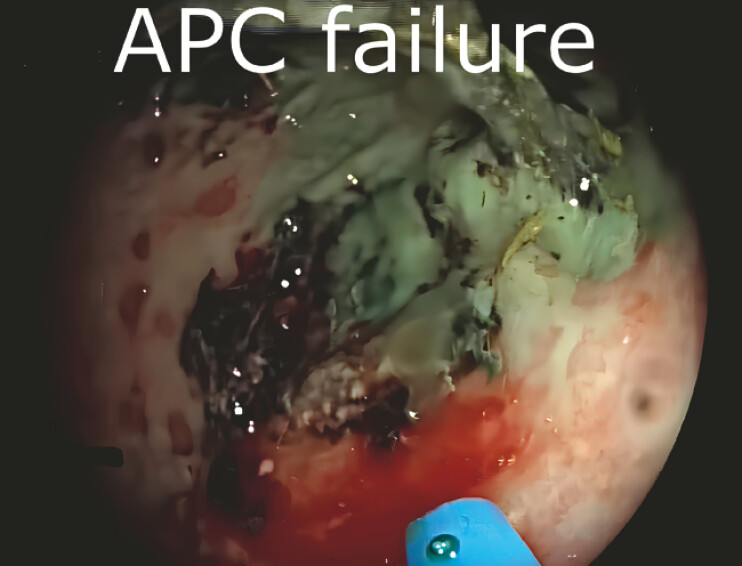 Fig. 1
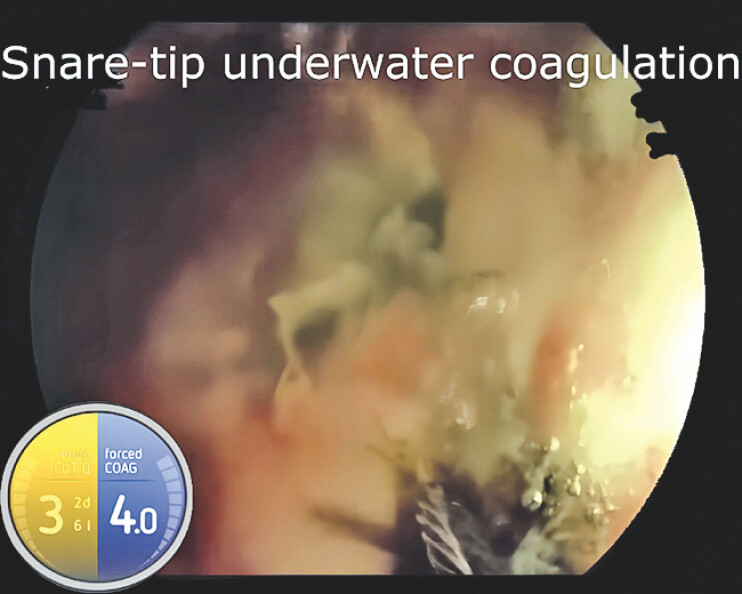 Fig. 2
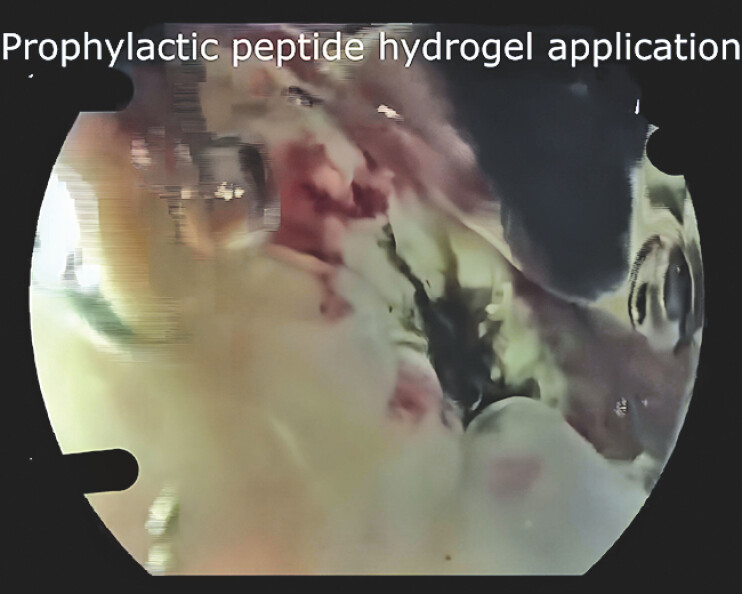 Fig. 3
Peer Reviews
No public reviews on file for this paper yet. If you reviewed it on a platform where reviews are public (OpenReview, ICLR, NeurIPS, ICML), you can paste yours below so the community can read it here.
Videos
No videos yet. Explain this paper in a talk, walkthrough, or lecture? Add one.
Taxonomy
TopicsGastrointestinal Bleeding Diagnosis and Treatment · Colorectal Cancer Screening and Detection · Esophageal and GI Pathology
Lower gastrointestinal bleeding represents a significant clinical challenge 1 2 , particularly in patients receiving antithrombotic therapy. Management requires prompt identification of the bleeding source and appropriate endoscopic intervention. The use of dual antiplatelet agents and anticoagulation increases both the risk and the severity of bleeding, complicating therapeutic decisions 3 .
We describe the case of 72-year-old patient who had recently undergone radical cystectomy and nephroureterectomy for urothelial carcinoma. The postoperative course was complicated by an ST-elevation myocardial infarction (STEMI) due to the patient’s frailty, revascularization was not feasible, and therefore dual antiplatelet therapy along with low molecular weight heparin was initiated. Shortly thereafter, the patient presented with severe rectal bleeding requiring blood transfusion. Colonoscopy revealed a circumferential rectal ulcer covered by a large adherent clot. Following the removal of the clot with a snare, active oozing bleeding from a visible vessel was identified at the ulcer base. Hemostasis with argon plasma coagulation (APC) was attempted but failed because the bleeding was deeply located and the energy delivery was insufficient to achieve effective coagulation ( Fig. 1 ). Then, underwater snare-tip forced coagulation (forced COAG 4.0) was performed, allowing stable vessel contact and controlled energy delivery, successfully achieving complete hemostasis ( Fig. 2 ). A layer of self-assembling peptide hydrogel was subsequently applied ( Fig. 3 ) over the treated area as a prophylactic measure to promote mucosal healing and reduce the risk of rebleeding ( Video 1 ).
Argon plasma coagulation (APC) attempt failed to achieve hemostasis due to the deeply located bleeding vessels within the rectal ulcer base.
Underwater snare-tip forced coagulation (forced COAG 4.0) successfully achieved hemostasis by allowing stable vessel contact and precise energy delivery at the ulcer base.
Application of the self-assembling peptide hydrogel over the treated ulcer area to promote mucosal healing and prevent rebleeding after successful hemostasis.
Endoscopic management of severe rectal bleeding in a patient on dual antiplatelet therapy and low molecular weight heparin. Underwater snare-tip coagulation successfully controls bleeding, followed by self-assembling peptide hydrogel application for healing.Video 1
This case highlights the complex management of lower GI bleeding in patients under combined antithrombotic therapy following recent major surgery and myocardial infarction. The underwater snare-tip coagulation technique provided an effective and safe solution when conventional APC was ineffective, offering enhanced visualization and precise thermal control. Adjunctive self-assembling peptide hydrogel application supported mucosal stabilization. This report underscores the importance of adaptable endoscopic approaches in managing high-risk bleeding in patients requiring intensive antithrombotic therapy.
Endoscopy_UCTN_Code_TTT_1AQ_2AZ
The reference list from the paper itself. Each links out to its DOI / PubMed record.
- 1Triantafyllou K Gkolfakis P Gralnek IM Diagnosis and management of acute lower gastrointestinal bleeding: European Society of Gastrointestinal Endoscopy (ESGE) Guideline Endoscopy 20215385086810.1055/a-1496-896934062566 · doi ↗ · pubmed ↗
- 2Oakland K Chadwick G East JE Diagnosis and management of acute lower gastrointestinal bleeding: guidelines from the British Society of Gastroenterology Gut 20196877678930792244 10.1136/gutjnl-2018-317807 · doi ↗ · pubmed ↗
- 3Elshaer A Abraham NS Management of Anticoagulant and Antiplatelet Agents in Acute Gastrointestinal Bleeding and Prevention of Gastrointestinal Bleeding Gastrointest Endosc Clin N Am 20243420521610.1016/j.giec.2023.09.00238395479 · doi ↗ · pubmed ↗