Early developmental trajectory phenotypes for risk stratification of autism spectrum disorder in very preterm infants: a machine learning approach
Li-Wen Chen, Yi-Tien Li, Chi-Hsiang Chu, Chin-Chin Wu, Ching-Lin Chu, Lan-Wan Wang, Han-Yi Tsai, Chung-Hsin Chiang, Chao-Ching Huang

TL;DR
Very preterm infants who later develop autism show unique developmental patterns that could help identify those at low risk for autism by age 5.
Contribution
This study introduces a machine learning model using developmental trajectories to predict autism risk in very preterm infants.
Findings
Infants later diagnosed with ASD had consistently lower cognitive scores and slower communication and motor development by 24 months.
A machine learning model achieved 71.8% accuracy in predicting ASD risk using developmental trajectories and neonatal factors.
The model's high negative predictive value suggests it can identify infants unlikely to develop ASD.
Abstract
Very preterm infants are at elevated risk for autism spectrum disorder (ASD), though early identification is challenging due to overlapping neurodevelopmental disorders. While the Bayley Scales of Infant and Toddler Development (BSID) is widely used for follow-up, it remains unclear whether domain-specific developmental trajectories—such as cognition, receptive and expressive communication, and fine and gross motor function assessed by the BSID, Third Edition (BSID-III)—can support the development of a prediction model for ASD risk by preschool age in this population. This population-based multicenter cohort study included infants born < 32 weeks’ gestation in 2011–2018. Neurodevelopment was assessed at 6, 12, and 24 months using domain-specific BSID-III scaled scores. ASD diagnosis was determined at age 5 years using the Autism Diagnostic Observation Schedule and the Autism Diagnostic…
Genes, proteins, chemicals, diseases, species, mutations and cell lines named across the full text — each resolved to its canonical identifier and authoritative record.
Click any figure to enlarge with its caption.
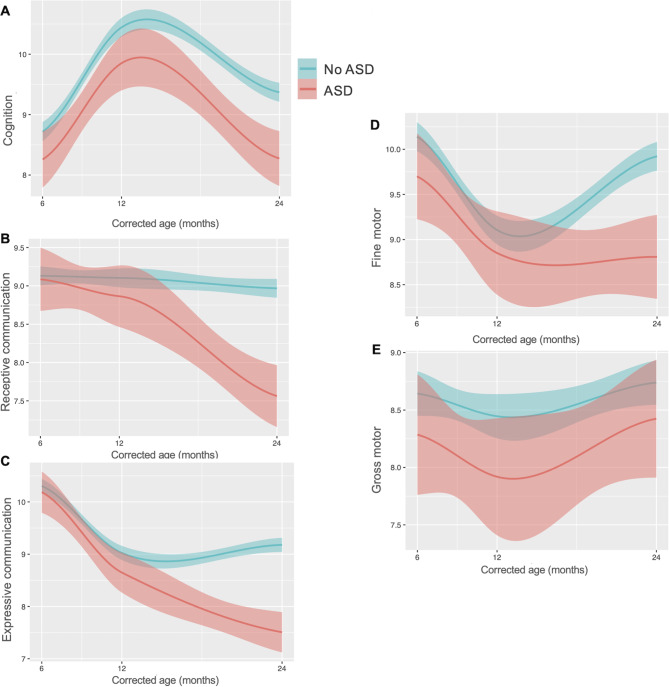 Figure 1
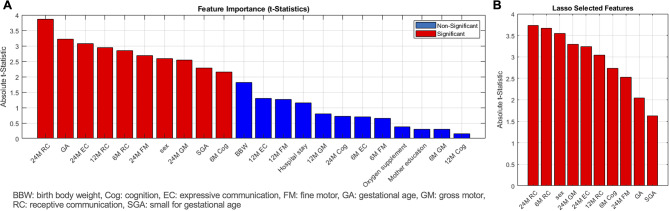 Figure 2
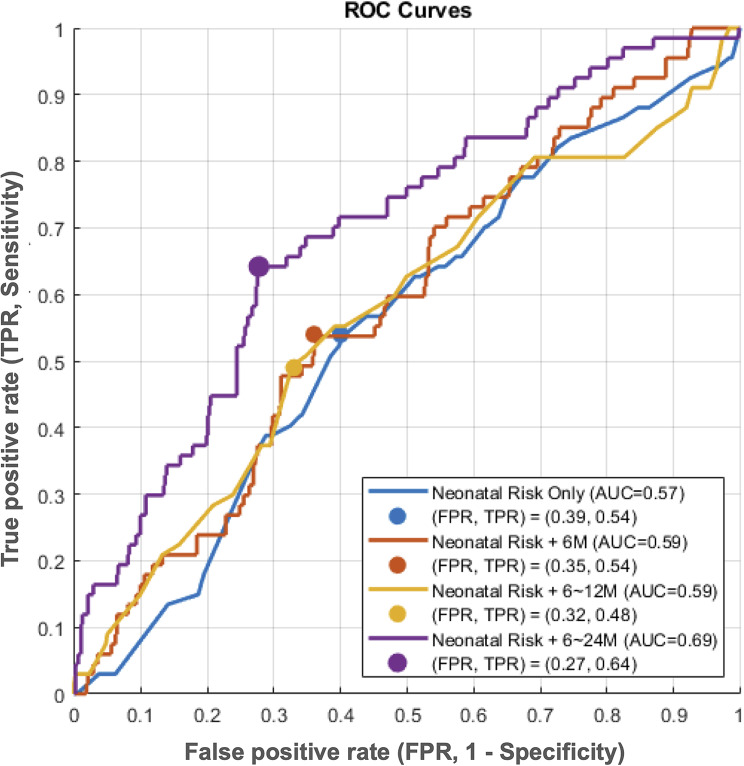 Figure 3
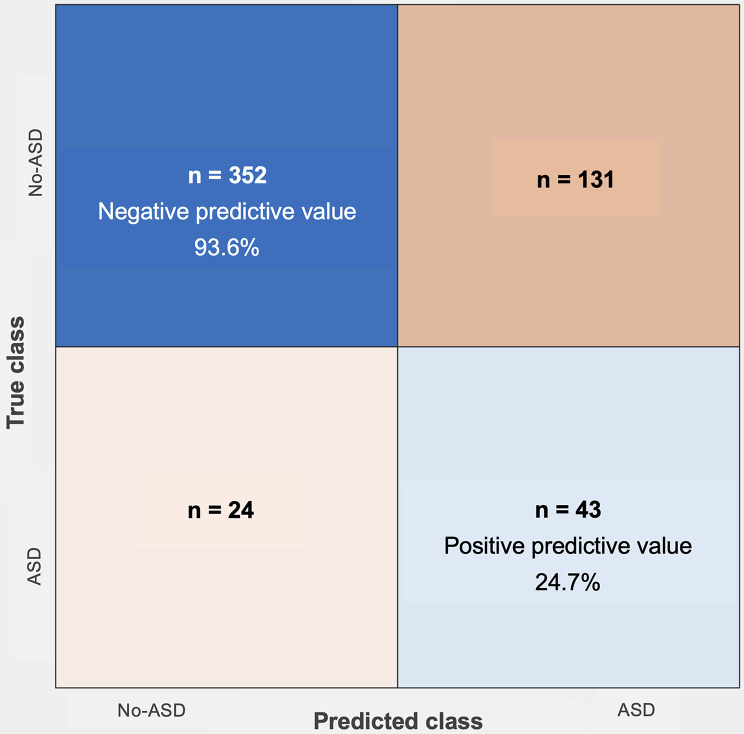 Figure 4
Peer Reviews
No public reviews on file for this paper yet. If you reviewed it on a platform where reviews are public (OpenReview, ICLR, NeurIPS, ICML), you can paste yours below so the community can read it here.
Videos
No videos yet. Explain this paper in a talk, walkthrough, or lecture? Add one.
Taxonomy
TopicsAutism Spectrum Disorder Research · Infant Development and Preterm Care · Family and Disability Support Research