From classical Chinese formula to modern mechanism: how Xiao-Yao-San modulates key signaling pathways in depression
Caiyan Qu, Rongyanqi Wang, Aiai Liu, Yueyun Liu, Zhentao Zhao, Wenzhi Hao, Jiaxu Chen

TL;DR
This paper reviews how Xiao-Yao-San, a traditional Chinese medicine, treats depression by modulating key signaling pathways that affect brain function and inflammation.
Contribution
The paper systematically reviews how Xiao-Yao-San modulates specific signaling pathways to exert antidepressant effects, offering insights for developing pathway-targeted antidepressants.
Findings
Xiao-Yao-San modulates signaling pathways like PI3K/Akt, NLRP3, NF-κB, and MAPK to treat depression.
Its effects include anti-inflammatory actions, improved hippocampal structure, and reduced oxidative stress.
Future research should explore cross-linked signaling pathways for new antidepressant development.
Abstract
Depression is a widespread mental disorder with profound effects on both physical and psychological health. Aberrant signal transduction contributes to depression by impairing neuronal function, reducing synaptic plasticity, and disrupting neurotransmitter transmission. Aberrant signal transduction can impair neuronal function, reduce synaptic plasticity, and disrupt neurotransmitter transmission, thereby contributing to the development of depression. Xiao-Yao-San (XYS), a traditional Chinese medicine (TCM) formula, has been extensively employed in the treatment of depression, with a broad therapeutic profile. This review aims to critically assess current scientific evidence on the antidepressant effects of XYS, focusing on its modulation of key signaling pathways. The goal is to provide a more robust mechanistic foundation for XYS-based therapies and offer insights for developing novel…
Genes, proteins, chemicals, diseases, species, mutations and cell lines named across the full text — each resolved to its canonical identifier and authoritative record.
Click any figure to enlarge with its caption.
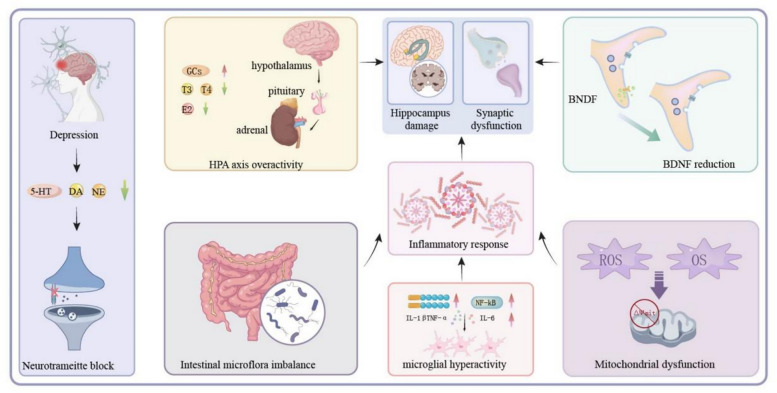 Figure 1
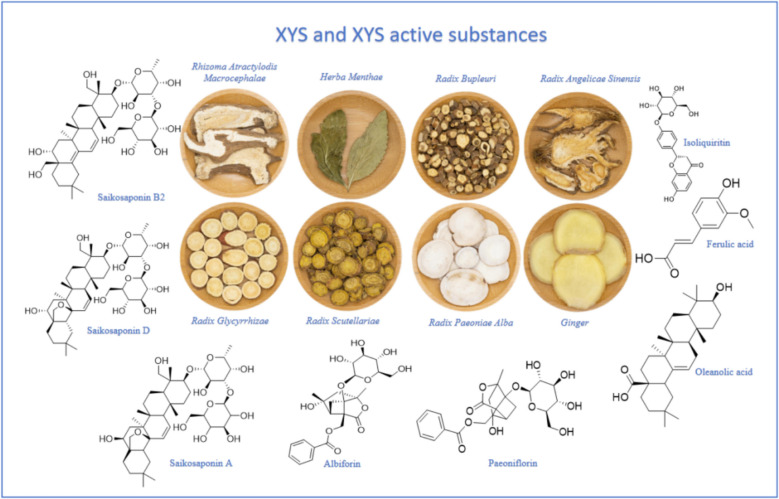 Figure 2
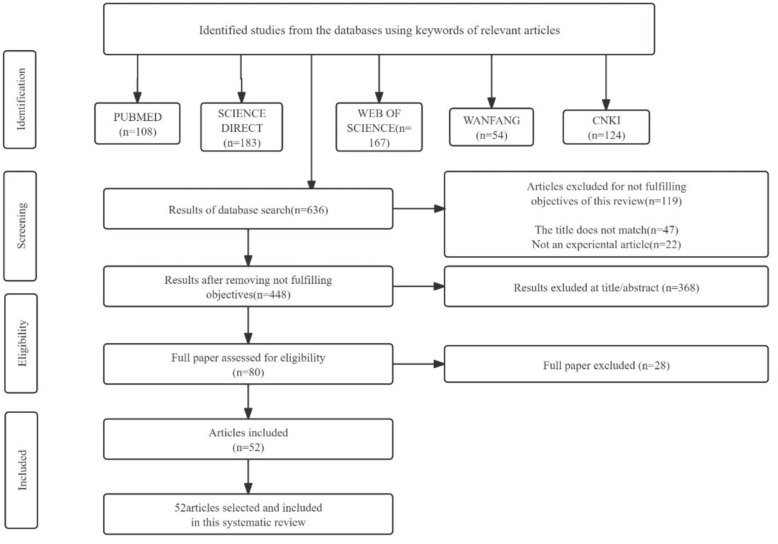 Figure 3
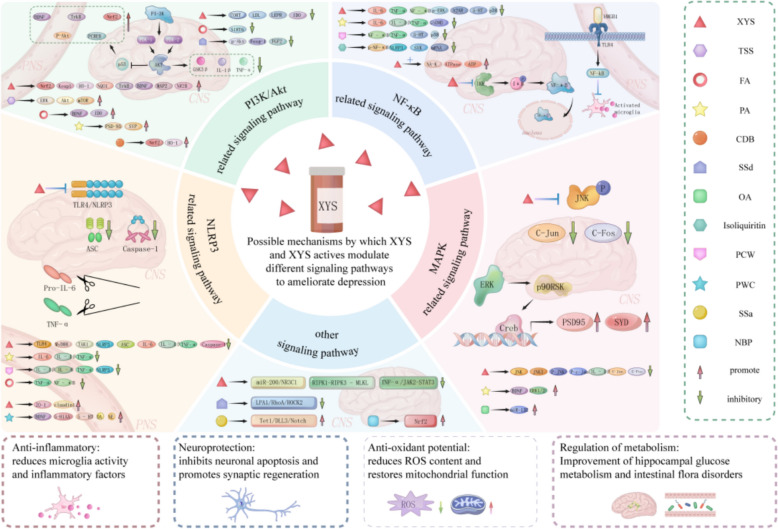 Figure 4
Peer Reviews
No public reviews on file for this paper yet. If you reviewed it on a platform where reviews are public (OpenReview, ICLR, NeurIPS, ICML), you can paste yours below so the community can read it here.
Videos
No videos yet. Explain this paper in a talk, walkthrough, or lecture? Add one.
Taxonomy
TopicsTryptophan and brain disorders · Treatment of Major Depression · Stress Responses and Cortisol