Prolonged infusion of remimazolam in surgical and medical intensive care unit patients: a pilot pharmacokinetic study
Yuji Suzuki, Matsuyuki Doi, Yoshitaka Aoki, Hiromi Kato, Kensuke Kobayashi, Soichiro Mimuro, Takashi Mochizuki, Takahiro Yamada, Motoyasu Miura, Shinya Uchida, Yoshiki Nakajima

TL;DR
This study examines how remimazolam behaves in the blood of ICU patients receiving long-term infusions, finding stable levels without significant accumulation.
Contribution
The study provides new pharmacokinetic data for prolonged remimazolam infusion in surgical and medical ICU patients.
Findings
Steady-state plasma concentrations showed modest intrasubject and moderate intersubject variability.
No statistically significant differences in clearance or volume of distribution between surgical and medical ICU groups.
No evidence of time-dependent accumulation of remimazolam in either group.
Abstract
The pharmacokinetics of prolonged remimazolam infusion in patients undergoing long-term mechanical ventilation remain unclear. This study aimed to evaluate the pharmacokinetics of remimazolam administered continuously for 24 h. This open-label pharmacokinetic analysis enrolled patients requiring mechanical ventilation into two groups: the surgical group, which received remimazolam during and after surgery, and the medical ICU group, which received remimazolam in the intensive care unit (ICU). Remimazolam was administered at a fixed rate of 0.1 mg/kg/h for ≥ 24 h, and blood samples were collected at regular intervals. Plasma remimazolam concentrations were measured by tandem mass spectrometry. Twenty patients (10 in each group) completed the study. The median duration of remimazolam infusion was 24.0 h in the surgical group and 102.0 h in the medical ICU group. The steady-state plasma…
Genes, proteins, chemicals, diseases, species, mutations and cell lines named across the full text — each resolved to its canonical identifier and authoritative record.
Click any figure to enlarge with its caption.
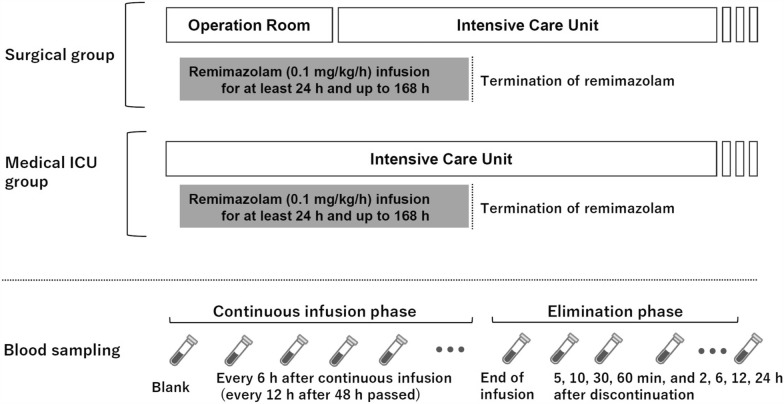 Figure 1
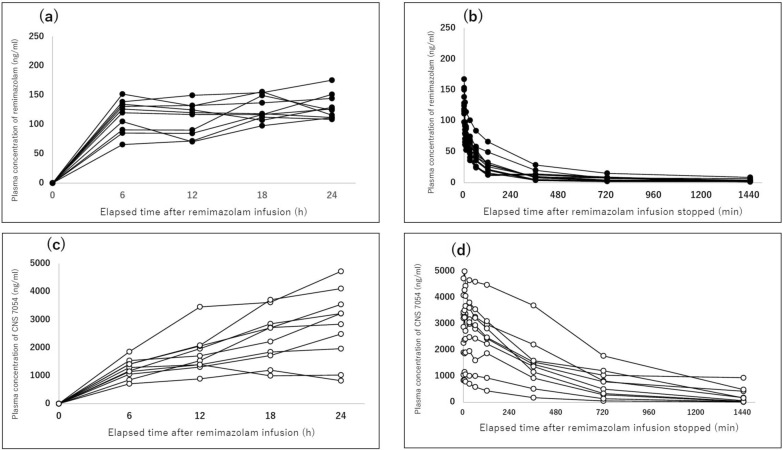 Figure 2
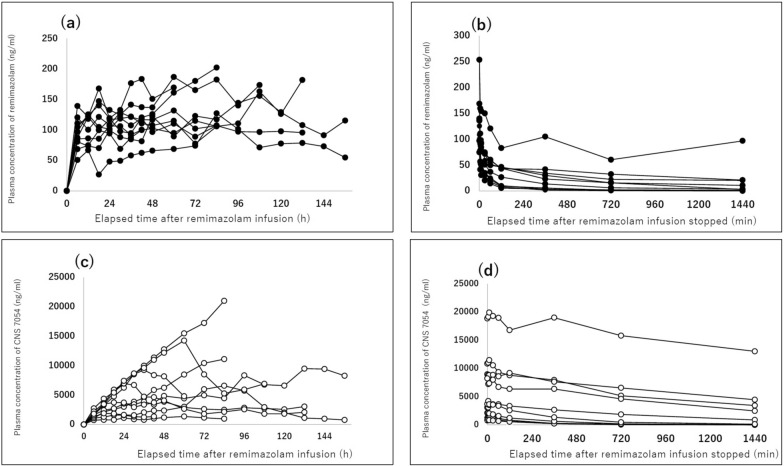 Figure 3
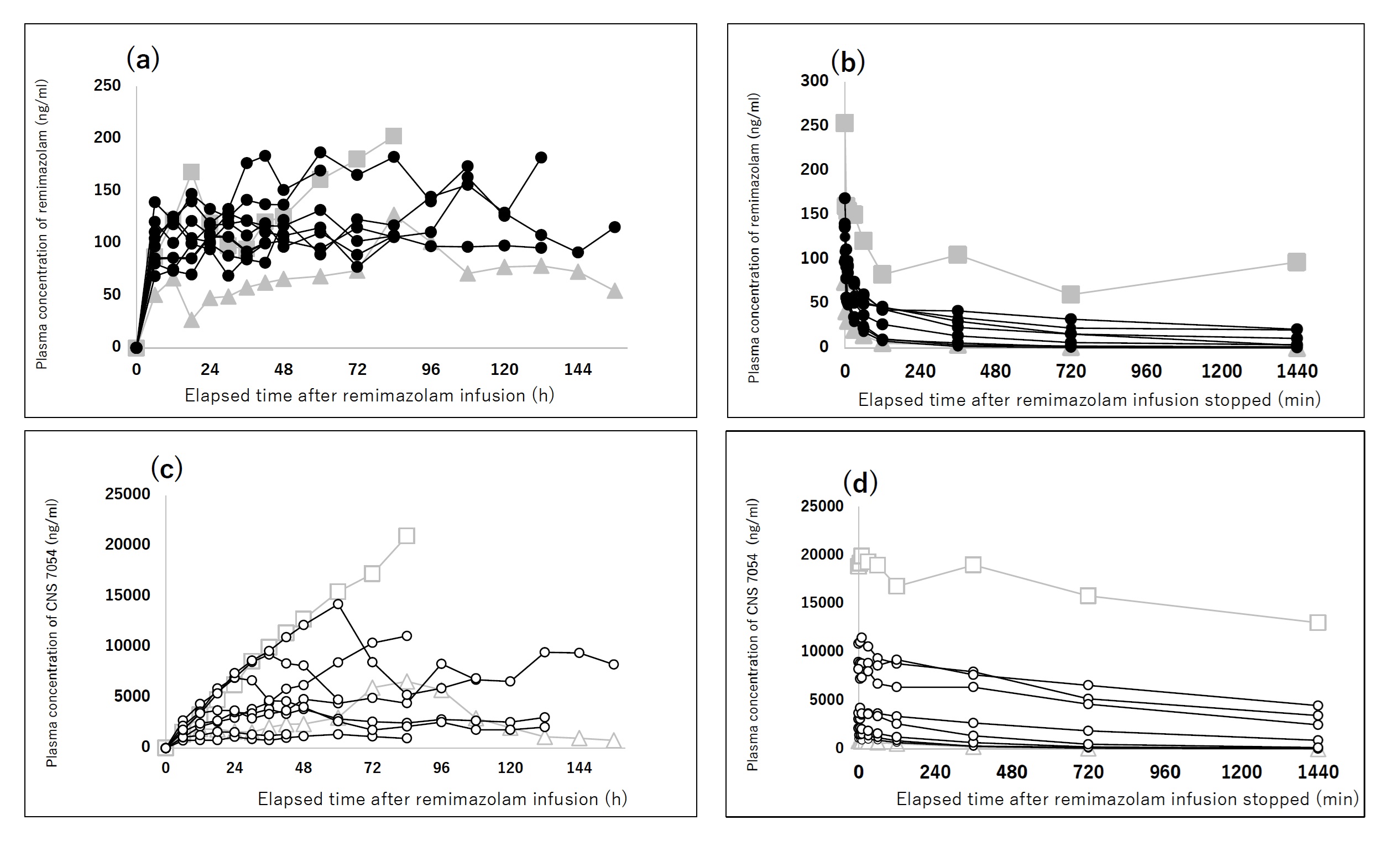 Figure 4
Peer Reviews
No public reviews on file for this paper yet. If you reviewed it on a platform where reviews are public (OpenReview, ICLR, NeurIPS, ICML), you can paste yours below so the community can read it here.
Videos
No videos yet. Explain this paper in a talk, walkthrough, or lecture? Add one.
Taxonomy
TopicsAnesthesia and Sedative Agents · Sepsis Diagnosis and Treatment · Patient Safety and Medication Errors