Adaptive-like CAR-iPSC-CD4⁺ T cells outperform CD8⁺ counterparts in sustained ALL control
Qingyi Guo, Chaoqi Zhang, Bo Wang, Shoichi Iriguchi, Akihiro Ishikawa, Atsutaka Minagawa, Tomoko Ishii, Yohei Kawai, Shin Kaneko

TL;DR
This study shows that CD4+ T cells made from iPSCs perform better than CD8+ T cells in fighting leukemia, offering a promising renewable source for CAR-T therapy.
Contribution
Demonstrates that iPSC-derived CD4+ T cells outperform CD8+ counterparts in sustained antitumor activity and helper functions.
Findings
iPSC-derived CD4+ T cells showed superior proliferation and cytokine secretion compared to CD8+ T cells.
CD4+ T cells exhibited sustained cytotoxicity and resistance to exhaustion in leukemia models.
They enhanced the expansion of CD8+ T cells, showing helper-like functions.
Abstract
Induced pluripotent stem cell (iPSC)–derived T cells offer a renewable source for off-the-shelf immunotherapy. With the advent of the artificial thymic organoid (ATO) method, the in vitro differentiation of CD4+ T cells from iPSCs has also become feasible. CD4⁺ T cells have shown superior longevity, resistance to exhaustion, and helper functions in primary settings, but whether iPSC-derived CD4⁺ T cells retain these features remains unclear. In this study, CD4⁺ T cells were differentiated from human iPSCs using the ATO system. Primary T cells served as controls to evaluate the phenotypic and activation features of iPSC-derived CD4⁺ and CD8⁺ T cells. To assess antitumor function, we generated CD19-BBζ CAR-iPSC-T cells and employed a hematologic malignancy model using NALM6 acute lymphoblastic leukemia (ALL) cells. Both short-term and long-term cytotoxicity assays were conducted to…
Genes, proteins, chemicals, diseases, species, mutations and cell lines named across the full text — each resolved to its canonical identifier and authoritative record.
Click any figure to enlarge with its caption.
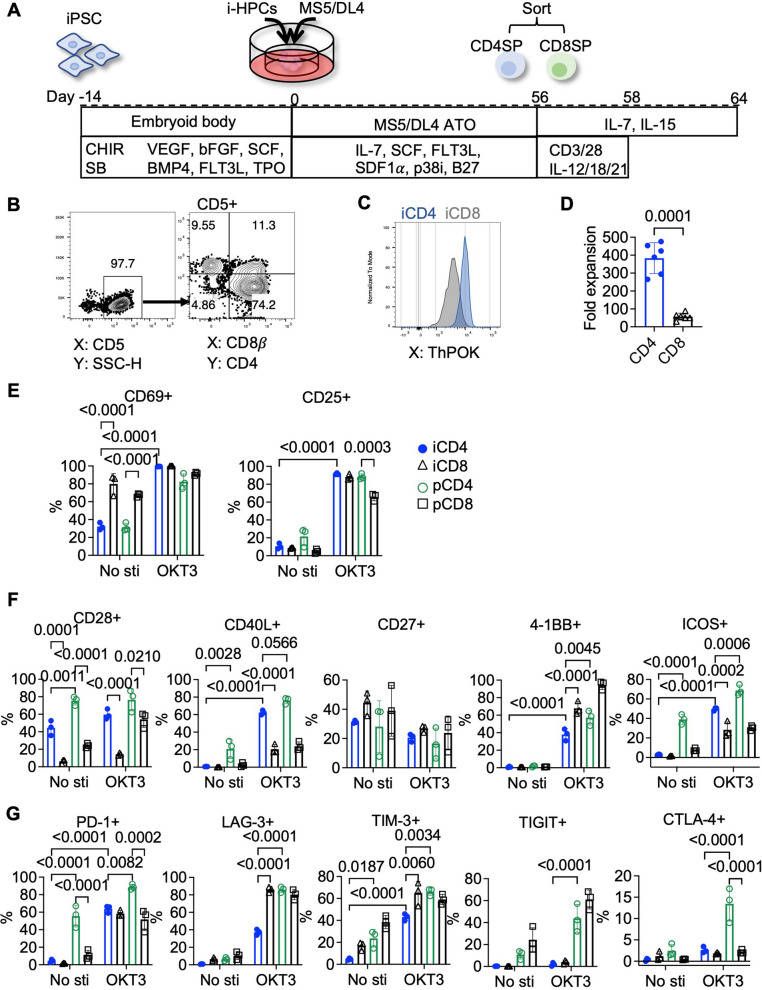 Figure 1
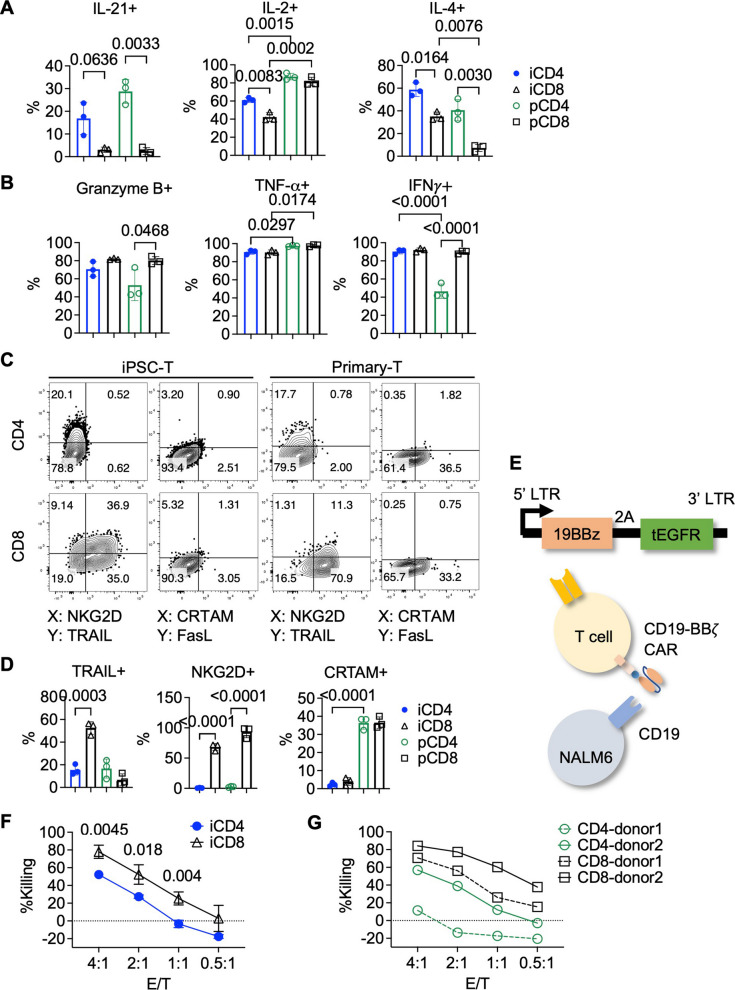 Figure 2
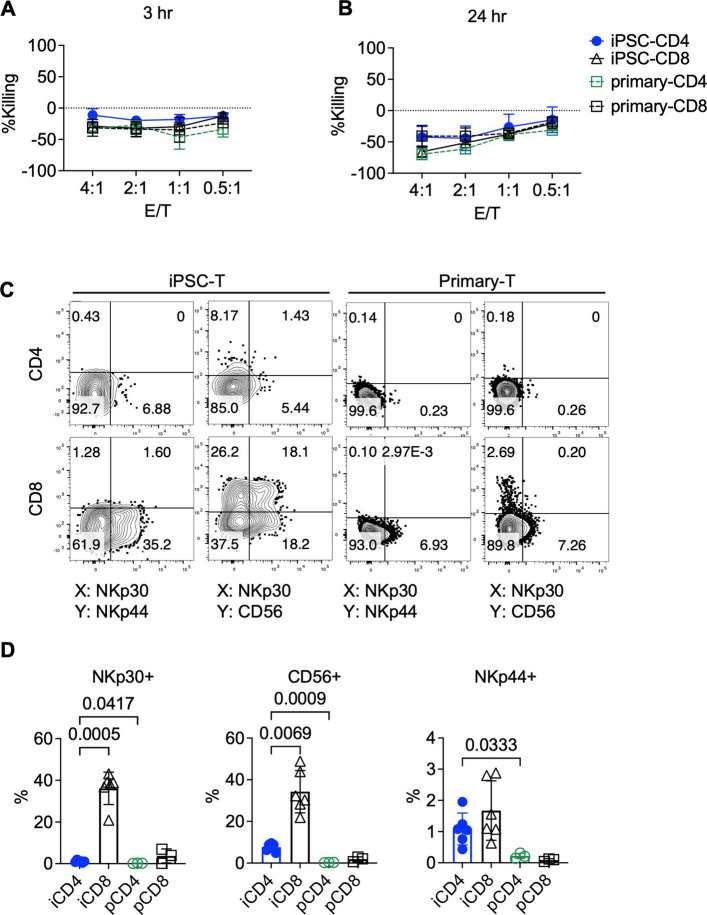 Figure 3
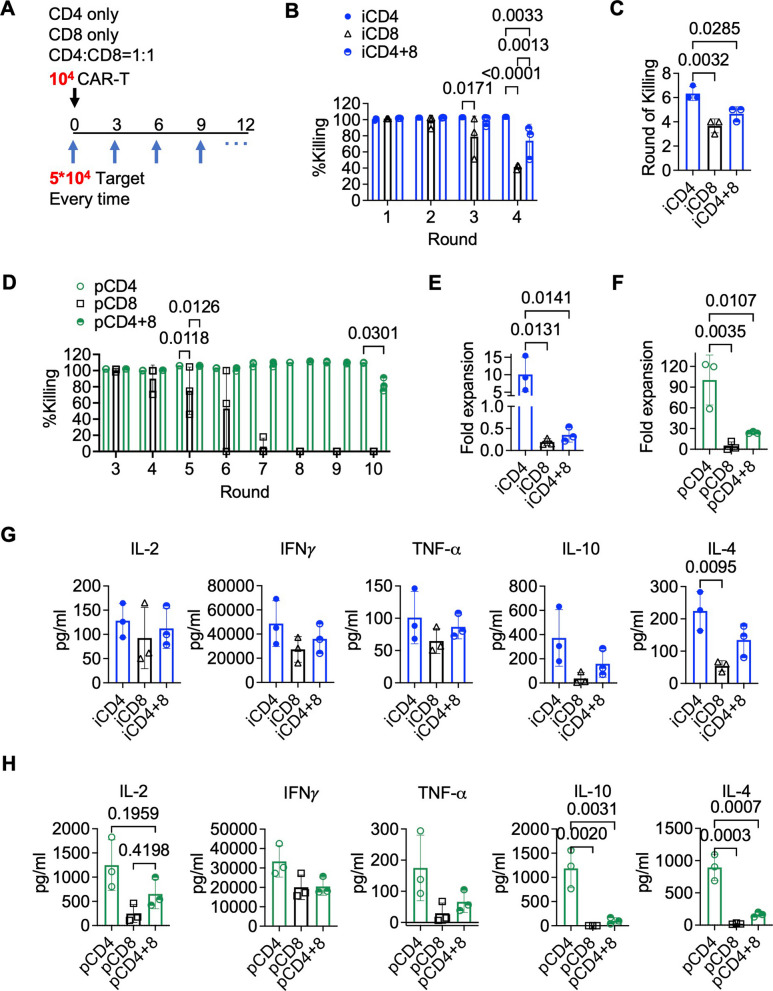 Figure 4
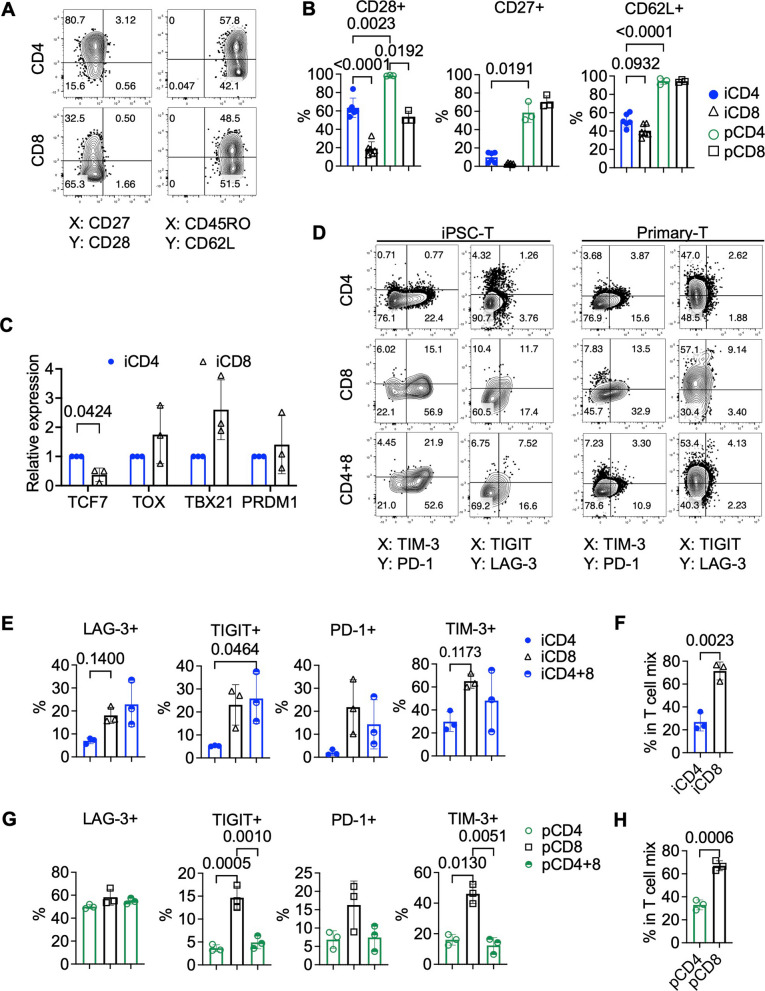 Figure 5
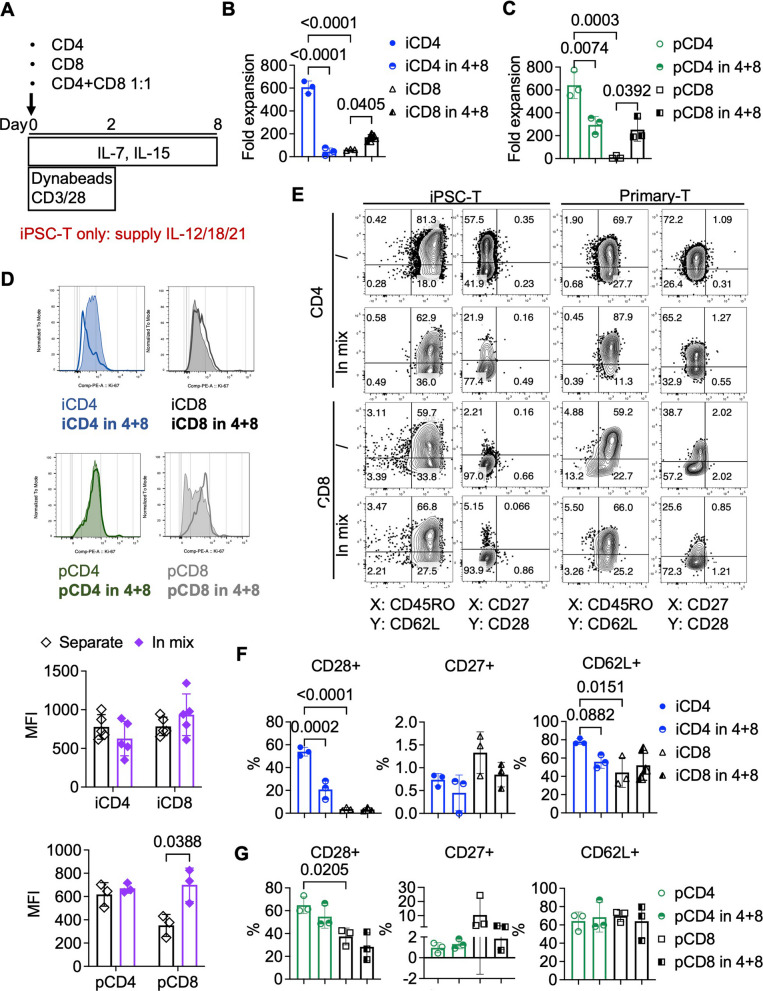 Figure 6
Peer Reviews
No public reviews on file for this paper yet. If you reviewed it on a platform where reviews are public (OpenReview, ICLR, NeurIPS, ICML), you can paste yours below so the community can read it here.
Videos
No videos yet. Explain this paper in a talk, walkthrough, or lecture? Add one.
Taxonomy
TopicsCAR-T cell therapy research · Pluripotent Stem Cells Research · Renal and related cancers