NI-RADS in posttreatment head and neck cancer surveillance: a framework for standardized imaging with clinical impact
David A. Zander, Ashley H. Aiken, Yuh-Shin Chang, Fabian Elsholtz, Ryan Hughes, Amy F. Juliano, Kim O. Learned, Ashok Srinivasan, Sara Strauss, Jaime Wicks, Paul M. Bunch

TL;DR
NI-RADS is a standardized imaging framework for monitoring head and neck cancer after treatment, aiming to improve patient outcomes through consistent reporting and risk-based surveillance.
Contribution
The release of NI-RADS MRI 2025 introduces modality-specific descriptors and management recommendations tailored for MRI in posttreatment surveillance.
Findings
NI-RADS provides a standardized lexicon and structured reporting format for post-treatment imaging findings.
Early imaging surveillance within six months of treatment is strongly supported by evidence.
Future updates to NI-RADS may include ultrasound and circulating tumor biomarkers.
Abstract
The Neck Imaging Reporting and Data System (NI-RADS), developed through the American College of Radiology (ACR), provides a standardized framework for interpreting and managing posttreatment imaging in head and neck cancer. Building upon the success of NI-RADS PET/CT, the recently released NI-RADS MRI version 2025 represents a major advancement, introducing modality-specific descriptors and management recommendations tailored to MRI. This review summarizes the history and development of NI-RADS, highlighting both the validated PET/CT framework and the subsequent MRI update. At its core, NI-RADS offers a standardized lexicon for post-treatment findings, a structured reporting format that stratifies risk of disease recurrence, and linked management recommendations. Surveillance imaging is an essential component of post-treatment head and neck cancer care. Evidence strongly supports early…
Genes, proteins, chemicals, diseases, species, mutations and cell lines named across the full text — each resolved to its canonical identifier and authoritative record.
Click any figure to enlarge with its caption.
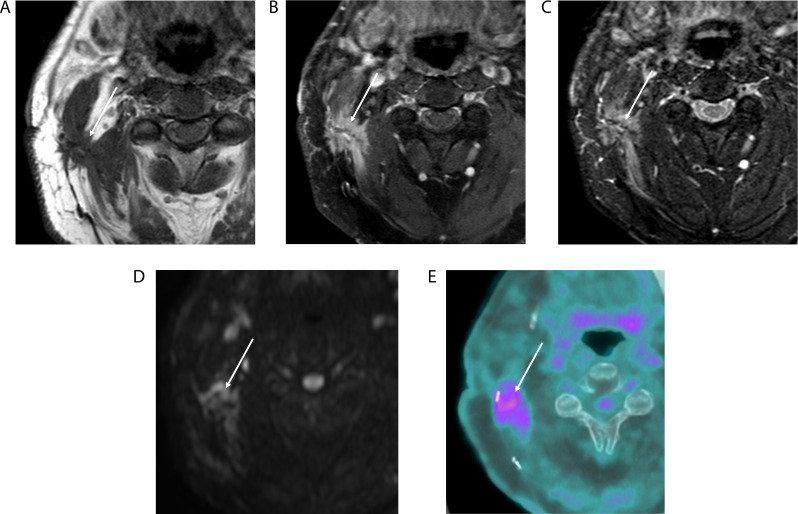 Figure 1
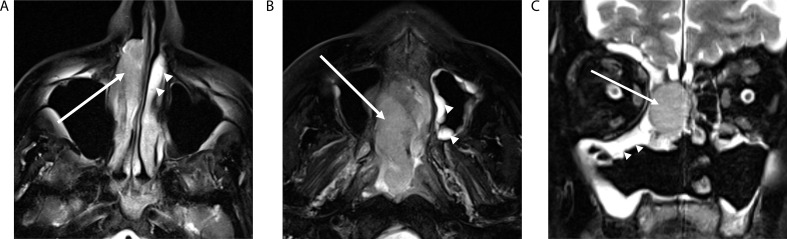 Figure 2
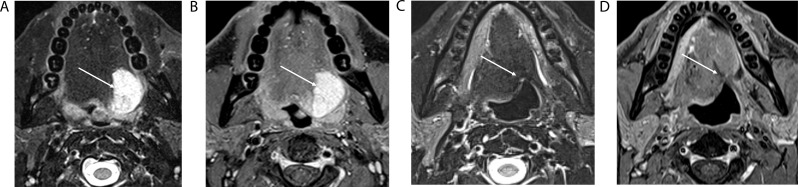 Figure 3
Peer Reviews
No public reviews on file for this paper yet. If you reviewed it on a platform where reviews are public (OpenReview, ICLR, NeurIPS, ICML), you can paste yours below so the community can read it here.
Videos
No videos yet. Explain this paper in a talk, walkthrough, or lecture? Add one.
Taxonomy
TopicsHead and Neck Cancer Studies · Esophageal Cancer Research and Treatment · Radiomics and Machine Learning in Medical Imaging