Giant anteaters on the move: native habitat selection and behavioral responses to land use change
Ana Yoko Ykeuti Meiga, Arnaud Leonard Jean Desbiez, Rubem A. P. Dornas, Nina Attias, Aline Giroux, Denis Valle

TL;DR
Giant anteaters prefer native habitats over human-modified ones, showing how landscape changes affect their behavior and highlighting the need for conservation in degraded areas.
Contribution
This study uses Bayesian models to reveal sex-independent habitat preferences and behavioral responses of giant anteaters to land use changes.
Findings
Giant anteaters spend more time in native habitats compared to human-modified ones.
The species is more likely to rest in native habitats and more active in disturbed areas.
Findings emphasize the importance of conserving native habitats for this vulnerable species.
Abstract
Landscape fragmentation and habitat loss are major drivers of global biodiversity decline. Understanding how animals adjust their behavior in response to these threats and adapt to human-altered environments is essential for developing effective conservation strategies. In this study, we apply Bayesian models to a unique movement dataset to explore how landscape transformation influences behavioral patterns in the giant anteater (Myrmecophaga tridactyla; Pilosa; Mammalia), a vulnerable species with limited physiological thermoregulatory capacity and strong behavioral responses to environmental changes. We used an extensive GPS tracking dataset from 41 giant anteaters in the Brazilian savanna—a biodiversity hotspot facing extensive landscape alteration due to land-use and land-cover change. We used the Time-Explicit habitat selection model to investigate giant anteater sex-based…
Genes, proteins, chemicals, diseases, species, mutations and cell lines named across the full text — each resolved to its canonical identifier and authoritative record.
Click any figure to enlarge with its caption.
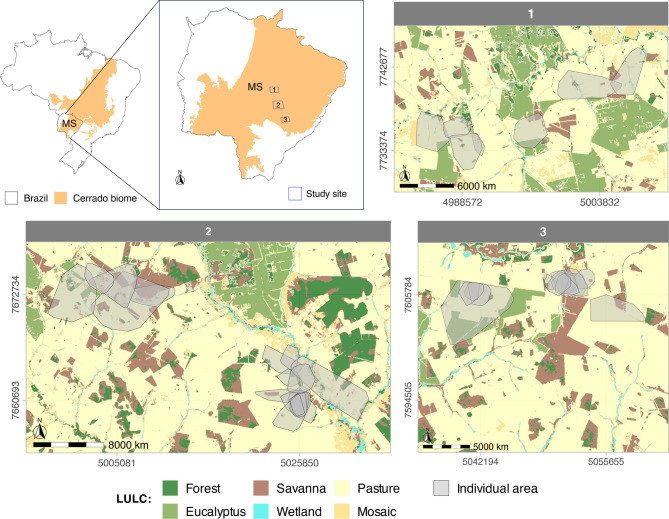 Figure 1
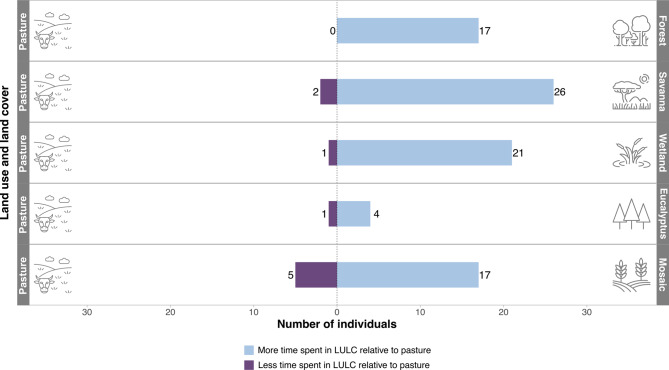 Figure 2
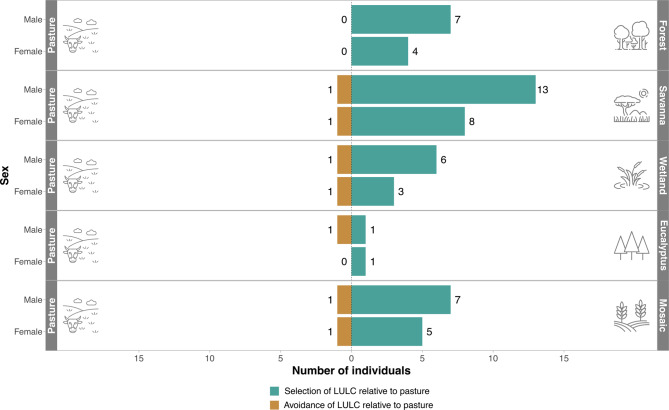 Figure 3
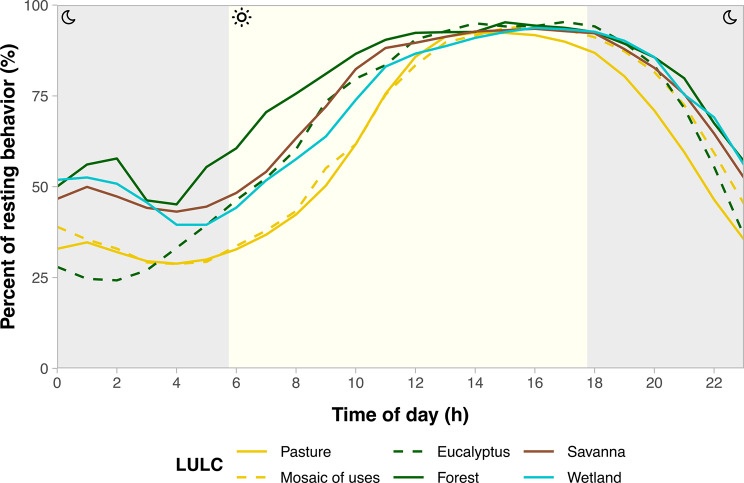 Figure 4
Peer Reviews
No public reviews on file for this paper yet. If you reviewed it on a platform where reviews are public (OpenReview, ICLR, NeurIPS, ICML), you can paste yours below so the community can read it here.
Videos
No videos yet. Explain this paper in a talk, walkthrough, or lecture? Add one.
Taxonomy
TopicsWildlife Ecology and Conservation · Primate Behavior and Ecology · Evolution and Paleontology Studies