Soluble RAGE further stratifies risk of coronary artery and end-stage kidney disease in high-risk individuals with type 1 diabetes and treatment-resistant hypertension
Krishna Adeshara, Raija Lithovius, Stefan Mutter, Valma Harjutsalo, Markku Lehto, Per-Henrik Groop, Niina Sandholm

TL;DR
Higher levels of sRAGE are linked to increased risk of heart and kidney disease in people with type 1 diabetes and hard-to-control high blood pressure.
Contribution
sRAGE provides additional risk stratification for CAD and ESKD beyond clinical variables in high-risk type 1 diabetes patients.
Findings
Higher sRAGE levels are associated with increased odds of treatment-resistant hypertension in type 1 diabetes patients.
sRAGE is linked to higher risk of coronary artery disease and end-stage kidney disease in those with treatment-resistant hypertension.
The association between sRAGE and disease risk is reduced after adjusting for estimated glomerular filtration rate.
Abstract
Soluble receptor for advanced glycation end-products (sRAGE) modulates RAGE-mediated inflammation and oxidative stress. We investigated if sRAGE stratifies cardiovascular and kidney disease risk in individuals with type 1 diabetes and baseline treatment-resistant hypertension (TRH). This study included 1262 adults with type 1 diabetes from the FinnDiane study who were on antihypertensive therapy and whose sRAGE concentration was measured at baseline. Participants were divided into groups: controlled blood pressure (BP) (n = 295), uncontrolled BP (n = 730) or TRH (n = 237). Prospective analyses were performed in those with baseline TRH. Of them, 62 developed coronary artery disease (CAD) and 38 stroke (median follow-up 12 years), while 99 progressed to end-stage kidney disease (ESKD) (median follow-up 9.2 years). Every 100 units increase in baseline sRAGE was associated with 4% higher…
Genes, proteins, chemicals, diseases, species, mutations and cell lines named across the full text — each resolved to its canonical identifier and authoritative record.
Click any figure to enlarge with its caption.
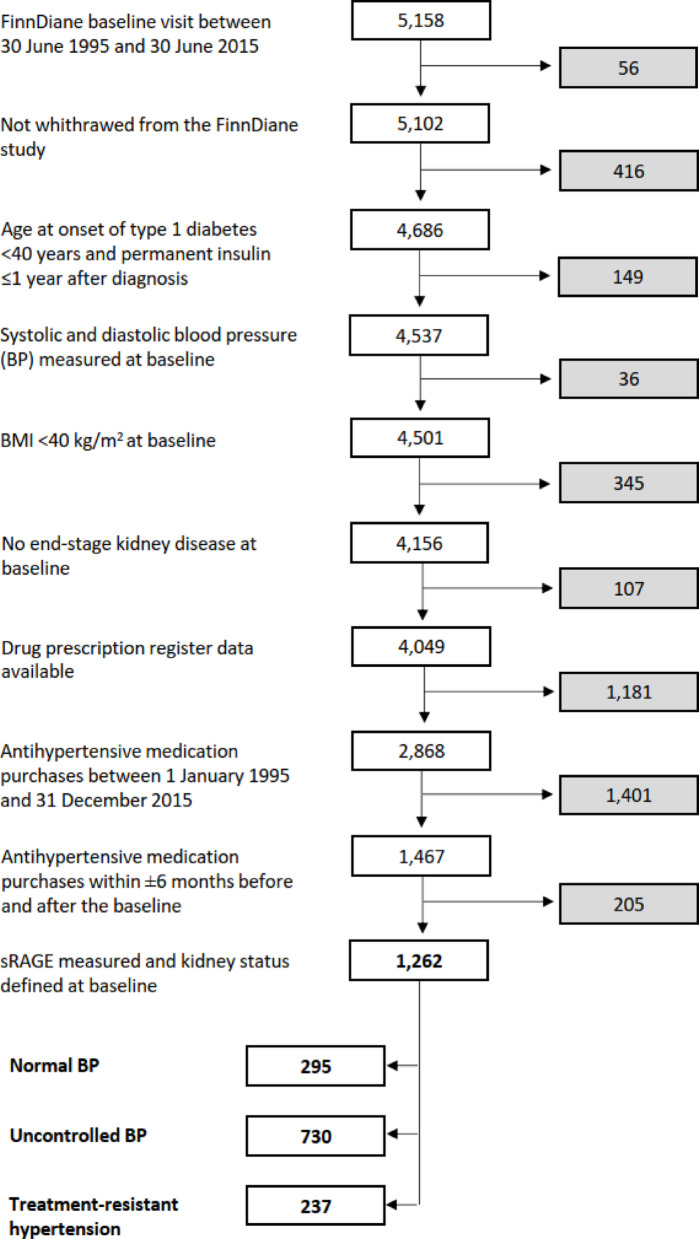 Figure 1
Peer Reviews
No public reviews on file for this paper yet. If you reviewed it on a platform where reviews are public (OpenReview, ICLR, NeurIPS, ICML), you can paste yours below so the community can read it here.
Videos
No videos yet. Explain this paper in a talk, walkthrough, or lecture? Add one.
Taxonomy
TopicsAdvanced Glycation End Products research · Diabetes and associated disorders · Diabetes Management and Research