Extreme spatial confinement and high site fidelity in a crevice-dwelling lizard with a minimal home range
R. Isaac Rojas-González, Isaac E. Diaz-Ortega

TL;DR
A small lizard species, Xenosaurus platyceps, has an extremely tiny home range, likely due to its specialized habitat and thermal environment.
Contribution
This study demonstrates that extreme habitat specialization can override traditional body-size predictions in determining home-range size.
Findings
Xenosaurus platyceps exhibited one of the smallest home ranges ever recorded for an adult lizard, at 0.014 m².
The lizard's home range was over two orders of magnitude smaller than predicted by body-size allometry.
Thermal modeling showed the lizard's body temperature was closely tied to its crevice environment, indicating thermoconforming behavior.
Abstract
Body size has traditionally been regarded as a key predictor of home-range extent. However, it remains unclear whether habitat specialisation can alter the expected allometric relationship between body size and home range. Crevice-dwelling lizards of the genus Xenosaurus provide an excellent system for addressing this question due to their extremely restricted habitat use. Using Bayesian generalised linear models—which allow explicit comparison of alternative hypotheses—we focused on (I) characterising the spatial behaviour of X. platyceps, (II) testing whether the home range of X. platyceps deviates from allometric expectations within a comparative dataset of 100 lizard species, and (III) evaluating whether the thermal environment helps explain its reduced movement. We report one of the smallest and most temporally consistent home ranges documented for an adult lizard. It was observed…
Genes, proteins, chemicals, diseases, species, mutations and cell lines named across the full text — each resolved to its canonical identifier and authoritative record.
Click any figure to enlarge with its caption.
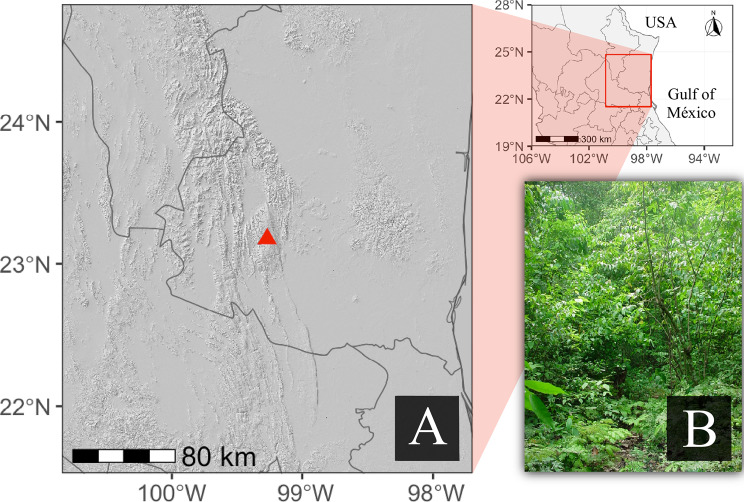 Figure 1
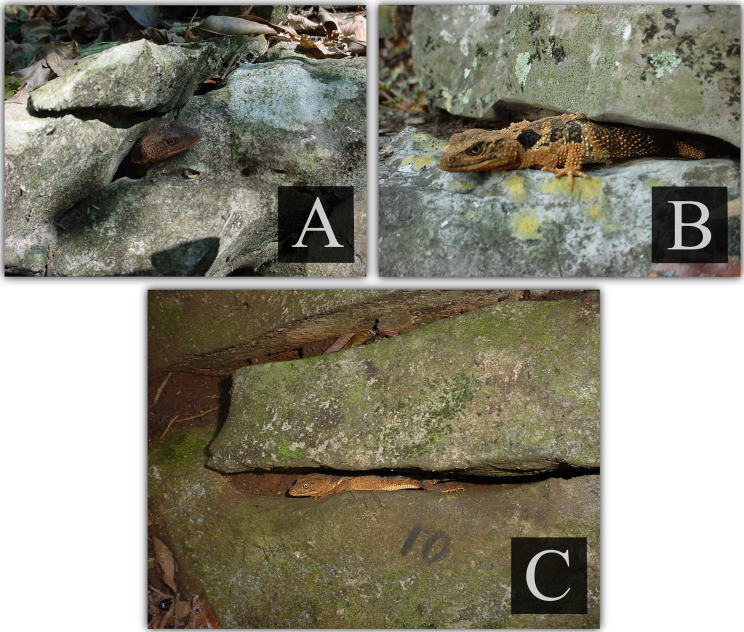 Figure 2
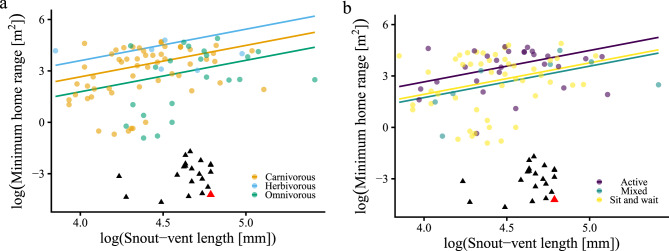 Figure 3
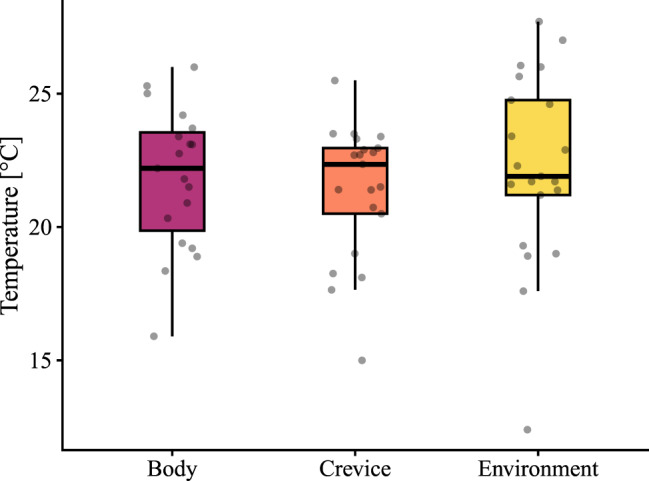 Figure 4
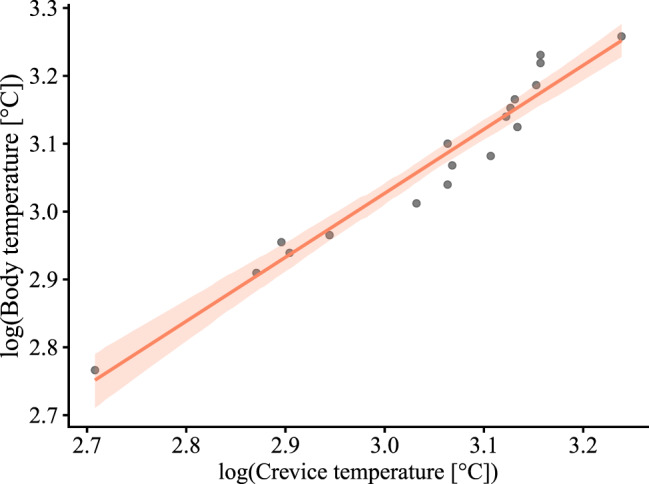 Figure 5
Peer Reviews
No public reviews on file for this paper yet. If you reviewed it on a platform where reviews are public (OpenReview, ICLR, NeurIPS, ICML), you can paste yours below so the community can read it here.
Videos
No videos yet. Explain this paper in a talk, walkthrough, or lecture? Add one.
Taxonomy
TopicsAmphibian and Reptile Biology · Turtle Biology and Conservation · Species Distribution and Climate Change