Synthesis of Cleavable Polyolefins via Ring-Opening Insertion Metathesis Polymerization (ROIMP) of Cyclopentene with Unsaturated Polyester Oligomers
Vajk Farkas, Ádám Erdélyi, Kristóf Varga, Dang Vu Hai, Momoko Ishii, Márton Nagyházi, Gábor Turczel, Pooja Dubey, László Trif, Ole Osterthun, Paul T. Anastas, Jürgen Klankermayer, János Moczó, Róbert Tuba

TL;DR
Scientists developed a new way to make environmentally friendly plastics that can be broken down easily using a chemical process called ROIMP.
Contribution
A novel method for synthesizing cleavable polyolefins via ROIMP using cyclopentene and unsaturated polyester oligomers.
Findings
Cleavable polyolefins were successfully synthesized using ROIMP with cyclopentene and polyester/polycarbonate oligomers.
Hydrolysis of the resulting polymers produced OH-functionalized oligomers suitable for further hydrogenation.
The approach was demonstrated at scale using oligo-diallyl succinate.
Abstract
The replacement of persistent plastics with chemically recyclable and environmentally benign alternatives is an urgent environmental challenge. Although an increasing number of degradable polymers are now available, many face limitations that prevent their efficient direct substitution for durable plastics, such as polyethylene. Here, we present a methodology for the synthesis of polyolefin copolymers containing cleavable units via Ring-Opening Insertion Metathesis Polymerization (ROIMP) of cyclopentene (CP) with unsaturated polyester and polycarbonate oligomers. In the first step, diallyl ester oligomers were prepared through acyclic diene metathesis (ADMET) polymerization followed by copolymerization with CP via ROIMP to yield long-chain polypentenamer (PPe) dyads separated by singular, easily cleavable ester or carbonate functionalities. Hydrolysis of the resulting cleavable PPe…
Genes, proteins, chemicals, diseases, species, mutations and cell lines named across the full text — each resolved to its canonical identifier and authoritative record.
Click any figure to enlarge with its caption.
 Figure 1
 Figure 2
 Figure 3
 Figure 4
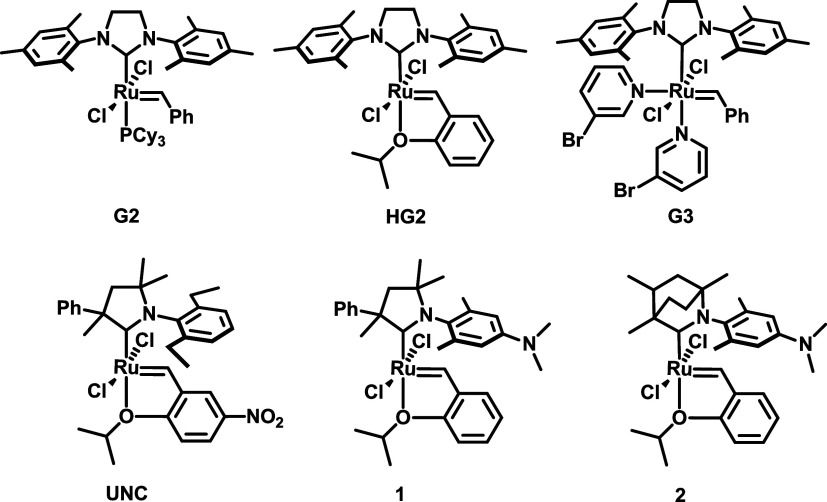 Figure 5
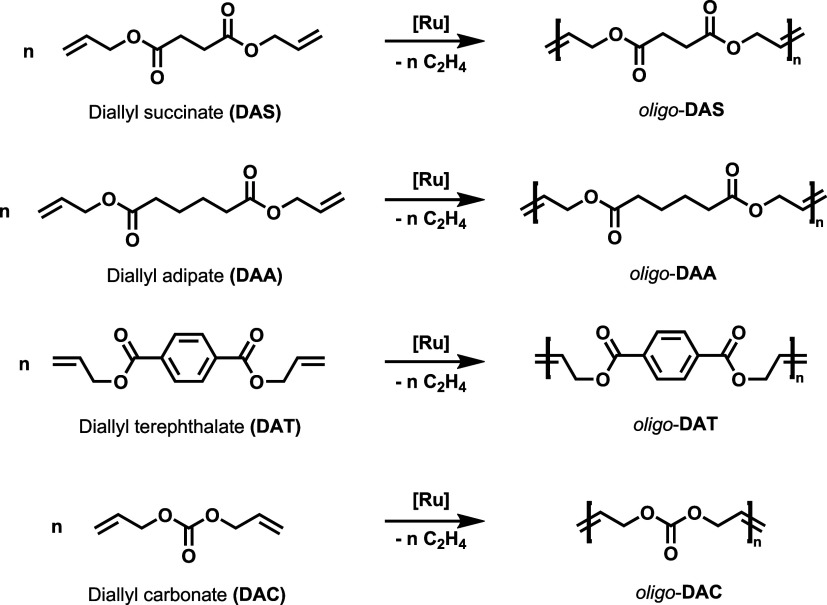 Figure 6
 Figure 7
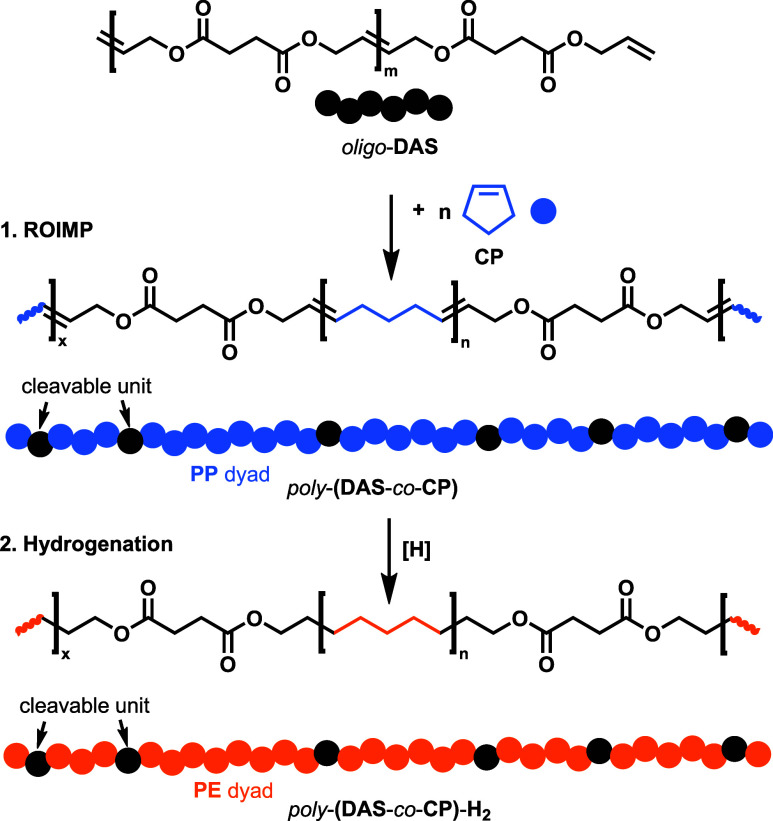 Figure 8
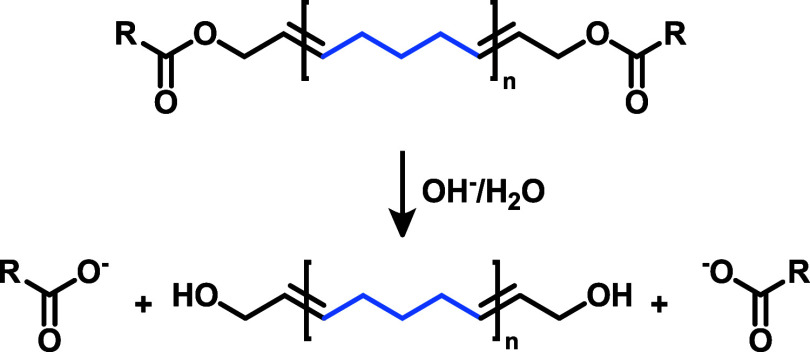 Figure 9
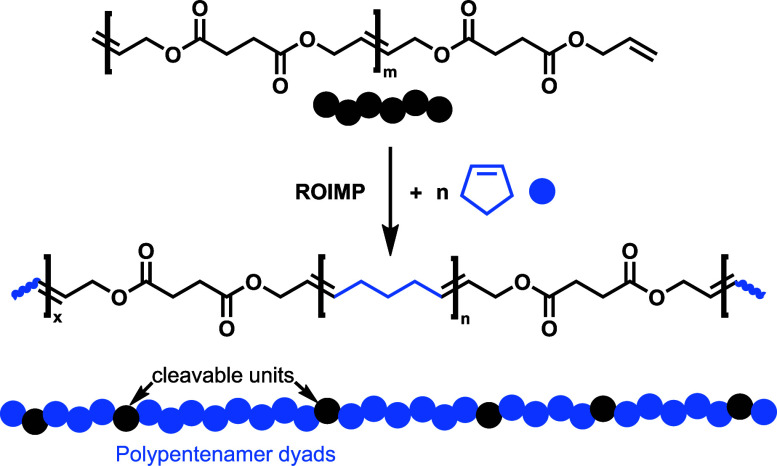 Figure 10
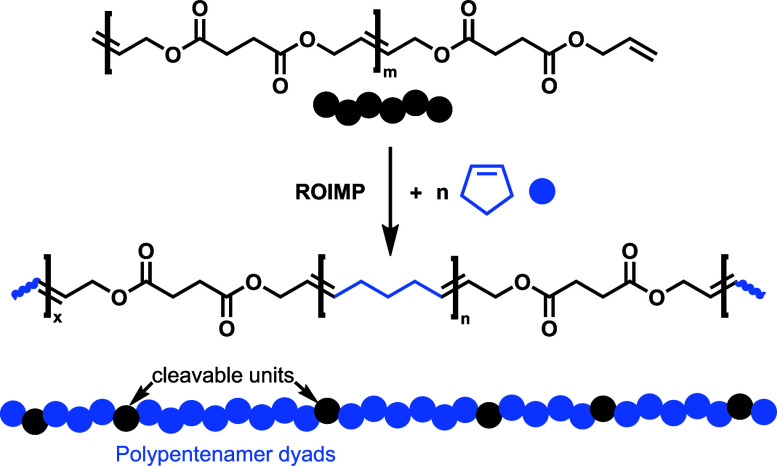 Figure 11
Peer Reviews
No public reviews on file for this paper yet. If you reviewed it on a platform where reviews are public (OpenReview, ICLR, NeurIPS, ICML), you can paste yours below so the community can read it here.
Videos
No videos yet. Explain this paper in a talk, walkthrough, or lecture? Add one.
Taxonomy
TopicsSynthetic Organic Chemistry Methods · Advanced Polymer Synthesis and Characterization · biodegradable polymer synthesis and properties