Generation of functional noncanonical donor splice sites by +2T variants in breast cancer susceptibility genes: impact on clinical interpretation
Inés Llinares‐Burguet, Lara Sanoguera‐Miralles, Elena Bueno‐Martínez, Alicia García‐Álvarez, Alberto Valenzuela‐Palomo, Pedro Pérez‐Segura, Miguel de la Hoya, Eladio A Velasco‐Sampedro

TL;DR
This study shows how certain genetic variants in breast cancer genes can create functional splicing sites, leading to normal protein production and affecting how these variants are clinically interpreted.
Contribution
The study identifies specific +2T variants in ATM, BRCA1, and PALB2 that generate functional noncanonical splice sites, impacting clinical classification.
Findings
Four +2T > C variants and ATM c.6347+2T > A/G produced functional full-length transcripts.
Two variants were reclassified from likely pathogenic to variant of uncertain significance.
Functional noncanonical splice sites may preserve gene function despite initial pathogenic predictions.
Abstract
Splicing dysregulation is a relevant mechanism of pathogenicity for variants in disease susceptibility genes. Variants affecting the critical intronic +1 and +2 GT nucleotides of the 5’ splice sites (5'ss) are generally strong indicators of pathogenicity. However, some +2 T variants create functional noncanonical 5'ss that generate wildtype transcripts, hampering accurate variant interpretation and genetic counseling. We previously showed that variants PALB2 c.108+2T > C and ATM c.1898+2T > G generated significant levels of full‐length (FL) transcripts by creating functional atypical GC and GG donor sites, respectively. In this study, we aimed to investigate the splicing impact of +2T variants in the breast cancer susceptibility genes ATM, BRCA1, and PALB2. For this purpose, five minigenes encompassing 29 exons of ATM, BRCA1, and PALB2 were employed. A total of 30 +2T > C/G/A variants…
Genes, proteins, chemicals, diseases, species, mutations and cell lines named across the full text — each resolved to its canonical identifier and authoritative record.
Click any figure to enlarge with its caption.
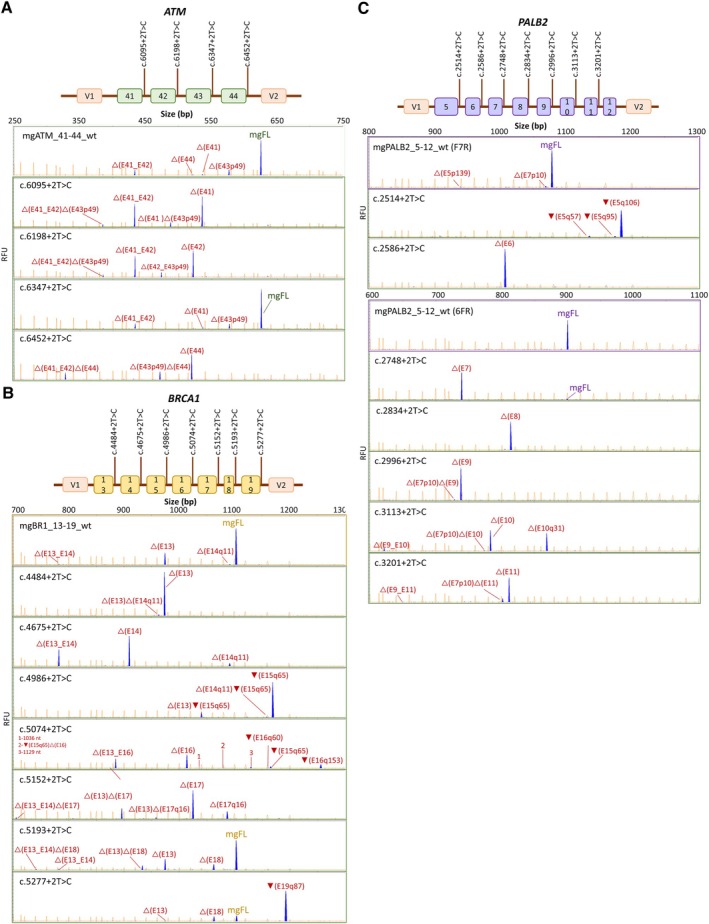 Figure 1
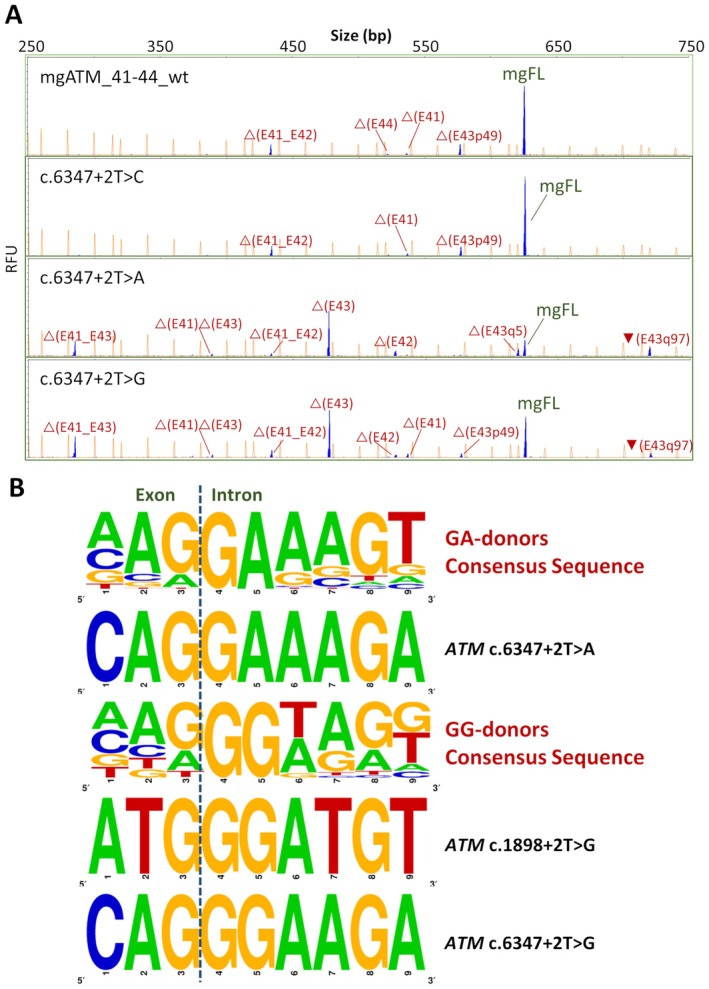 Figure 2
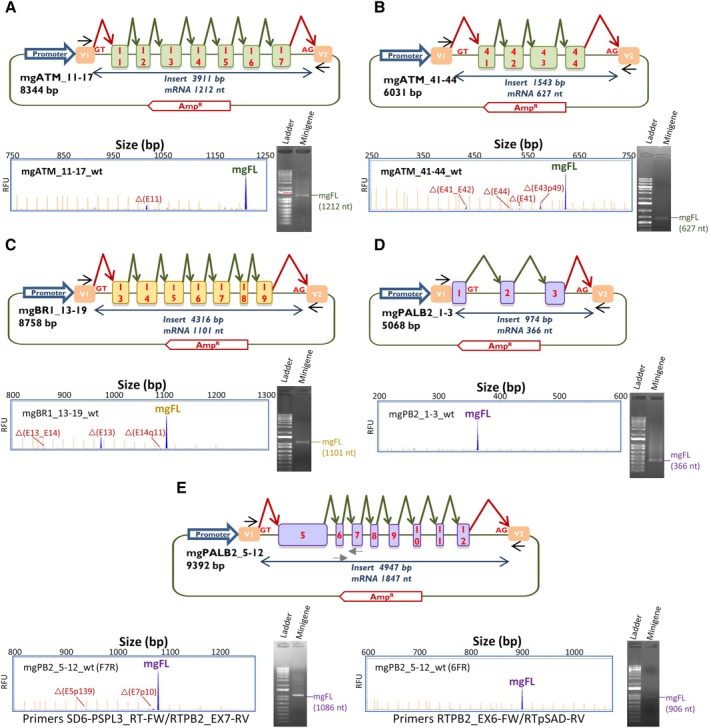 Figure 3
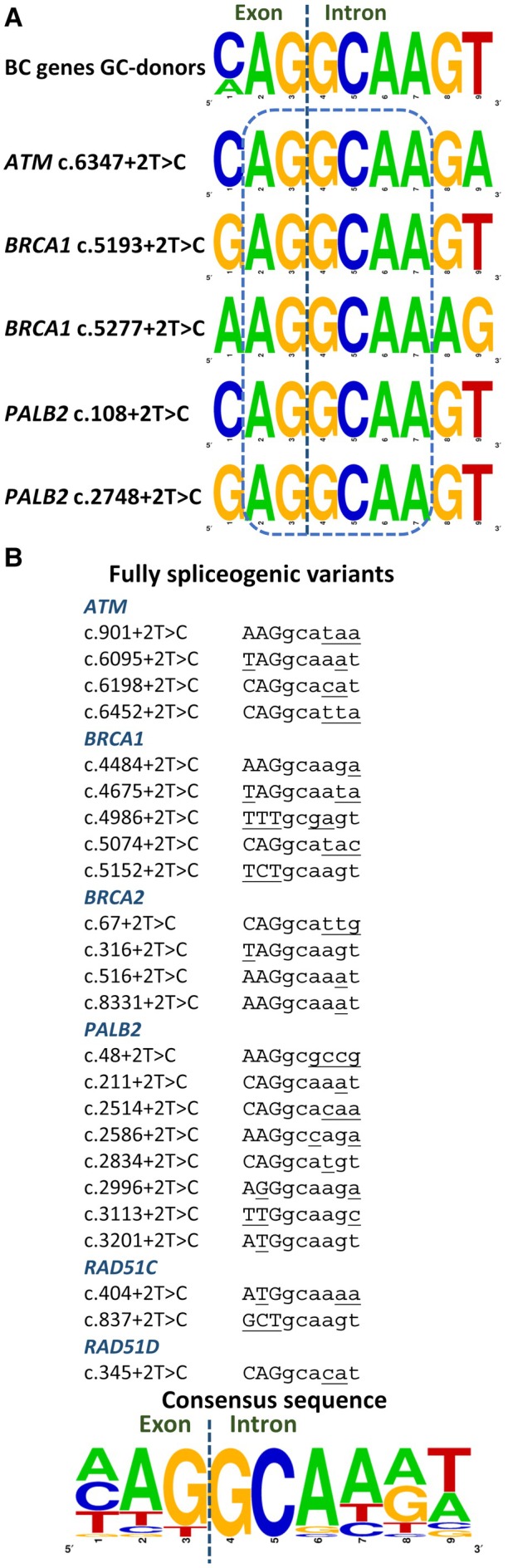 Figure 4
Peer Reviews
No public reviews on file for this paper yet. If you reviewed it on a platform where reviews are public (OpenReview, ICLR, NeurIPS, ICML), you can paste yours below so the community can read it here.
Videos
No videos yet. Explain this paper in a talk, walkthrough, or lecture? Add one.
Taxonomy
TopicsBRCA gene mutations in cancer · Genomics and Rare Diseases · Cancer Genomics and Diagnostics