Estrogen regulation in the prostate underlies racial disparity in men with benign prostatic hyperplasia
Teresa T Liu, Laura E Pascal, Emily A Ricke, Ana Lucila Bautista‐Ruiz, Justin Townsend, Glenn O Allen, Rajiv Dhir, Douglas W Strand, Donald B DeFranco, William A Ricke

TL;DR
The study explores how estrogen regulation in the prostate differs between African American and European American men, contributing to racial disparities in benign prostatic hyperplasia.
Contribution
The study identifies racial differences in estrogen receptor regulation and steroid metabolism in benign prostate tissues, offering insights for precision therapies.
Findings
Steroid metabolism gene expression differs between normal African American and European American prostates.
ERα's role in LUTS/BPH is more pronounced in European American samples, while African American samples show increased ER and metabolism gene expression.
Collagen deposition does not significantly differ between racial groups in LUTS/BPH prostate tissues.
Abstract
Lower urinary tract symptoms (LUTS), associated with benign prostatic hyperplasia (BPH), are an aging‐related disease, with more than 210 million cases worldwide. Estrogen exposure and estrogen regulation have been implicated in a variety of disease processes, with estrogen receptor (ER)‐α pathways associated with disease progression and ERβ pathways considered to be disease‐protective through enhanced apoptosis and reduced cellular proliferation. Preclinical models of LUTS/BPH have shown that ERα activation contributes to disease initiation and progression. Self‐identified African American (AA) men have a high incidence of LUTS/BPH, with increased incidence of non‐surgical treatment failure, larger prostates at time of surgery, and surgery occurring at a younger age compared with self‐identified European American (EA) men. While circulating estrogen levels are higher in AA individuals,…
Genes, proteins, chemicals, diseases, species, mutations and cell lines named across the full text — each resolved to its canonical identifier and authoritative record.
Click any figure to enlarge with its caption.
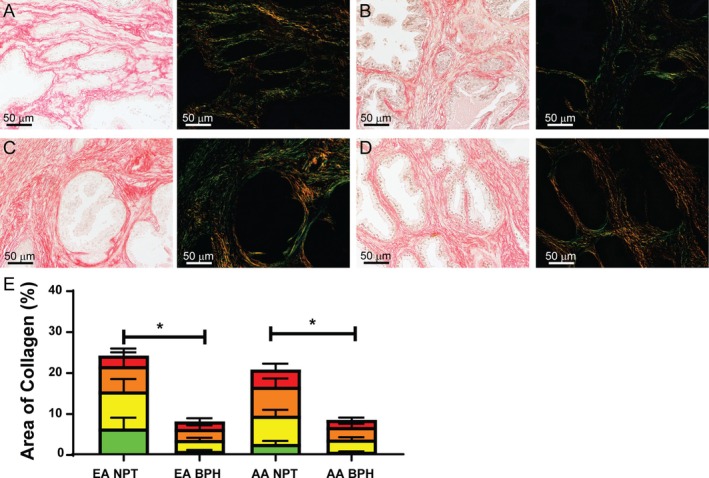 Figure 1
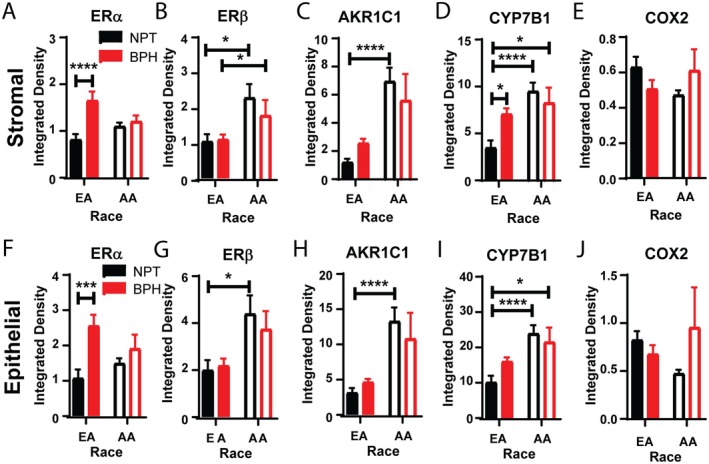 Figure 2
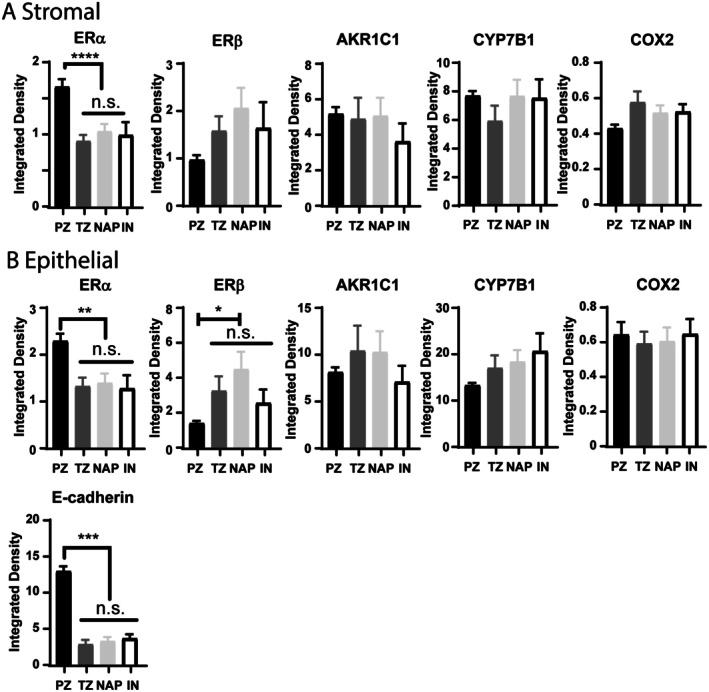 Figure 3
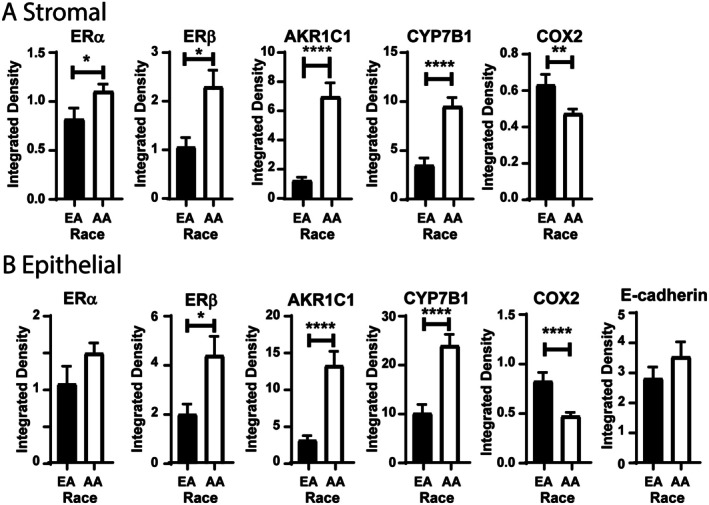 Figure 4
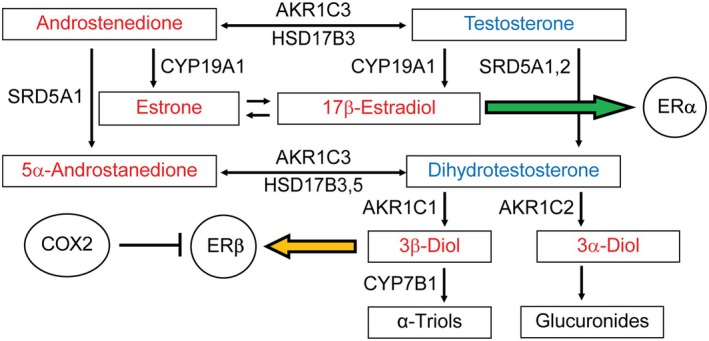 Figure 5
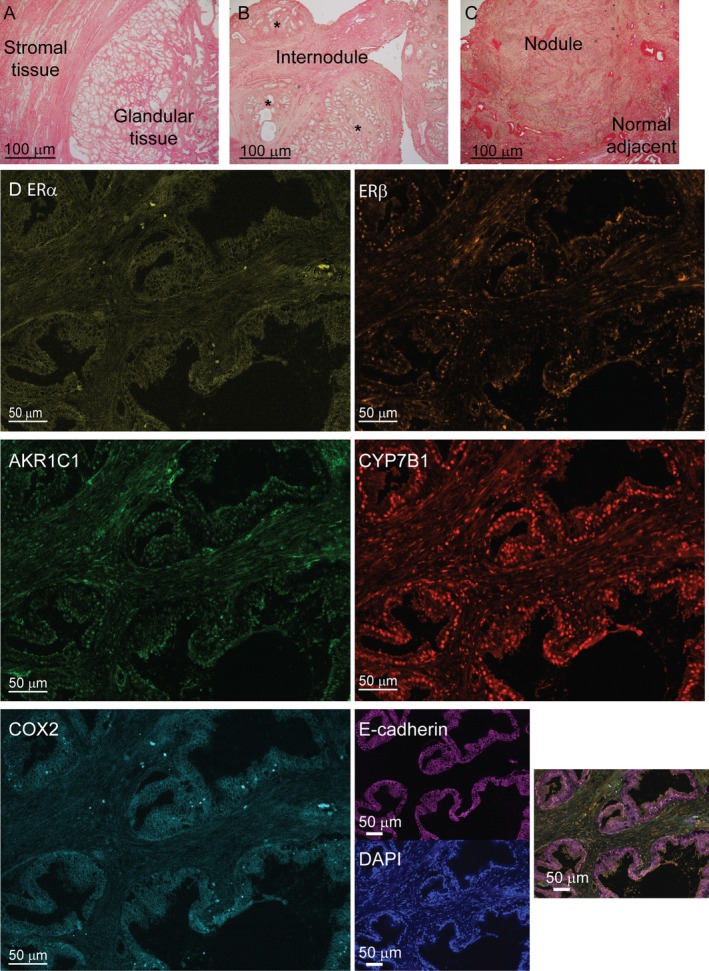 Figure 6
Peer Reviews
No public reviews on file for this paper yet. If you reviewed it on a platform where reviews are public (OpenReview, ICLR, NeurIPS, ICML), you can paste yours below so the community can read it here.
Videos
No videos yet. Explain this paper in a talk, walkthrough, or lecture? Add one.
Taxonomy
TopicsUrinary Bladder and Prostate Research · Prostate Cancer Diagnosis and Treatment · Pelvic floor disorders treatments