Thiolated Hyaluronic Acid: A Gateway for Targeted Killing of Staphylococcus aureus on the Race for Surface Colonization
Mariana Blanco Massani, Susanne Meile, Annabelle Knoll, David Gintsburg, Ilaria Polidori, Anna Seybold, Débora C. Coraça‐Huber, Martin J. Loessner, Gergely Kali, Mathias Schmelcher, Szczepan Zapotoczny, Andreas Bernkop‐Schnürch

TL;DR
A new thiolated hyaluronic acid material selectively targets and kills Staphylococcus aureus bacteria while protecting surrounding cells, offering a potential solution for preventing infections.
Contribution
Thiolated hyaluronic acid is developed as a targeted gateway to kill S. aureus while protecting against nonspecific degradation.
Findings
Thiolated hyaluronic acid (HAMS) irreversibly inhibits mammalian hyaluronidase but not Staphylococcal hyaluronate lyase.
M23-PP/HAMS nanoparticles effectively kill S. aureus in co-culture experiments while promoting wound healing.
HAMS-coated nanoparticles remain stable for seven days and resist nonspecific degradation.
Abstract
Hyaluronic acid (HA) is degraded by Staphylococcal hyaluronate lyase (Hysa) and mammalian hyaluronidase (Hyal). Thiolated HA (HAMS) is used as a targeted gateway for Staphylococcus aureus killing while enhancing the previous M23 endolysin–polyphosphate (M23‐PP NPs) enzyme‐responsive nanoparticle formulation. Synthesis of HAMS and characterization for nuclear magnetic resonance, solubility, thiol content, pKa, and degradation by Hysa and Hyal are presented. Nanoparticles prepared via ionotropic gelation between M23‐PP NPs and either HAMS or HA yield M23‐PP/HAMS or M23‐PP/HA NPs, respectively. Their characterization includes size, zeta potential, morphology, release profiles, safety, targeted release, and efficacy. HAMS with a thiol content of 250.18 ± 90.32 µmol g−1, solubility of 50.99 ± 0.02 mg mL−1, exhibits pKa values of 3.2, 4.2, and 8.8. This thiolated polymer irreversibly inhibits…
Genes, proteins, chemicals, diseases, species, mutations and cell lines named across the full text — each resolved to its canonical identifier and authoritative record.
Click any figure to enlarge with its caption.
 Figure 1
 Figure 2
 Figure 3
 Figure 4
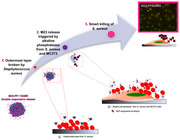 Figure 5
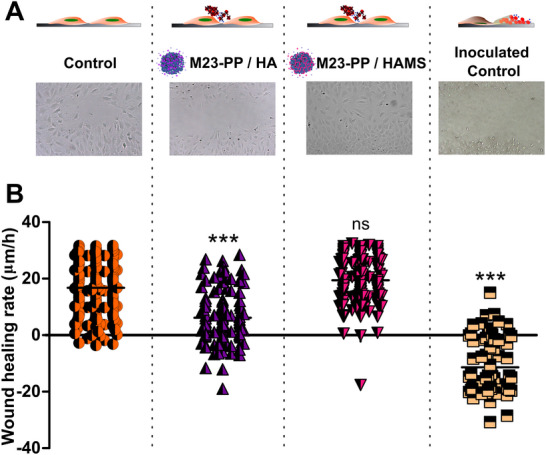 Figure 6
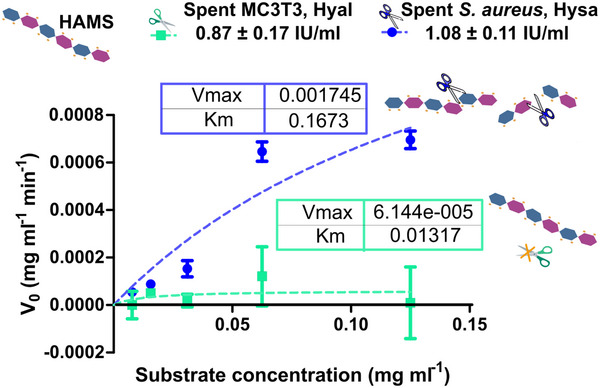 Figure 7
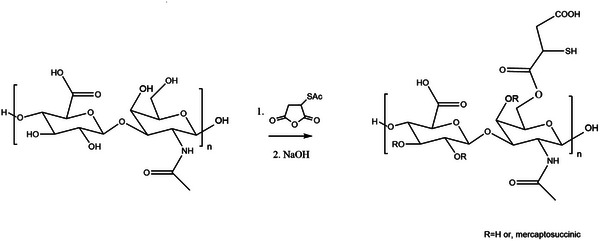 Figure 8
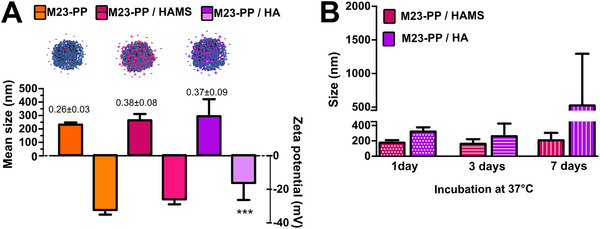 Figure 9
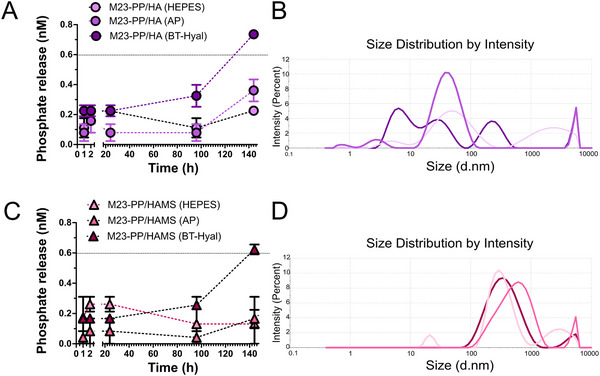 Figure 10
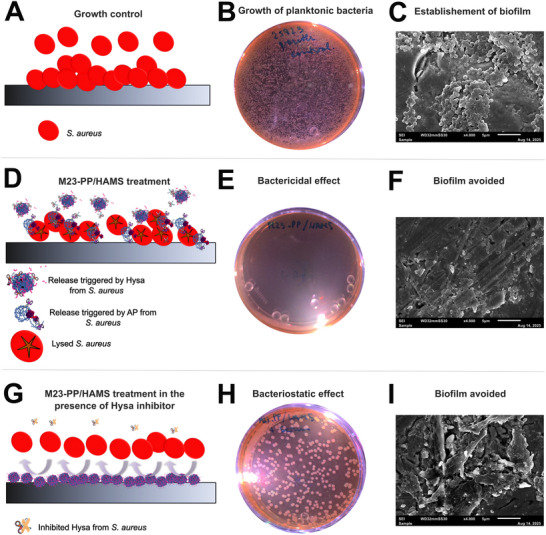 Figure 11
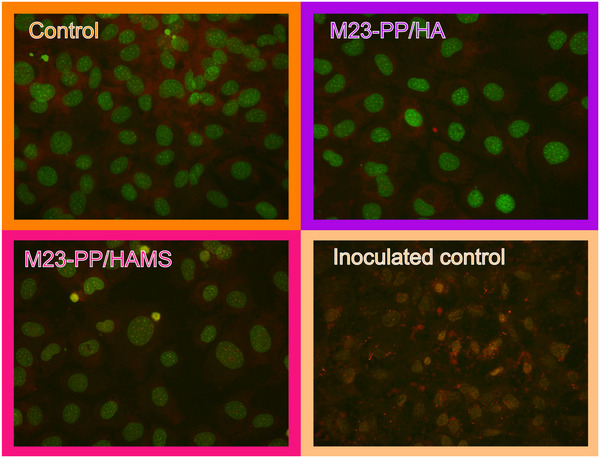 Figure 12
Peer Reviews
No public reviews on file for this paper yet. If you reviewed it on a platform where reviews are public (OpenReview, ICLR, NeurIPS, ICML), you can paste yours below so the community can read it here.
Videos
No videos yet. Explain this paper in a talk, walkthrough, or lecture? Add one.
Taxonomy
TopicsProteoglycans and glycosaminoglycans research · Advanced Drug Delivery Systems · Ocular Surface and Contact Lens