Biomechanical Evolution in Longitudinal Analysis of Lumbar Stress Injuries in Fast Bowlers: A Systematic Review
C Arun, Sai Aditya Raman, Nimishaanth SS, Thiagarajan KA, Arumugam Sivaraman

TL;DR
This systematic review examines biomechanical factors contributing to lumbar stress injuries in fast bowlers, aiming to improve injury prevention and training practices.
Contribution
The study provides a 15-year synthesis of biomechanical contributors to lumbar stress injuries in adolescent fast bowlers, identifying specific injury risk factors and prevention strategies.
Findings
Shoulder counter-rotation exceeding 25°, trunk lateral flexion, and reduced knee flexion at front-foot contact increase lumbar and lower-limb loading.
Poor lumbopelvic control increases lumbar stress injury risk by up to 88%, while greater ankle dorsiflexion (>30°) has a protective effect.
Preventive strategies should focus on biomechanical screening, workload regulation, and lumbopelvic strengthening.
Abstract
Fast bowling involves a highly complex and physically demanding motion sequence, placing fast bowlers under substantially greater workloads than other cricketing roles. Consequently, they experience a disproportionately high incidence of injuries, particularly to the lower back, with lumbar stress fractures being especially common in adolescent bowlers. These injuries are multifactorial, arising from repeated exposure to high spinal loads, underscoring the need for comprehensive biomechanical analysis and targeted preventive strategies to enhance safety and prolong athletic careers. This systematic review synthesizes 15 years (2008-2023) of research to identify injury patterns and biomechanical contributors, aiming to inform safer, sustainable training practices. A comprehensive search of MEDLINE, Embase, SPORTDiscus, CINAHL, Scopus, Web of Science, PubMed, and Google Scholar identified…
Genes, proteins, chemicals, diseases, species, mutations and cell lines named across the full text — each resolved to its canonical identifier and authoritative record.
Click any figure to enlarge with its caption.
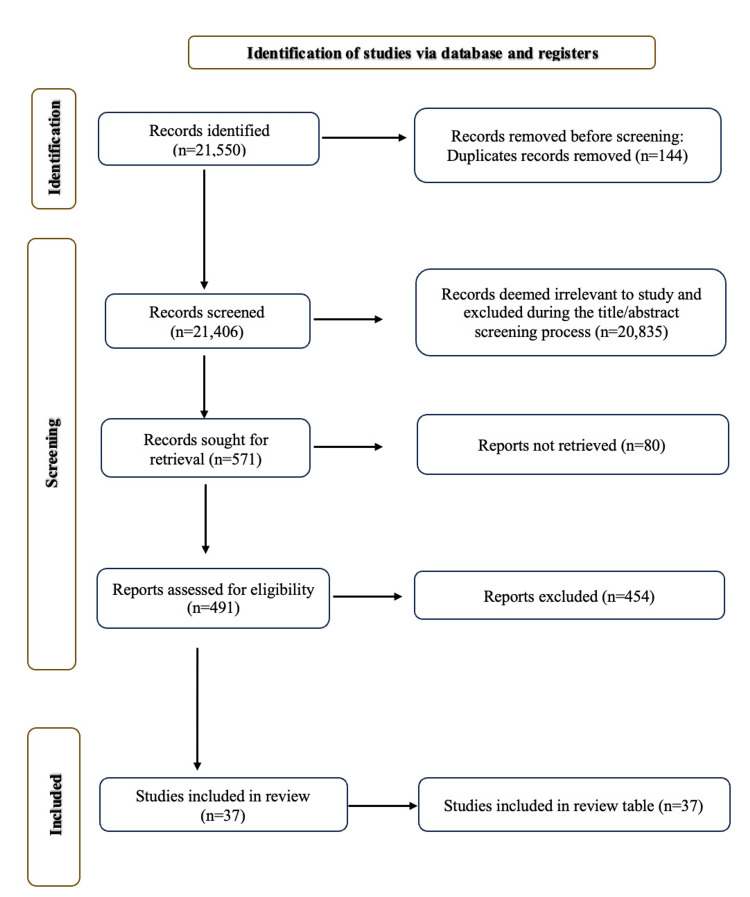 Figure 1
Peer Reviews
No public reviews on file for this paper yet. If you reviewed it on a platform where reviews are public (OpenReview, ICLR, NeurIPS, ICML), you can paste yours below so the community can read it here.
Videos
No videos yet. Explain this paper in a talk, walkthrough, or lecture? Add one.
Taxonomy
TopicsSports injuries and prevention · Shoulder Injury and Treatment · Lower Extremity Biomechanics and Pathologies