The Association Between 5α-Reductase Inhibitors and the Presence of Subsequent Dry Eye Disease in Androgenetic Alopecia: A TriNetX Database Study
Chia-Yi Lee, Shun-Fa Yang, Yu-Ling Chang, Jing-Yang Huang, Chao Bin Yeh, Feng-Ming Yeh, Chao Kai Chang

TL;DR
This study finds that using 5α-reductase inhibitors for androgenetic alopecia is linked to a higher risk of developing dry eye disease.
Contribution
The study is the first to use a large database to show a significant association between 5α-reductase inhibitors and dry eye disease in androgenetic alopecia patients.
Findings
Patients using 5α-reductase inhibitors had a 2.97% incidence of dry eye disease compared to 2.60% in non-users.
The adjusted hazard ratio showed a 8.4% higher risk of dry eye disease in users of 5α-reductase inhibitors.
The risk was consistently higher in users with additional factors like metabolic syndrome.
Abstract
Purpose The purpose of this study is to evaluate the association between the application of 5α-reductase inhibitors (5ARI) and the incidence of subsequent dry eye disease (DED) in the androgenetic alopecia population. Method A retrospective cohort study was conducted, and patients with androgenetic alopecia were included and classified according to the receipt of 5ARI therapy or not. A total of 77,982 patients were included in the 5ARI group and the non-5ARI group. The prime outcome was the development of DED after 5ARI usage. The Cox proportional hazard regression was applied for the analysis, which yielded the adjusted hazard ratio (aHR) and 95% confidence interval (CI) of the primary outcome. Results After the whole follow-up period up to 10 years, there were 2317 (2.97%) and 2026 (2.60%) DED episodes in the 5ARI group and the non-5ARI group, respectively. The incidence rate is…
Genes, proteins, chemicals, diseases, species, mutations and cell lines named across the full text — each resolved to its canonical identifier and authoritative record.
Click any figure to enlarge with its caption.
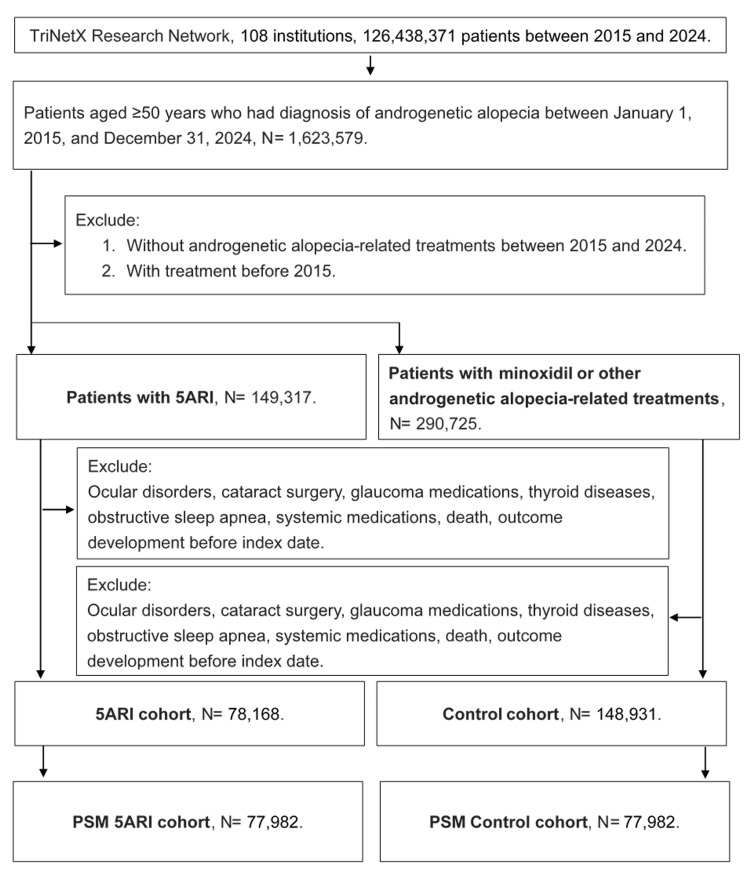 Figure 1
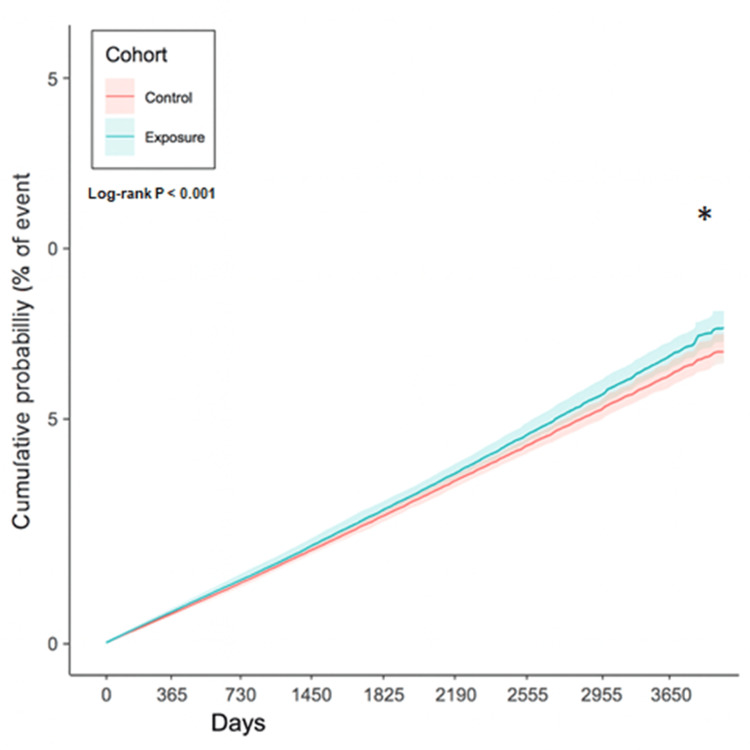 Figure 2
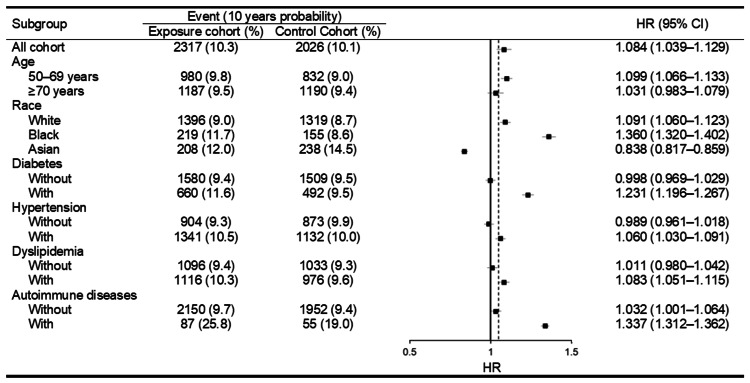 Figure 3
Peer Reviews
No public reviews on file for this paper yet. If you reviewed it on a platform where reviews are public (OpenReview, ICLR, NeurIPS, ICML), you can paste yours below so the community can read it here.
Videos
No videos yet. Explain this paper in a talk, walkthrough, or lecture? Add one.
Taxonomy
TopicsHair Growth and Disorders · Ocular Surface and Contact Lens · Ovarian function and disorders