A general aqueous synthetic strategy towards 1-benzylTHIQs enabled by umpolung hydrazone
Manpreet Kaur, Evan F. W. Chen, Jan Michael Salgado, Ruofei Cheng, Chao-Jun Li

TL;DR
A new green chemistry method synthesizes 1-benzylTHIQ alkaloids using water and sustainable materials, avoiding hazardous reagents.
Contribution
A sustainable, aqueous, ruthenium-catalyzed strategy for synthesizing 1-benzylTHIQs with functional group tolerance and minimal waste.
Findings
The method uses renewable aldehydes and water as solvent, avoiding hazardous organometallic reagents.
A diverse range of substituted 1-benzylTHIQs was synthesized with moderate to excellent yields.
The approach enables late-stage functionalization of pharmacologically relevant molecules.
Abstract
Primarily found in plants, 1-benzyltetrahydroisoquinoline (1-benzylTHIQ) alkaloids are a diverse class of N-heterocyclic natural products with biological activity against various infectious diseases and neurodegenerative pathologies. Traditionally, 1-benzylTHIQs are synthesized using commercially inaccessible pre-functionalized materials or hazardous organometallic reagents, making their synthesis challenging. Herein, we developed an environmentally benign synthetic strategy to synthesize 1-benzylTHIQs, which aligns with green chemistry principles. This method utilizes abundant, renewable aldehydes as sustainable alkyl carbanion equivalents, thereby eliminating the use of highly reactive or hazardous organometallic reagents. This reaction is catalyzed by ruthenium, using water as a greener solvent, eliminating the need for organic solvents, thereby reducing its environmental impact.…
Genes, proteins, chemicals, diseases, species, mutations and cell lines named across the full text — each resolved to its canonical identifier and authoritative record.
Click any figure to enlarge with its caption.
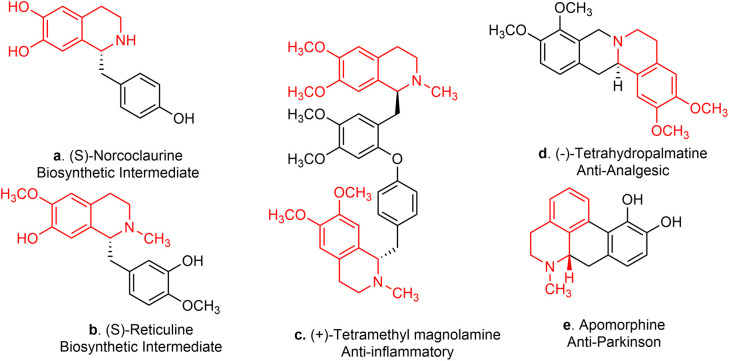 Figure 1
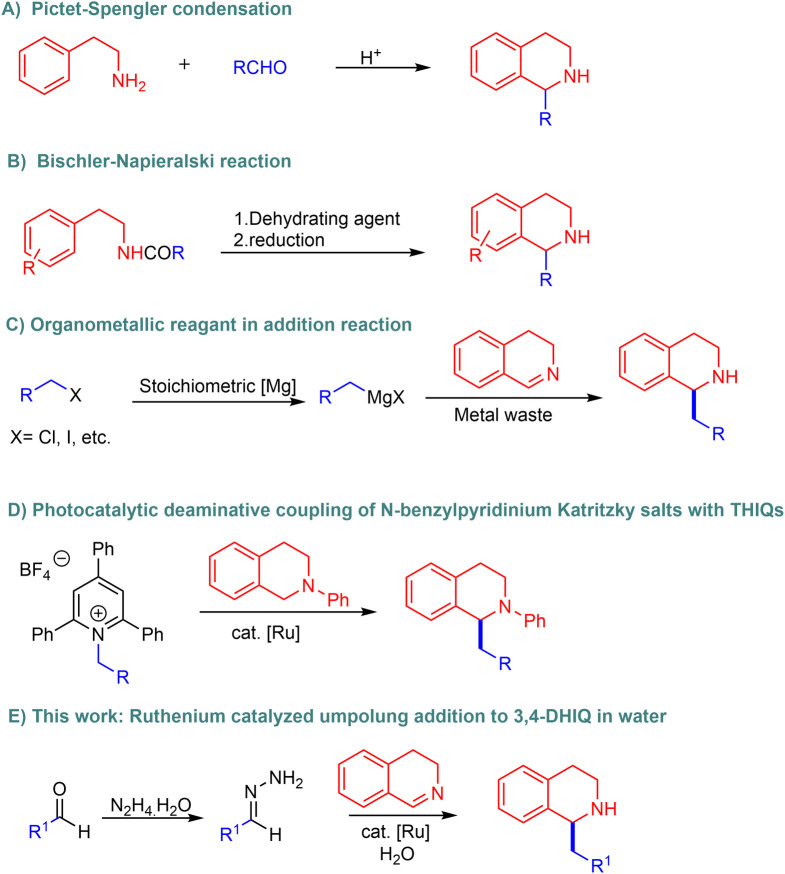 Figure 2
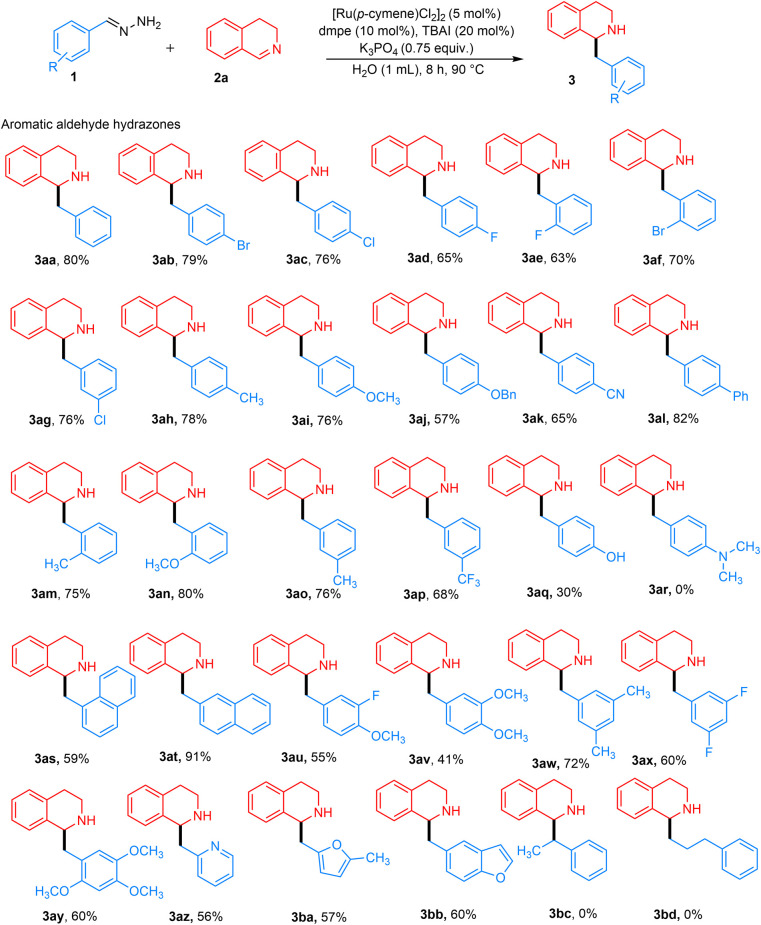 Figure 3
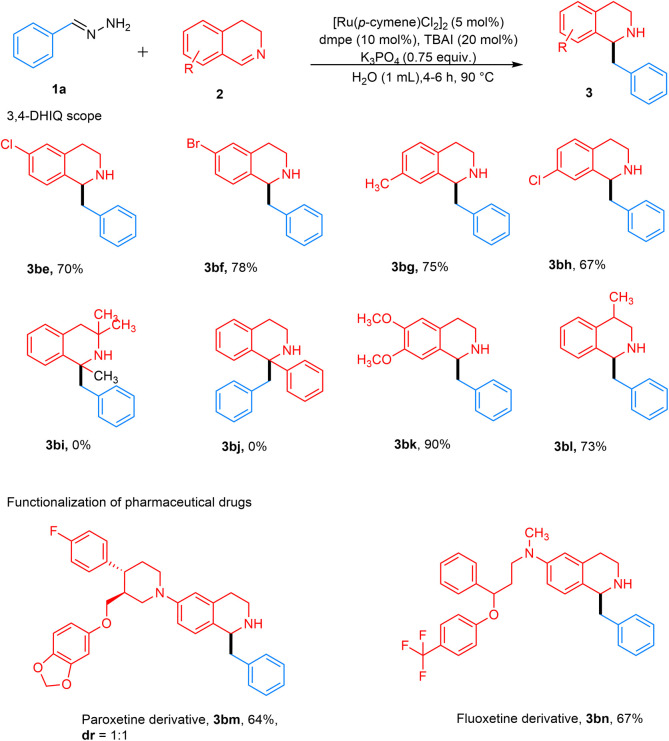 Figure 4
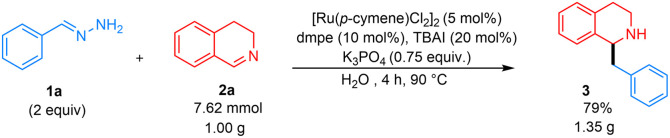 Figure 5
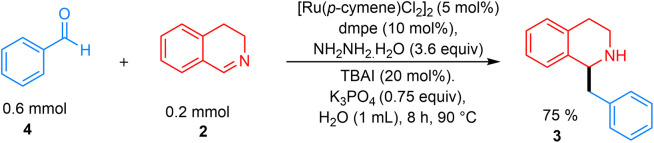 Figure 6
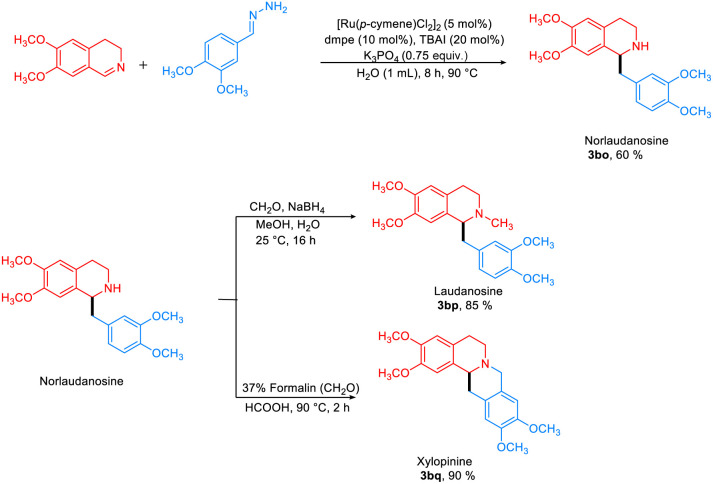 Figure 7
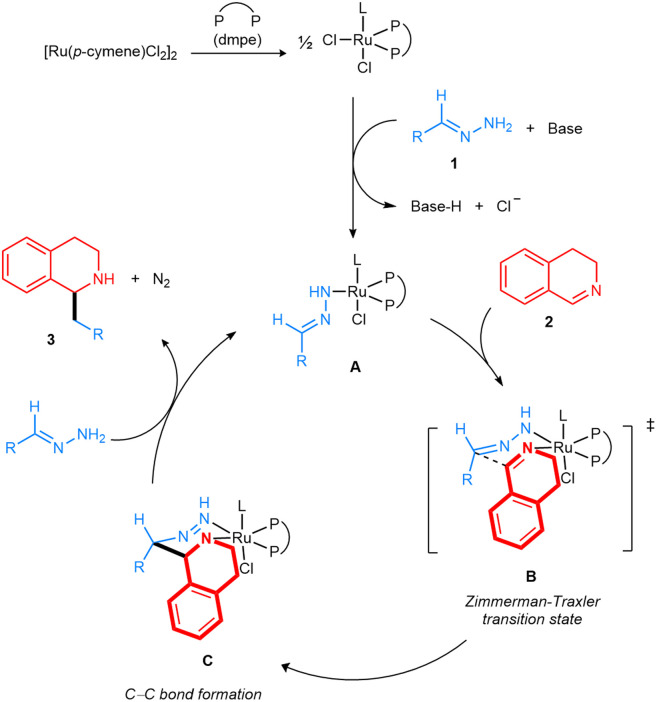 Figure 8
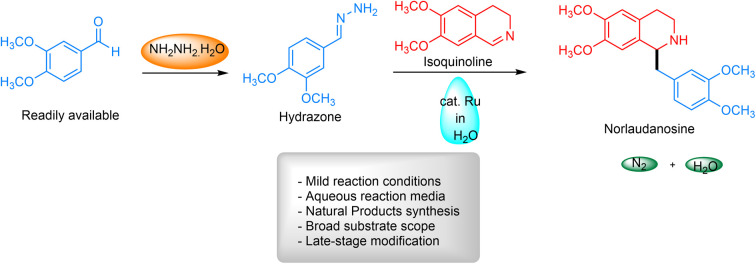 Figure 9
 Figure 10
 Figure 11
Peer Reviews
No public reviews on file for this paper yet. If you reviewed it on a platform where reviews are public (OpenReview, ICLR, NeurIPS, ICML), you can paste yours below so the community can read it here.
Videos
No videos yet. Explain this paper in a talk, walkthrough, or lecture? Add one.
Taxonomy
TopicsSynthesis and Biological Activity · Chemical synthesis and alkaloids · Berberine and alkaloids research