Efficient Calculation of Electrostatic Energies for Large-Scale Nonadiabatic Molecular Dynamics in a Site Basis
Samuele Giannini, Ljiljana Stojanovic, Matthew Ellis, Guido Falk von Rudorff, Jochen Blumberger

TL;DR
This paper introduces a more efficient method to calculate electrostatic energies in large-scale molecular simulations, improving accuracy and agreement with experimental results.
Contribution
A new computational scheme for efficiently calculating electrostatic energies in nonadiabatic molecular dynamics simulations.
Findings
Including electrostatic site energy fluctuations reduces hole delocalization and mobility in crystalline anthracene.
Electrostatics improve agreement with experimental mobilities and anisotropy without changing the transport mechanism.
Omitting electrostatic site energy disorder is reasonable for acenes but not sufficient for near-quantitative agreement with experiments.
Abstract
Nonadiabatic molecular dynamics simulation of charge and exciton transport in molecular materials and biological systems are often carried out in a (quasi-)diabatic or site basis. Such simulations require the calculation of the electrostatic site energy of all possible charge or excited states of the system at each molecular dynamics step, which quickly becomes computationally prohibitive when Ewald summation is used. By combining the damped shifted force real space electrostatic summation method with a suitable addition-subtraction scheme, we show that the calculation of electrostatic energy and forces for N mol site energies can be carried out at a small and system size independent overhead compared to the calculation for a single site energy. This advance enables us to include full electrostatic interactions in nonadiabatic molecular dynamics simulations for charge and exciton…
Genes, proteins, chemicals, diseases, species, mutations and cell lines named across the full text — each resolved to its canonical identifier and authoritative record.
Click any figure to enlarge with its caption.
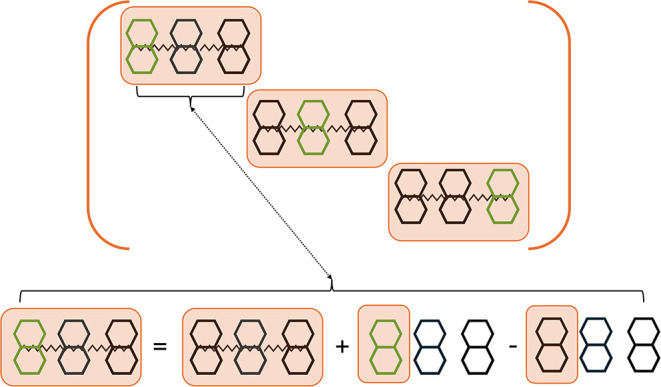 Figure 1
 Figure 2
 Figure 3
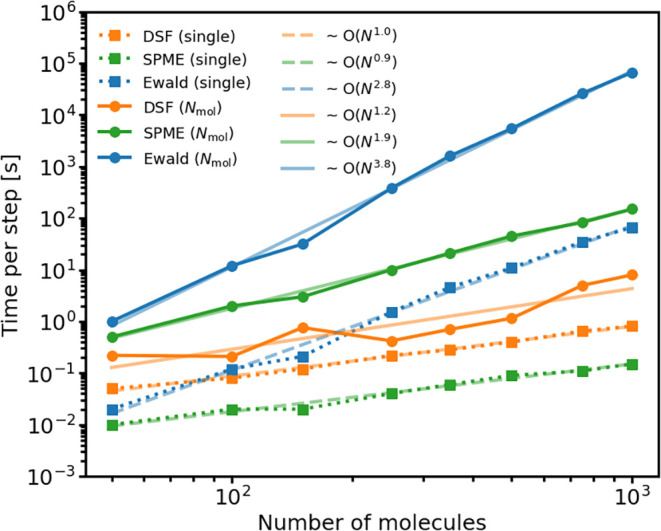 Figure 4
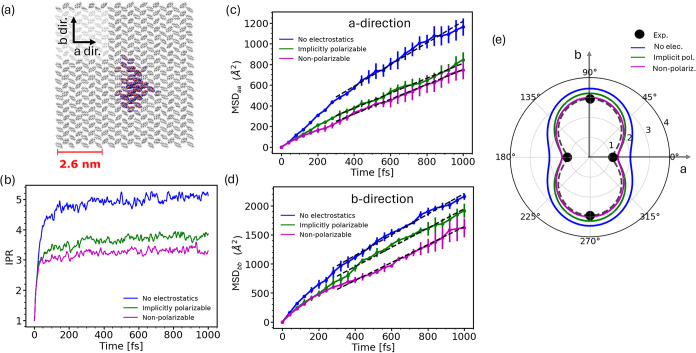 Figure 5
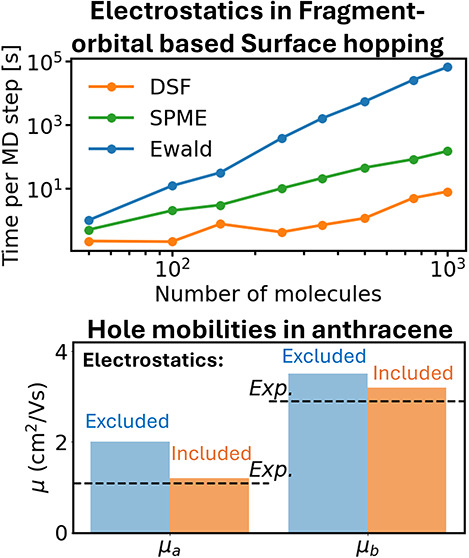 Figure 6
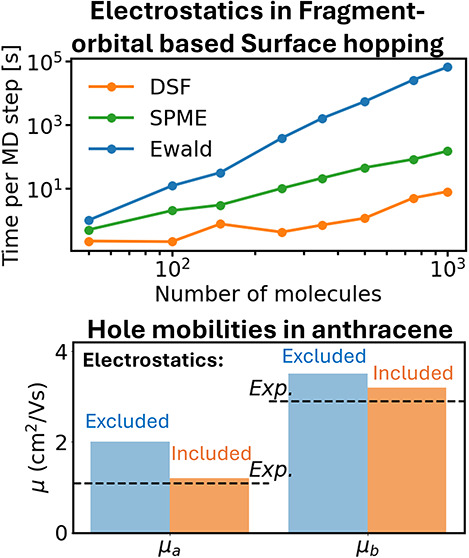 Figure 7
 Figure 8
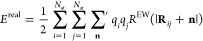 Figure 9
 Figure 10
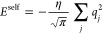 Figure 11
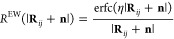 Figure 12
 Figure 13
 Figure 14
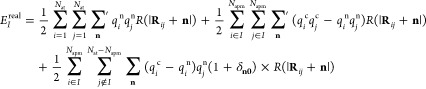 Figure 15
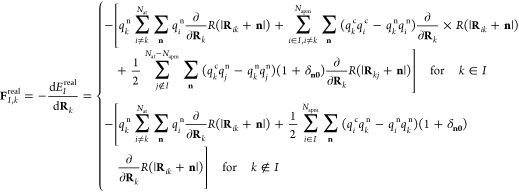 Figure 16
 Figure 17
 Figure 18
 Figure 19
 Figure 20
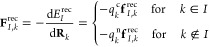 Figure 21
 Figure 22
 Figure 23
 Figure 24
 Figure 25
 Figure 26
 Figure 27
 Figure 28
 Figure 29
 Figure 30
 Figure 31
 Figure 32
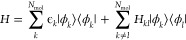 Figure 33
 Figure 34
 Figure 35
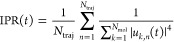 Figure 36
 Figure 37
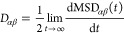 Figure 38
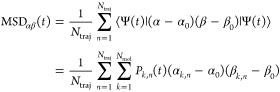 Figure 39
Peer Reviews
No public reviews on file for this paper yet. If you reviewed it on a platform where reviews are public (OpenReview, ICLR, NeurIPS, ICML), you can paste yours below so the community can read it here.
Videos
No videos yet. Explain this paper in a talk, walkthrough, or lecture? Add one.
Taxonomy
TopicsOrganic Electronics and Photovoltaics · Molecular Junctions and Nanostructures · Spectroscopy and Quantum Chemical Studies