Quantum Calculation of the Collision-Induced Line-Shape Effects in Antiprotonic Helium and the New Accurate Ab Initio p̅He+ –He Potential Energy Surface
Hubert J. Jóźwiak, Dimitar Bakalov, Michał Przybytek, Michail Stoilov, Piotr Wcisło

TL;DR
This paper calculates how helium atoms affect the spectral lines of antiprotonic helium, using new quantum methods to improve precision in measuring fundamental symmetries.
Contribution
The paper introduces a new ab initio potential energy surface and quantum framework for studying antiprotonic helium with high accuracy.
Findings
A new potential energy surface was developed for p̅He+–He interactions.
Quantum scattering calculations provided pressure broadening and shift coefficients for 50 transitions in p̅4He+.
The results support high-precision spectroscopy for testing CPT symmetry and determining pion and kaon masses.
Abstract
We present the first fully ab initio calculations of collision-induced broadening and shift of spectral lines in antiprotonic helium (p̅He+) perturbed by atomic helium. To overcome critical limitations of previous studies, we construct a new highly accurate potential energy surface (PES) that spans a wide range of p̅He+ –He geometries relevant to all metastable states of the exotic helium atom. Rigorous quantum scattering calculations performed using the new PES yield scattering S-matrices from which we extract pressure broadening and shift coefficients for 50 transitions in antiprotonic helium-4 (p̅4He+) . This data set provides the first rigorous benchmark for earlier semiclassical calculations and establishes a robust theoretical reference for high-precision spectroscopy of antiprotonic helium, which is used to test the fundamental charge, parity, and time reversal (CPT)…
Genes, proteins, chemicals, diseases, species, mutations and cell lines named across the full text — each resolved to its canonical identifier and authoritative record.
Click any figure to enlarge with its caption.
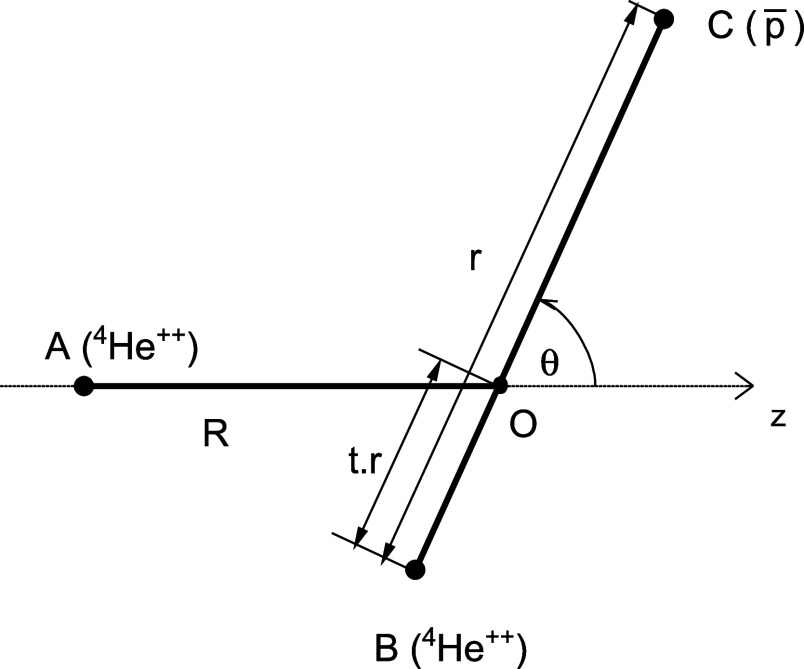 Figure 1
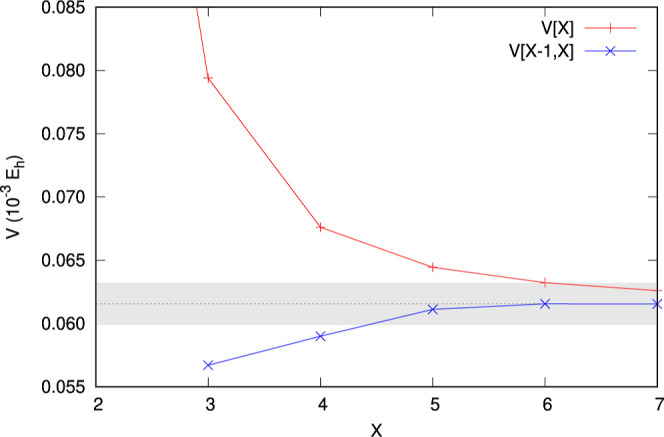 Figure 2
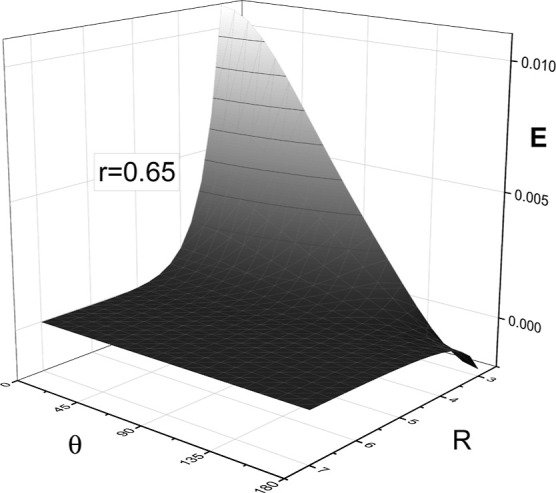 Figure 3
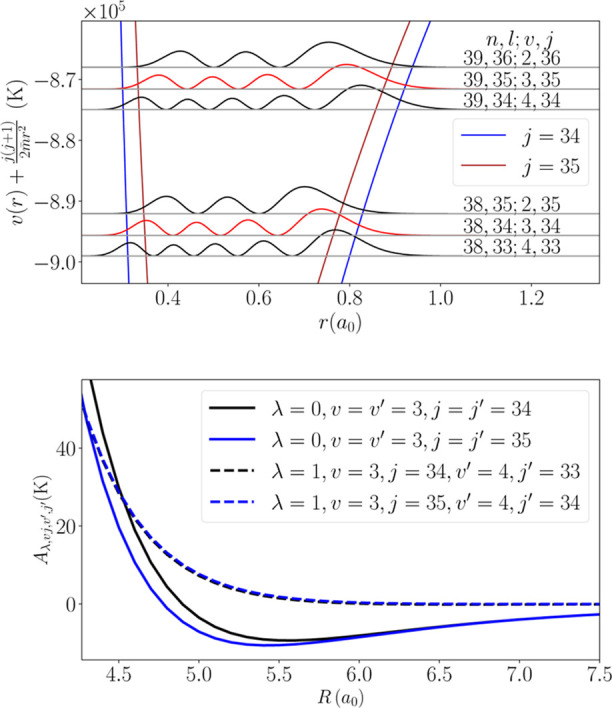 Figure 4
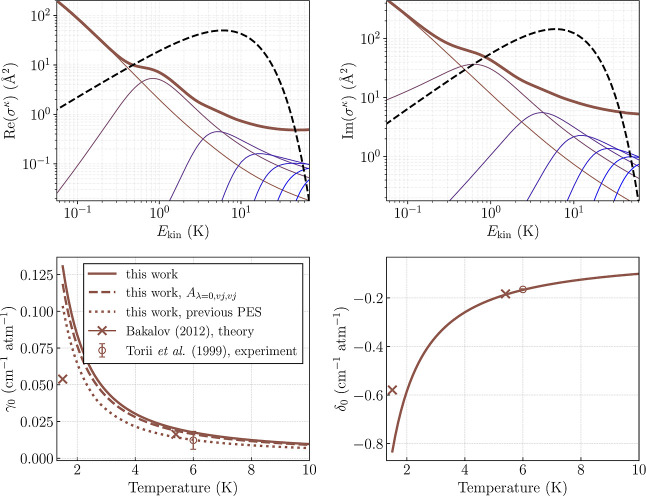 Figure 5
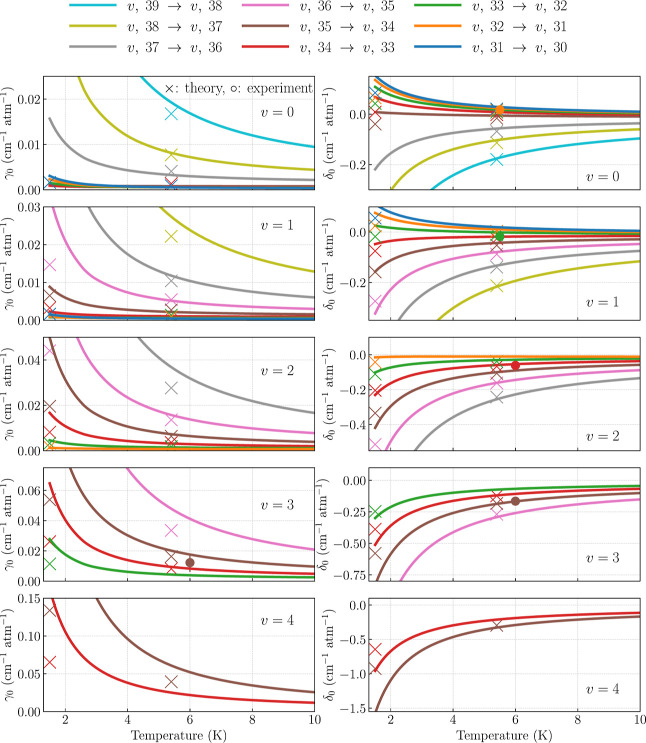 Figure 6
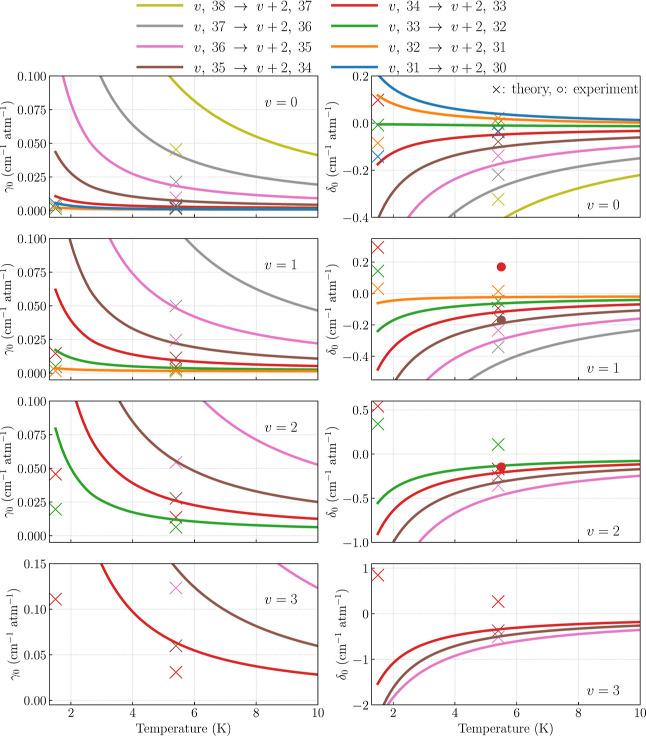 Figure 7
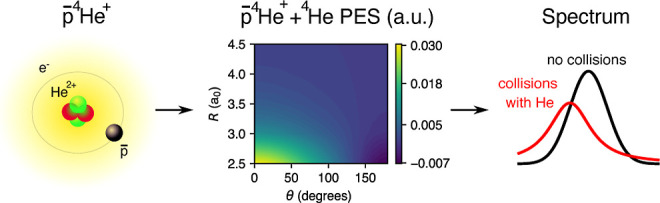 Figure 8
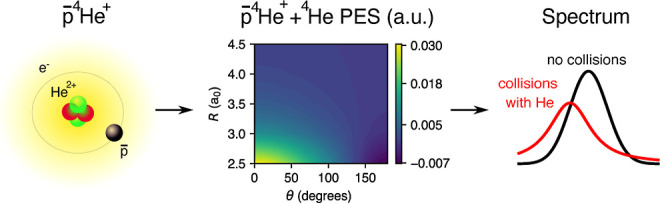 Figure 9
 Figure 10
 Figure 11
 Figure 12
 Figure 13
 Figure 14
 Figure 15
 Figure 16
 Figure 17
 Figure 18
 Figure 19
 Figure 20
 Figure 21
 Figure 22
 Figure 23
 Figure 24
 Figure 25
 Figure 26
 Figure 27
 Figure 28
 Figure 29
 Figure 30
 Figure 31
 Figure 32
 Figure 33
 Figure 34
 Figure 35
 Figure 36
 Figure 37
 Figure 38
 Figure 39
 Figure 40
 Figure 41
 Figure 42
 Figure 43
 Figure 44
 Figure 45
 Figure 46
 Figure 47
 Figure 48
 Figure 49
 Figure 50
Peer Reviews
No public reviews on file for this paper yet. If you reviewed it on a platform where reviews are public (OpenReview, ICLR, NeurIPS, ICML), you can paste yours below so the community can read it here.
Videos
No videos yet. Explain this paper in a talk, walkthrough, or lecture? Add one.
Taxonomy
TopicsHigh-pressure geophysics and materials · Quantum, superfluid, helium dynamics · Atomic and Molecular Physics