Proton Pump Inhibitor‐Induced Fundic Gland Polyps With Massive Bleeding Regressed on Alternative Histamine 2 Receptor Antagonist Therapy
Ryosuke Ikeda, Hiroaki Kaneko, Hiroki Sato, Yuto Matsuoka, Tomomi Hamaguchi, Aya Ikeda, Yoshihiro Goda, Soichiro Sue, Kuniyasu Irie, Shin Maeda

TL;DR
A patient with PPI-induced stomach polyps experienced severe bleeding, which stopped and improved after switching to a different type of acid-reducing medication.
Contribution
This case is the first to demonstrate regression of PPI-induced fundic gland polyps and cessation of bleeding after switching to H2RA therapy.
Findings
Massive bleeding from PPI-induced fundic gland polyps was successfully controlled with vitamin K and H2RA therapy.
Switching from PPI to H2RA led to gradual and significant regression of the polyps over 6 months.
PPI-induced FGPs can cause severe bleeding, especially in patients on anticoagulant therapy.
Abstract
We report a case of massive bleeding from proton pump inhibitor (PPI)‐induced fundic gland polyps (FGPs) that regressed after switching to a histamine‐2 receptor antagonist (H2RA). A 46‐year‐old man with antiphospholipid syndrome had been receiving warfarin and lansoprazole for 4 years. Esophagogastroduodenoscopy (EGD) revealed multiple enlarged, edematous FGPs compared to those observed 3 years earlier. One month later, the patient presented with melena, anemia, and transient loss of consciousness. Laboratory data revealed anemia and a prolonged prothrombin time/international normalized ratio (PT‐INR). Emergency EGD showed refractory oozing from the FGPs caused by insufflation and water jet stimulation. The bleeding was successfully controlled with vitamin K administration. After PT‐INR normalization, no further bleeding occurred, and a follow‐up EGD 3 days later showed no bleeding…
Genes, proteins, chemicals, diseases, species, mutations and cell lines named across the full text — each resolved to its canonical identifier and authoritative record.
Click any figure to enlarge with its caption.
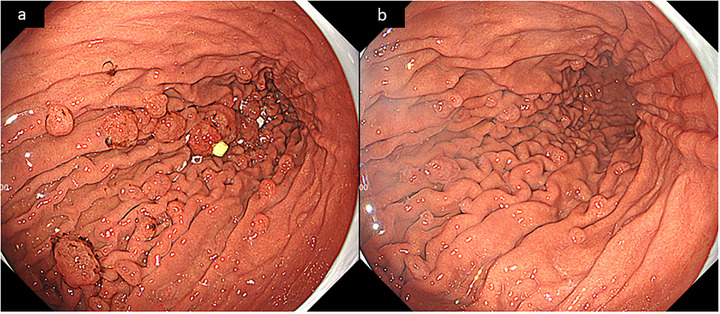 Figure 1
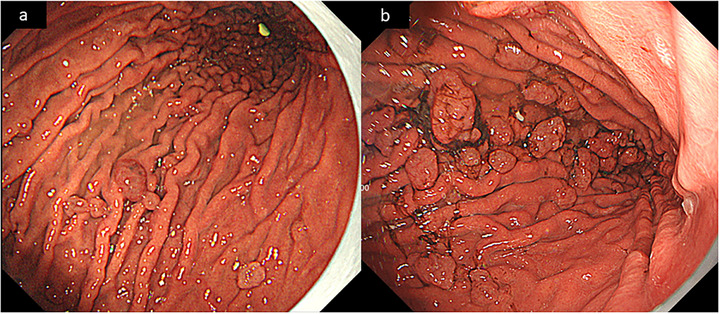 Figure 2
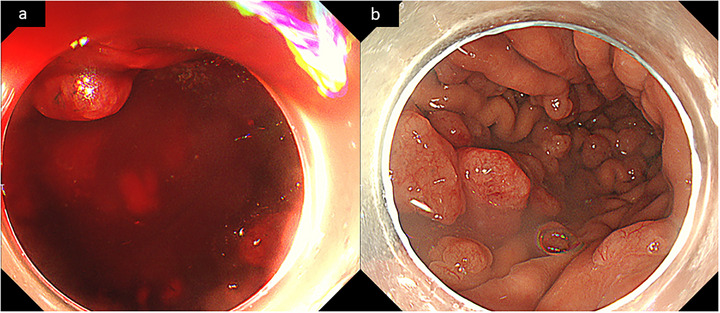 Figure 3
Peer Reviews
No public reviews on file for this paper yet. If you reviewed it on a platform where reviews are public (OpenReview, ICLR, NeurIPS, ICML), you can paste yours below so the community can read it here.
Videos
No videos yet. Explain this paper in a talk, walkthrough, or lecture? Add one.
Taxonomy
TopicsGastrointestinal Bleeding Diagnosis and Treatment · Helicobacter pylori-related gastroenterology studies · Gastroesophageal reflux and treatments