The Gwangju Alzheimer's & Related Dementias (GARD) cohort: Over a decade of Asia's largest longitudinal multimodal study
Kyu Yeong Choi, Sarang Kang, Seungho Cook, Donghe Li, Yu Yong Choi, Eun Hyun Seo, Xudong Han, Jung Eun Park, Suyeon Lee, Sunjae Lee, Ji Yeon Chung, Ari Chong, Seong‐Min Choi, Jung‐Min Ha, Min Kyung Song, Jung Sup Lee, IL Han Choo, Ja‐Hae Kim, Ho‐Chun Song, Byeong C Kim

TL;DR
The GARD study in South Korea tracks dementia progression using a large, long-term dataset to find biomarkers and improve Alzheimer's research in East Asia.
Contribution
GARD is Asia's largest longitudinal multimodal cohort for Alzheimer's, offering Korean-specific insights and global research value.
Findings
Enrolled 12,877 participants with diverse cognitive statuses for multi-omics and imaging data.
Includes extensive neuroimaging and multi-omics data for biomarker discovery and disease heterogeneity analysis.
Aims to identify Korean-specific biomarkers for early detection and cognitive decline prediction.
Abstract
Alzheimer's disease (AD) is a major public health concern in Korea, with a high prevalence among older adults. A community‐based longitudinal study is essential for tracking disease progression, identifying biomarkers, and developing targeted prevention and treatment strategies. The Gwangju Alzheimer's & Related Dementias (GARD) cohort was established to address these needs through a multimodal approach. Participants aged ≥60 years undergo comprehensive clinical evaluations, neuroimaging, and biospecimen collection for multi‐omics analyses (genomics, transcriptomics, proteomics, and metagenomics) at baseline and systematic follow‐up visits. From over 17,000 screened individuals, 12,877 were enrolled. Baseline diagnoses include 5,123 cognitively unimpaired (CU), 3,250 mild cognitive impairment (MCI), and 2,125 AD dementia. The resource includes magnetic resonance imaging scans (n =…
Genes, proteins, chemicals, diseases, species, mutations and cell lines named across the full text — each resolved to its canonical identifier and authoritative record.
Click any figure to enlarge with its caption.
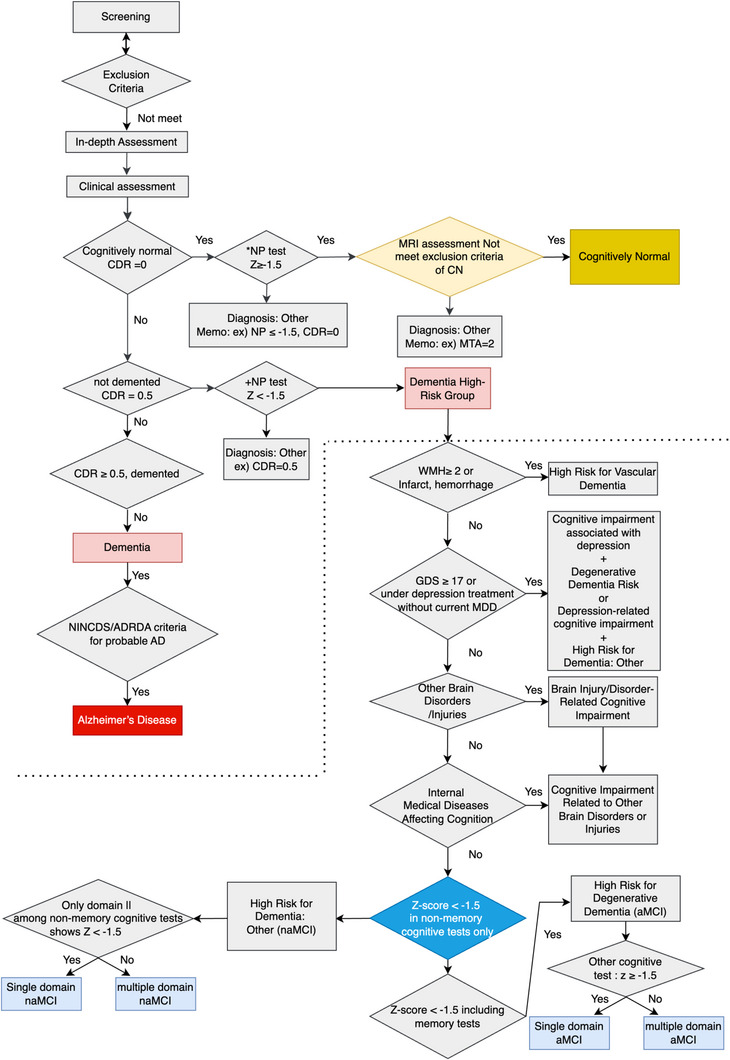 Figure 1
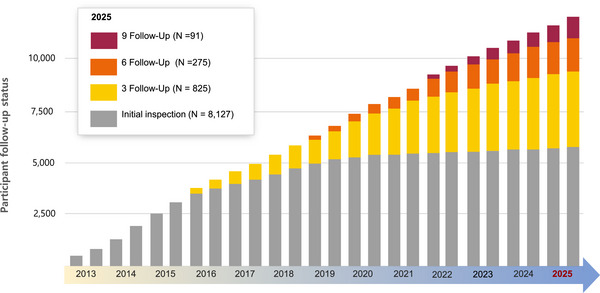 Figure 2
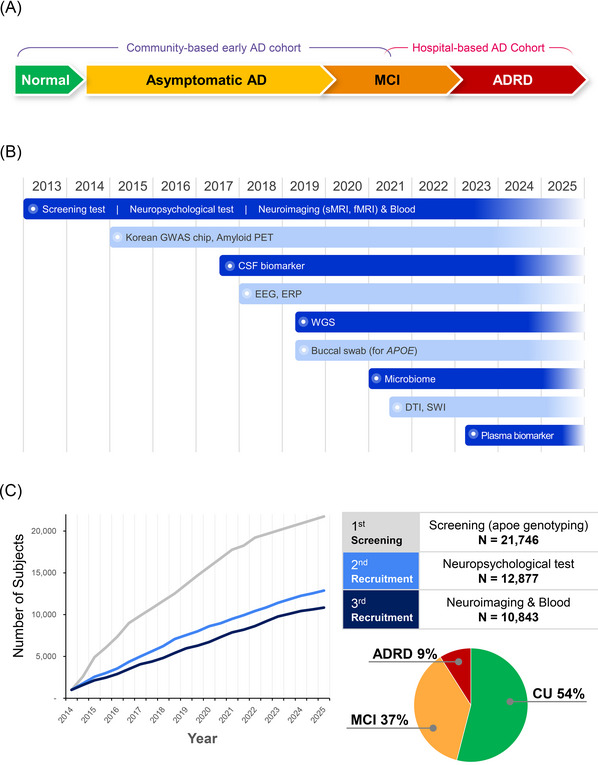 Figure 3
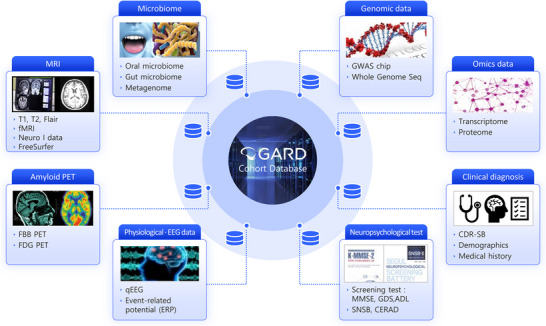 Figure 4
Peer Reviews
No public reviews on file for this paper yet. If you reviewed it on a platform where reviews are public (OpenReview, ICLR, NeurIPS, ICML), you can paste yours below so the community can read it here.
Videos
No videos yet. Explain this paper in a talk, walkthrough, or lecture? Add one.
Taxonomy
TopicsDementia and Cognitive Impairment Research · Alzheimer's disease research and treatments · Neurological Disease Mechanisms and Treatments