Data-Driven Crystal Structure Prediction for Ternary Metal Chalcogenides
Tianshu Li, Hyunsoo Park, Aron Walsh

TL;DR
This paper explores how generative AI can help discover new crystal structures for materials more efficiently than traditional methods.
Contribution
The study demonstrates that generative artificial intelligence outperforms traditional methods in predicting stable crystal structures for ternary metal chalcogenides.
Findings
Generative AI (genAI) using denoising diffusion matches or exceeds traditional methods in identifying low-energy crystal structures.
Machine-learned interatomic potentials provide reliable energy estimates and uncertainty quantification for candidate structures.
The approach is applied to ternary metal chalcogenides like Na2SiS3 and KMo2S4, showing promise for scalable materials exploration.
Abstract
The efficient design and discovery of stable inorganic crystal structures is central to materials innovation. Here, we compare data-driven approaches for accelerated crystal structure prediction: substitution into known prototype structures, generative artificial intelligence (genAI) using denoising diffusion as implemented in Chemeleon, and an evolutionary global optimization search. Candidate structures are optimized using an ensemble of machine-learned interatomic potentials, providing both energy estimates and uncertainty quantification. Applied to a large set of known and hypothetical ternary metal chalcogenide compositions, including technologically relevant sulfides such as Na2SiS3, RbPS3, and KMo2S4, our analysis reveals that the genAI approach not only matches but can surpass traditional methods in identifying diverse, low-energy structures. These findings highlight the promise…
Genes, proteins, chemicals, diseases, species, mutations and cell lines named across the full text — each resolved to its canonical identifier and authoritative record.
Click any figure to enlarge with its caption.
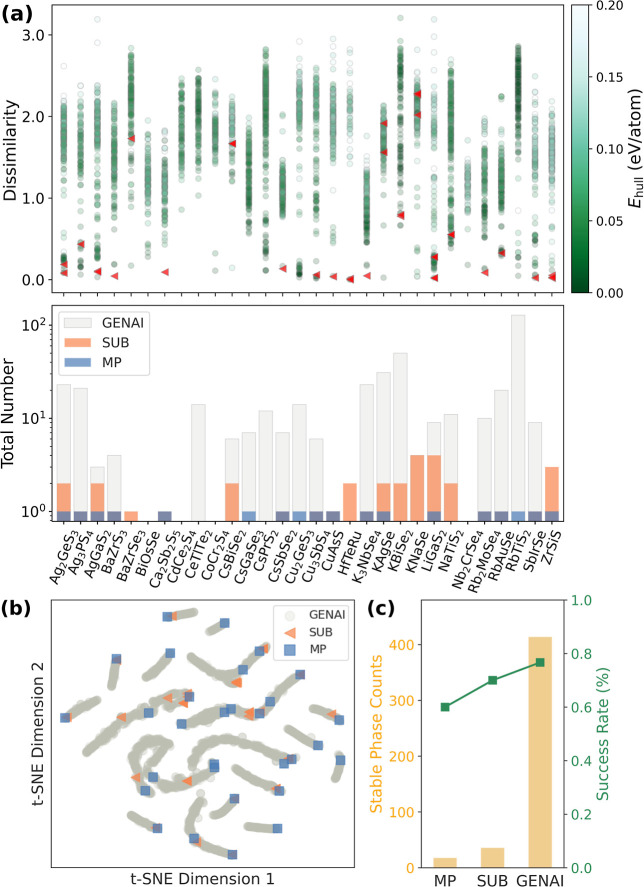 Figure 1
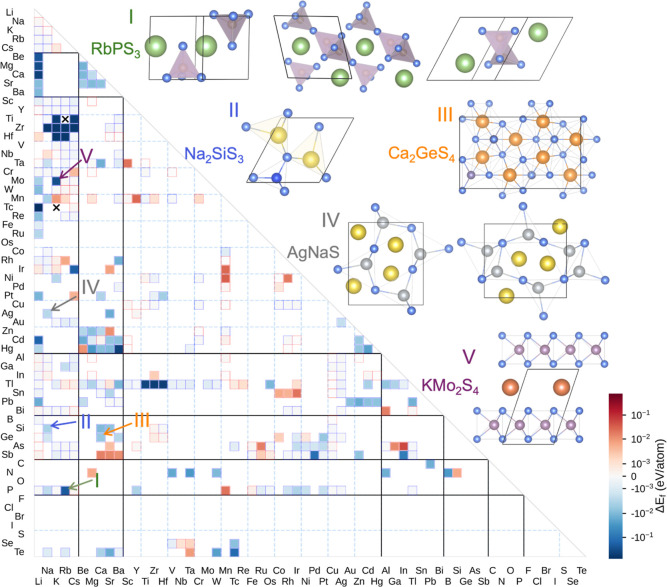 Figure 2
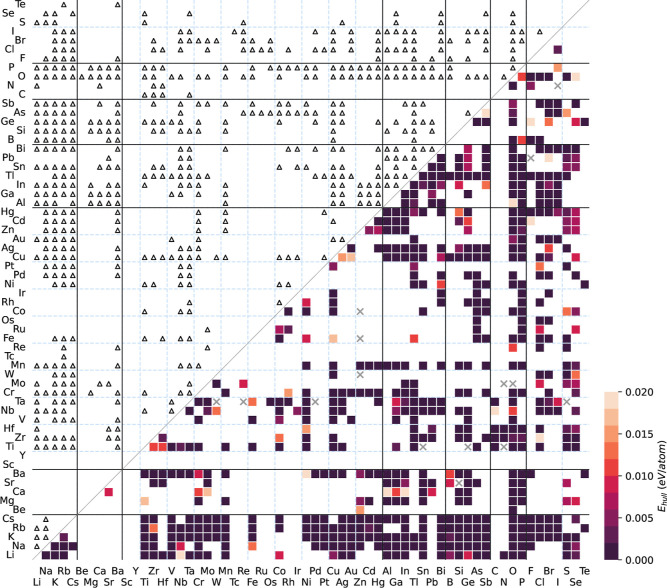 Figure 3
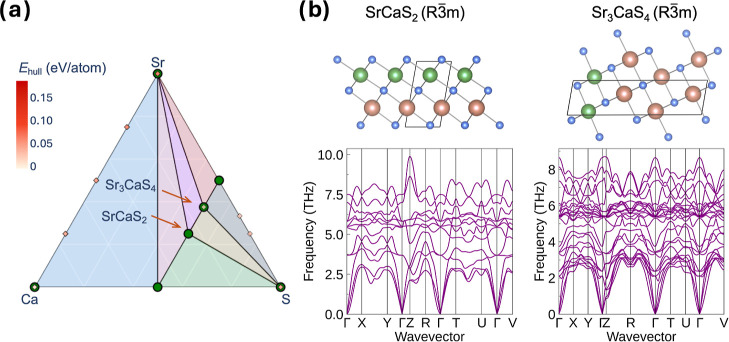 Figure 4
 Figure 5
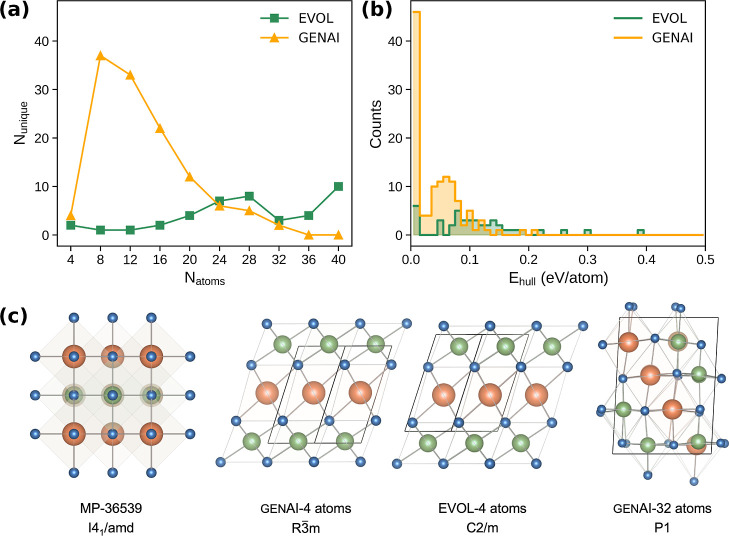 Figure 6
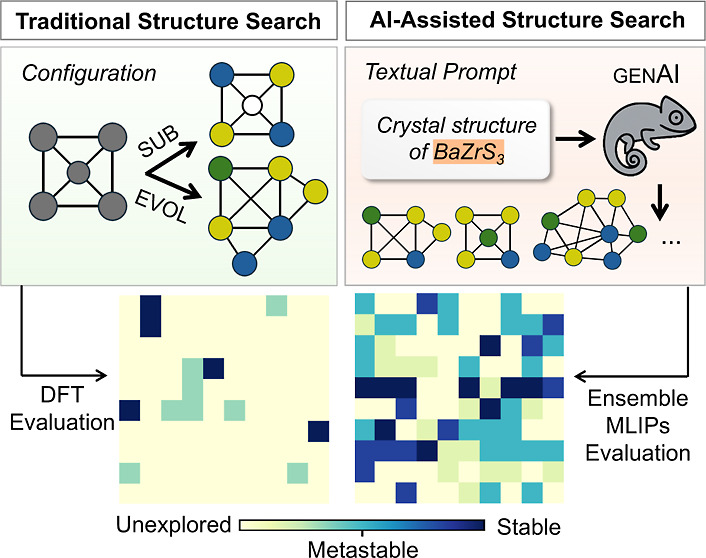 Figure 7
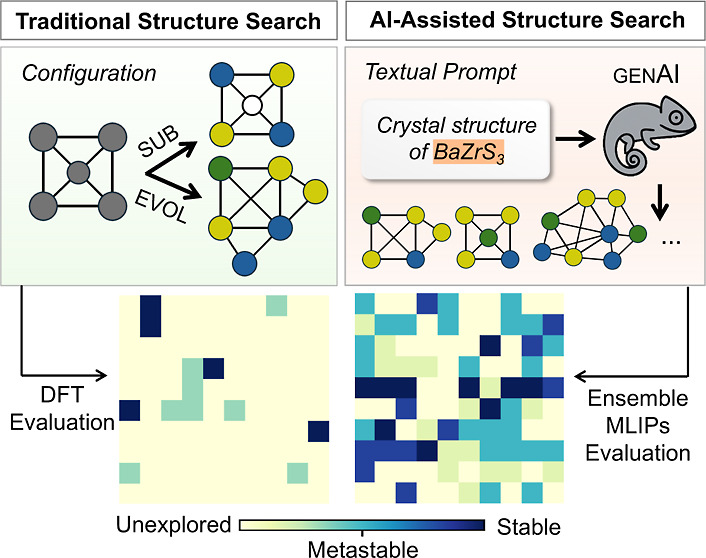 Figure 8
 Figure 9
 Figure 10
Peer Reviews
No public reviews on file for this paper yet. If you reviewed it on a platform where reviews are public (OpenReview, ICLR, NeurIPS, ICML), you can paste yours below so the community can read it here.
Videos
No videos yet. Explain this paper in a talk, walkthrough, or lecture? Add one.
Taxonomy
TopicsMachine Learning in Materials Science · Inorganic Chemistry and Materials · X-ray Diffraction in Crystallography