Noninvasive Early Detection and Recurrence Monitoring for Non‐Muscle‐Invasive Bladder Cancer via Urine Tumor DNA: A Prospective Clinical Study
Junlong Wu, Shengming Jin, Qianming Bai, Huina Wang, Huanqing Cheng, Xiaoyan Zhou, Yijun Shen, Chunguang Ma, Chengyuan Gu, Hui Chen, Yafeng Zhang, Libin Chen, Shahrokh F. Shariat, Feng Lou, Shanbo Cao, Yiping Zhu, Dingwei Ye

TL;DR
A urine-based test called utLIFE-UC accurately detects non-muscle invasive bladder cancer and predicts recurrence, potentially reducing the need for invasive procedures.
Contribution
The study presents the first prospective, longitudinal analysis of urinary tumor DNA for non-muscle invasive bladder cancer surveillance.
Findings
utLIFE-UC detected NMIBC with 90.5% sensitivity and accurately identified residual tumor after surgery.
Positive test results predicted future relapse with a median lead time of 73.5 days.
Sustained negative results indicated recurrence-free status, improving risk stratification.
Abstract
Conventional approaches for the detection and surveillance of non‐muscle invasive bladder cancer (NMIBC) remain invasive, burdensome, and costly. The utLIFE‐UC assay, designed to identify mutations and large copy number variations in urine, has demonstrated high accuracy in detecting urothelial carcinoma. Here, we assessed its efficacy in early detection of NMIBC, identifying minimal residual disease, and monitoring recurrence. Among 108 consecutive NMIBC patients evaluated, utLIFE‐UC exhibited a sensitivity of 90.5% in diagnosing NMIBC, with comparable performance in detecting both de novo and recurrent NMIBC. For patients undergoing repeat transurethral resection of bladder tumor (Re‐TURBT), the assay accurately identified all cases with residual tumor, achieving a 100% negative predictive value. Positive postoperative utLIFE‐UC results before the first follow‐up cystoscopy predicted…
Genes, proteins, chemicals, diseases, species, mutations and cell lines named across the full text — each resolved to its canonical identifier and authoritative record.
Click any figure to enlarge with its caption.
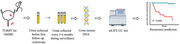 Figure 1
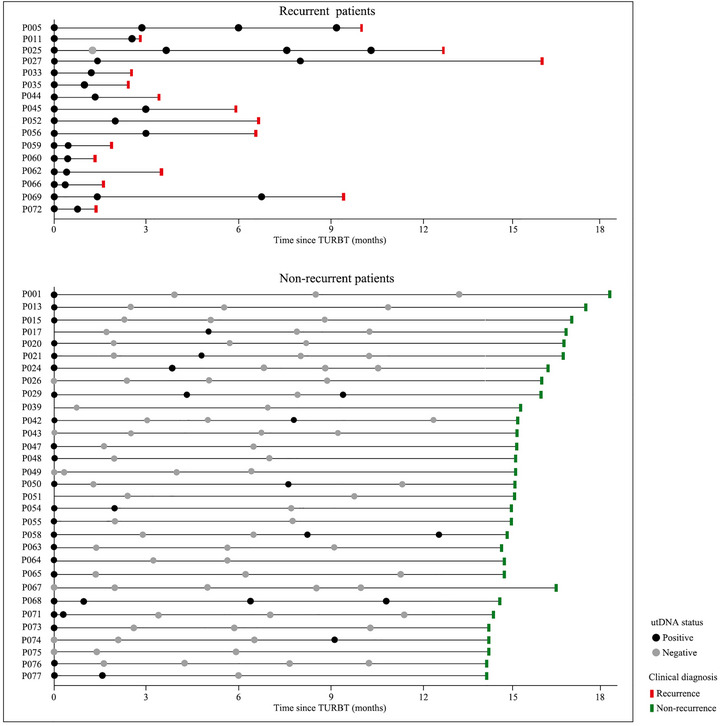 Figure 2
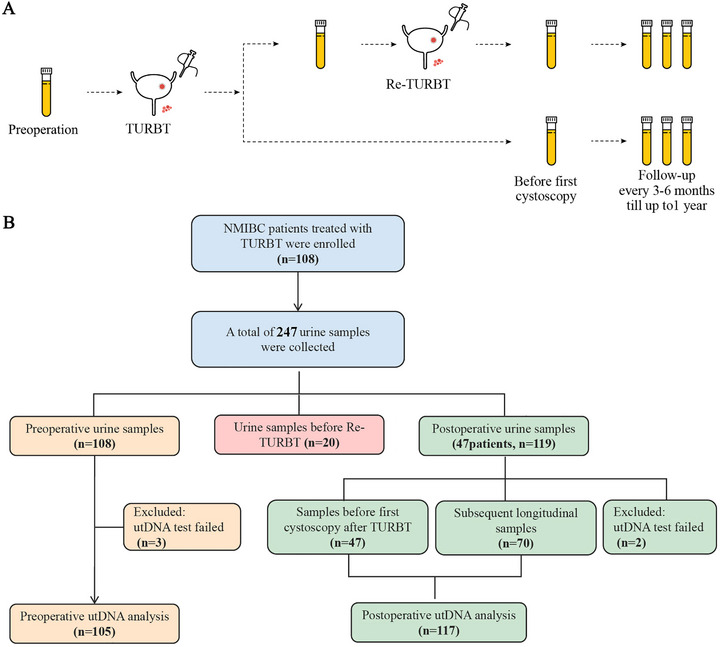 Figure 3
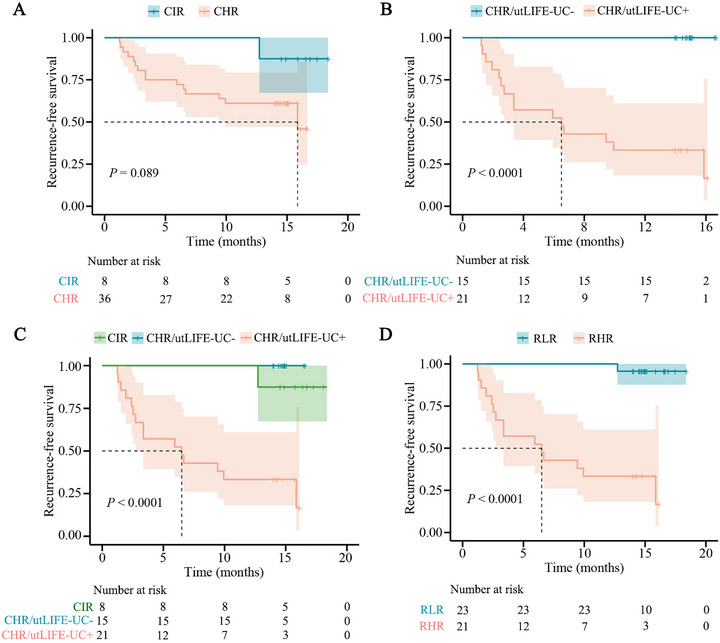 Figure 4
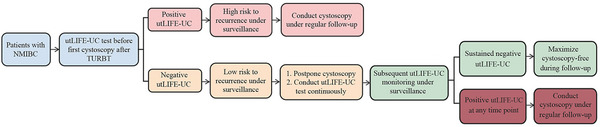 Figure 5
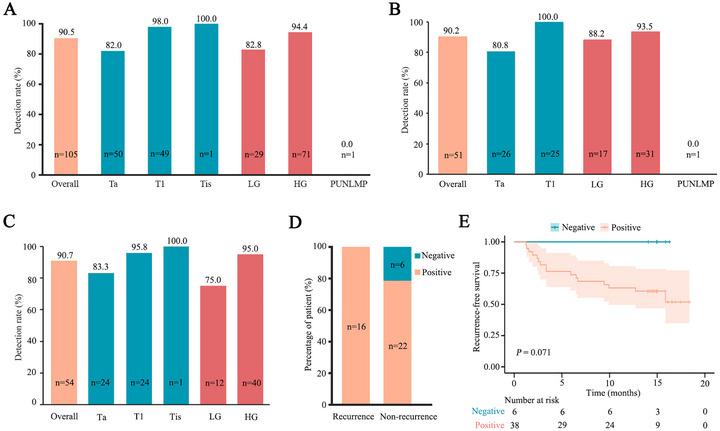 Figure 6
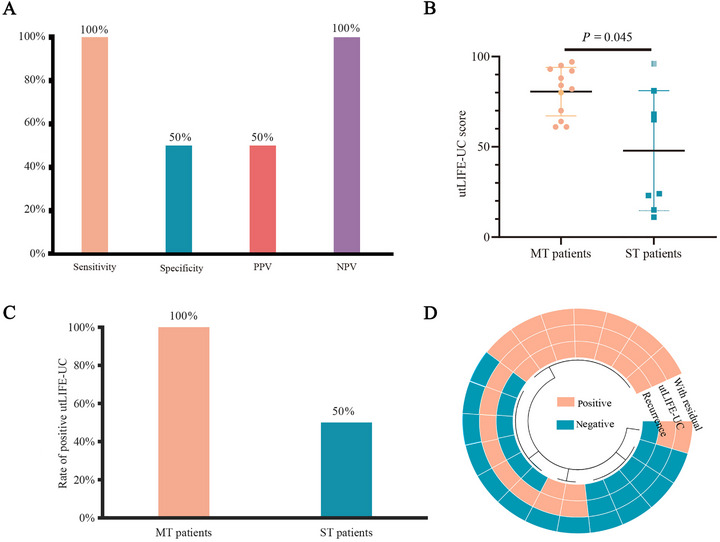 Figure 7
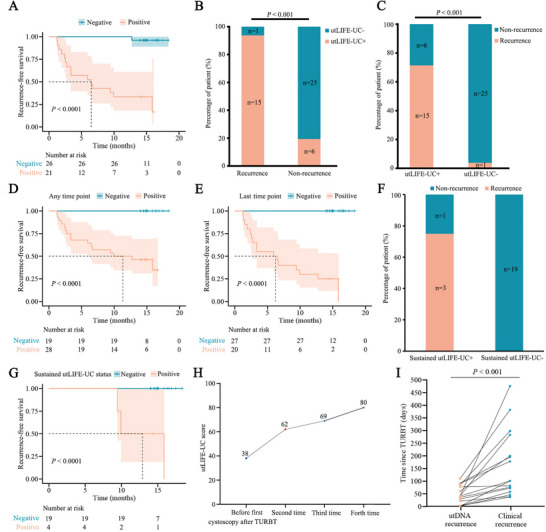 Figure 8
Peer Reviews
No public reviews on file for this paper yet. If you reviewed it on a platform where reviews are public (OpenReview, ICLR, NeurIPS, ICML), you can paste yours below so the community can read it here.
Videos
No videos yet. Explain this paper in a talk, walkthrough, or lecture? Add one.
Taxonomy
TopicsBladder and Urothelial Cancer Treatments · Urinary and Genital Oncology Studies · Cancer Genomics and Diagnostics