Use of a conditional Glanzmann thrombasthenia mouse model reveals a supportive and possibly non-adhesive role for TLT-1 in the platelet-fibrinogen interaction
Siobhan Branfield, Nicholas Koshy, Yashieta Somani, Barbara Manfredi, Caitlin Schneider, Hanan Tlais, Vandre Figueiredo, Randal Westrick, A. Valance Washington

TL;DR
This study uses a genetically modified mouse model to explore the role of TLT-1 in platelet function, finding it supports but does not directly mediate platelet adhesion.
Contribution
A novel conditional mouse model reveals TLT-1's supportive but non-adhesive role in platelet-fibrinogen interactions.
Findings
Deleting Treml1 in cItga2b−/− mice results in only minor differences in bleeding and aggregation.
TLT-1 appears to support platelet aggregation but does not act as a primary adhesive receptor.
The study clarifies TLT-1's role in hemostasis and inflammation through conditional knockout models.
Abstract
The platelet integrin receptor, αIIbβ3, binds fibrinogen to mediate platelet-platelet contacts, regulate hemostasis, and modulate inflammation. The Triggering Receptor Expressed in Myeloid (TREM) – Like (TLT)-1 is an enigmatic 34kD receptor found on platelets that affects their hemostatic and inflammatory functions. Similar to αIIbβ3, TLT-1’s ligand is also fibrinogen; however, TLT-1’s direct role in platelet function remains unknown. We created a tamoxifen-inducible conditional αIIb deficient (cItga2b−/−) mouse to better understand TLT-1’s role in platelet function, specifically TLT-1’s binding to fibrinogen and its role in hemostasis and inflammation. We first characterized our cItga2b−/− null mouse and subsequently crossed this mouse with a Treml1−/− mouse, creating a conditional double knockout (cDKO). While the floxed cItga2b /Treml1−/− mouse shows significant differences compared…
Genes, proteins, chemicals, diseases, species, mutations and cell lines named across the full text — each resolved to its canonical identifier and authoritative record.
Click any figure to enlarge with its caption.
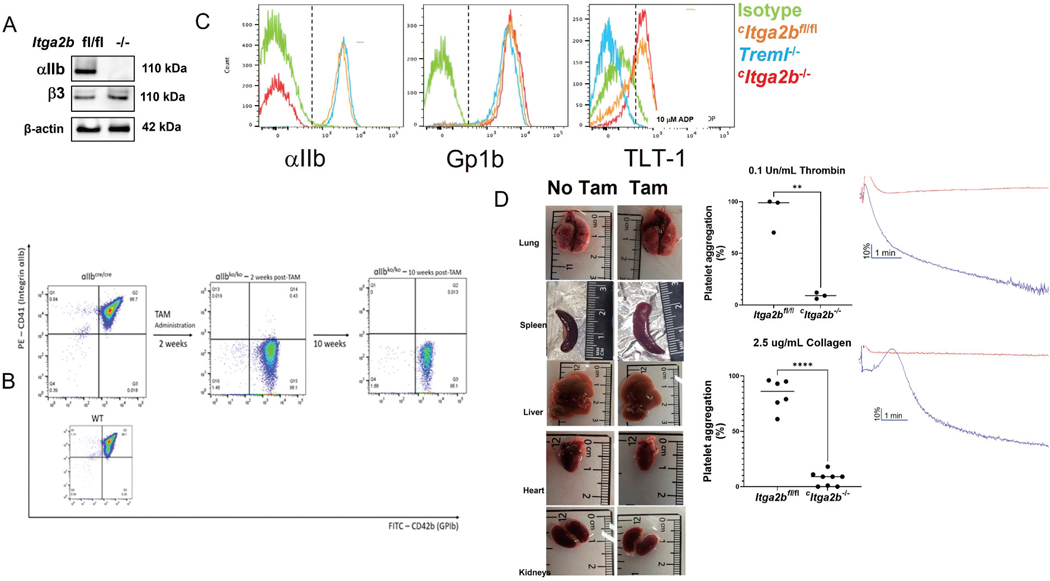 Figure 1
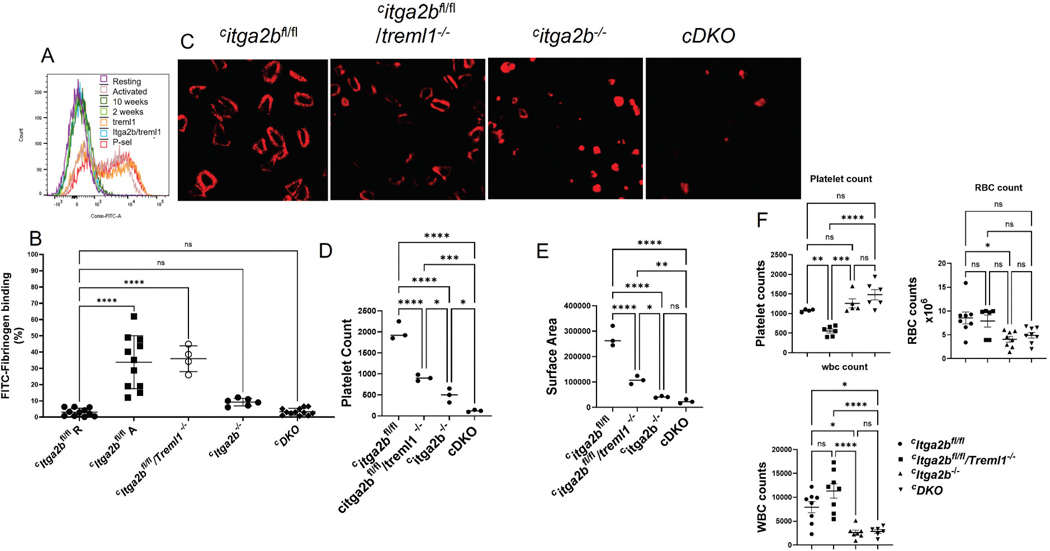 Figure 2
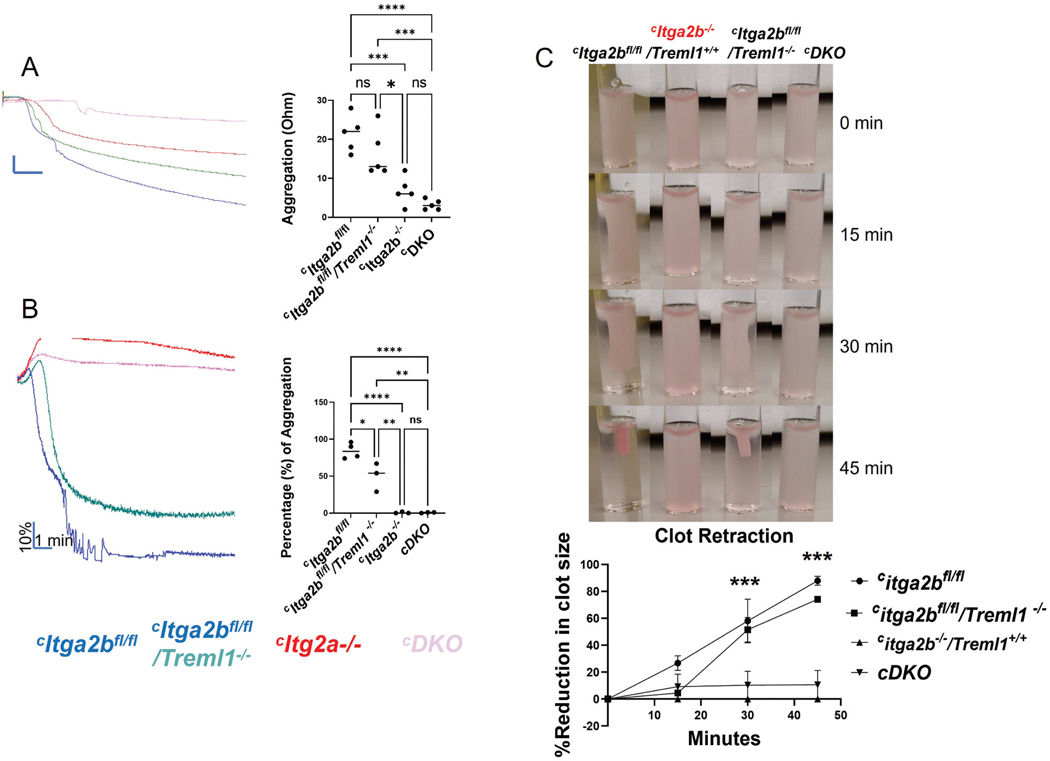 Figure 3
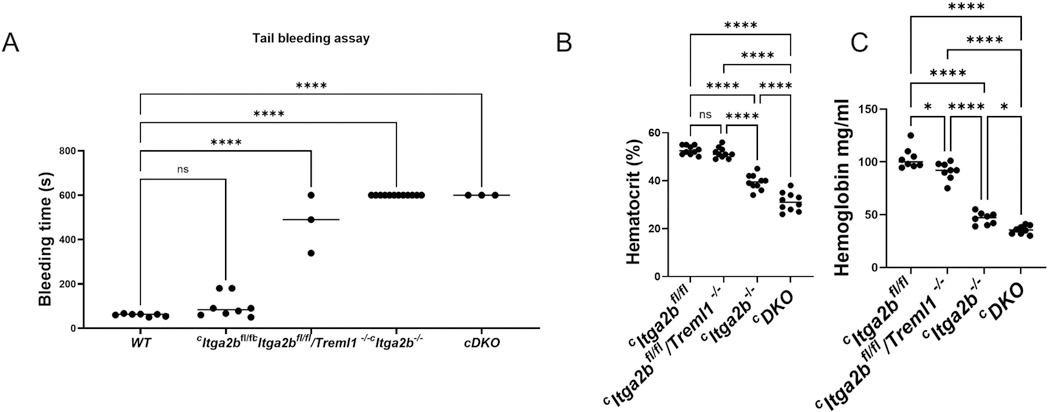 Figure 4
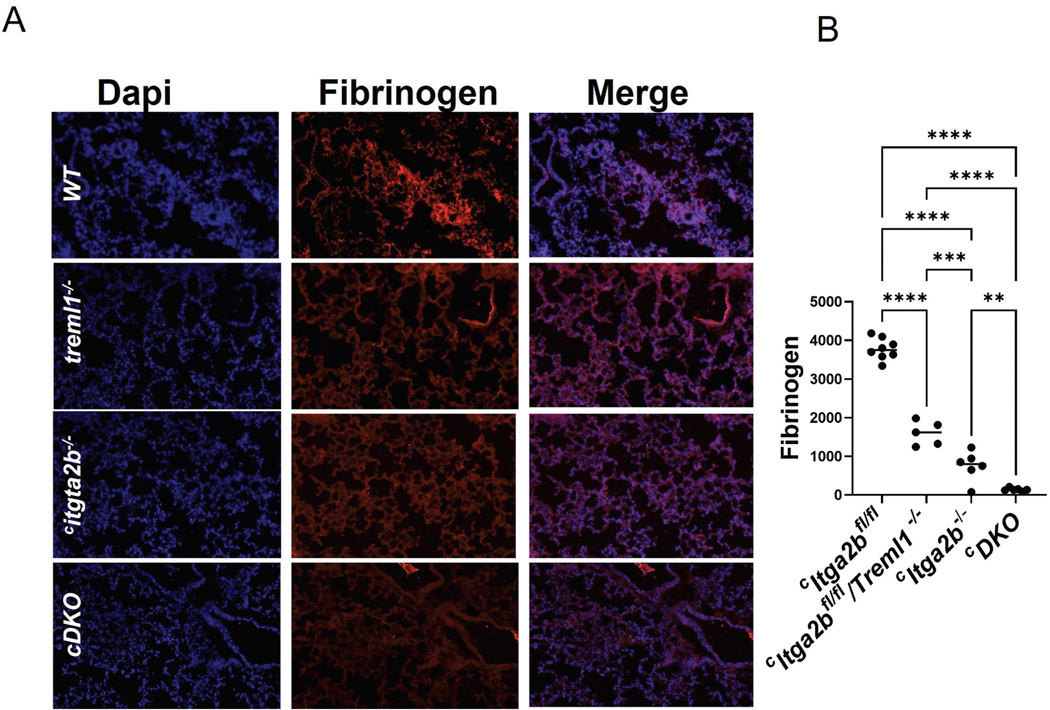 Figure 5
Peer Reviews
No public reviews on file for this paper yet. If you reviewed it on a platform where reviews are public (OpenReview, ICLR, NeurIPS, ICML), you can paste yours below so the community can read it here.
Videos
No videos yet. Explain this paper in a talk, walkthrough, or lecture? Add one.
Taxonomy
TopicsInflammation biomarkers and pathways · Platelet Disorders and Treatments · Blood properties and coagulation