Computerized tomography‐derived body composition metrics are associated with 24‐h urine lithogenic parameters
Reza Lahiji, Lorenzo Storino Ramacciotti, Ernie Morton, Edouard H. Nicaise, Adam Braunschweig, Gregory Palmateer, Benjamin Schmeusser, Dattatraya Patil, Maxwell Richardson, Frank Glover, Ethan Kearns, Aaron Lay, Mohammad Hajiha, Viraj A. Master, Kenneth Ogan

TL;DR
This study finds that body composition metrics from CT scans are linked to urine parameters that contribute to kidney stone formation.
Contribution
The study demonstrates novel associations between CT-derived body composition and lithogenic urine markers in kidney stone patients.
Findings
Higher skeletal muscle index is linked to increased odds of elevated urine volume and lithogenic markers.
Visceral adipose tissue index is associated with reduced urine volume and altered sodium excretion.
Skeletal muscle density correlates with lower odds of elevated oxalate and low citrate excretion.
Abstract
The relationship between body composition and lithogenic urine parameters remains poorly defined. This study aimed to evaluate associations between computerized tomography (CT)‐derived body composition metrics and 24‐h urine findings. Stone‐forming patients in our Nephrolithiasis Database who underwent 24‐h urine testing and CT within 120 days were retrospectively reviewed. Skeletal muscle index (SMI), visceral adipose tissue index (VATI), subcutaneous adipose tissue index (SATI) and skeletal muscle density (SMD) were calculated from segmented L3 axial images. Spearman correlations and multivariable logistic regression tested associations between body composition and 24‐h urine markers. Among 443 patients, all body composition metrics demonstrated numerous correlations with 24‐h urine marker values on Spearman analysis. After adjusting for confounders, higher SMI quartiles were…
Genes, proteins, chemicals, diseases, species, mutations and cell lines named across the full text — each resolved to its canonical identifier and authoritative record.
Click any figure to enlarge with its caption.
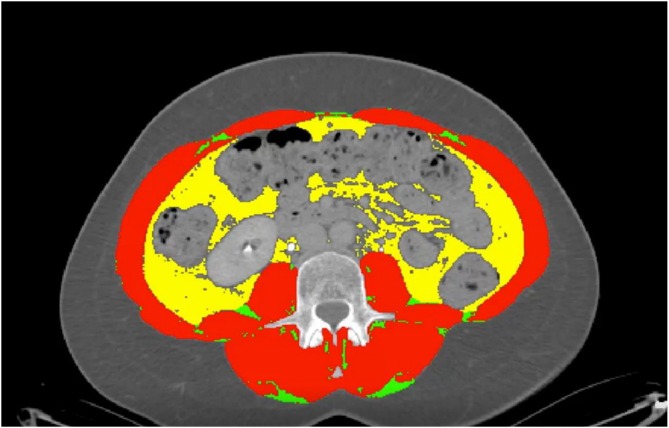 Figure 1
Peer Reviews
No public reviews on file for this paper yet. If you reviewed it on a platform where reviews are public (OpenReview, ICLR, NeurIPS, ICML), you can paste yours below so the community can read it here.
Videos
No videos yet. Explain this paper in a talk, walkthrough, or lecture? Add one.
Taxonomy
TopicsKidney Stones and Urolithiasis Treatments · Chronic Kidney Disease and Diabetes · Dialysis and Renal Disease Management