Non-invasive versus invasive estimation of left ventricular wall stress with cardiac magnetic resonance imaging in severe aortic stenosis
Riley J. Batchelor, Stavroula Papapostolou, Jack He, John Kearns, David M. Kaye, Dion Stub, Shane Nanayakkara, Antony Walton, Anoop N. Koshy, Andrew J. Taylor

TL;DR
This study compares non-invasive and invasive methods to estimate heart wall stress in patients with severe aortic stenosis using MRI and finds strong agreement between the two.
Contribution
A fully non-invasive method for estimating left ventricular wall stress using cuff pressure and echocardiographic data is validated against invasive measurements.
Findings
Non-invasive and invasive LVWS were strongly correlated (r = 0.89, p < 0.001).
Bland–Altman analysis showed a small positive bias with narrow limits of agreement.
Lower non-invasive LVWS was associated with better 6MWT performance.
Abstract
Left ventricular wall stress (LVWS) is a key determinant of myocardial oxygen demand in aortic stenosis (AS), but CMR-based assessment typically requires invasive left ventricular (LV) pressure. We evaluated a fully non-invasive method to quantify systolic LVWS in severe AS. In 35 TAVR candidates with severe AS who underwent CMR, circumferential LVWS was calculated using a cylindrical LV model across seven short-axis slices. End-systolic LV pressure was estimated as brachial systolic blood pressure plus echocardiographic mean transvalvular gradient. Circumferential LVWS from this cuff-based approach was compared with LVWS calculated using simultaneously acquired invasive LV pressures. Agreement was assessed using Pearson correlation, linear regression, and Bland–Altman analysis. Six-minute walk test (6MWT) distance was compared between patients above and below the median non-invasive…
Genes, proteins, chemicals, diseases, species, mutations and cell lines named across the full text — each resolved to its canonical identifier and authoritative record.
Click any figure to enlarge with its caption.
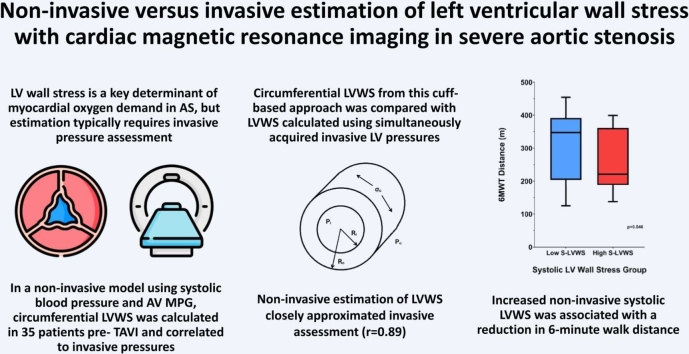 Figure 1
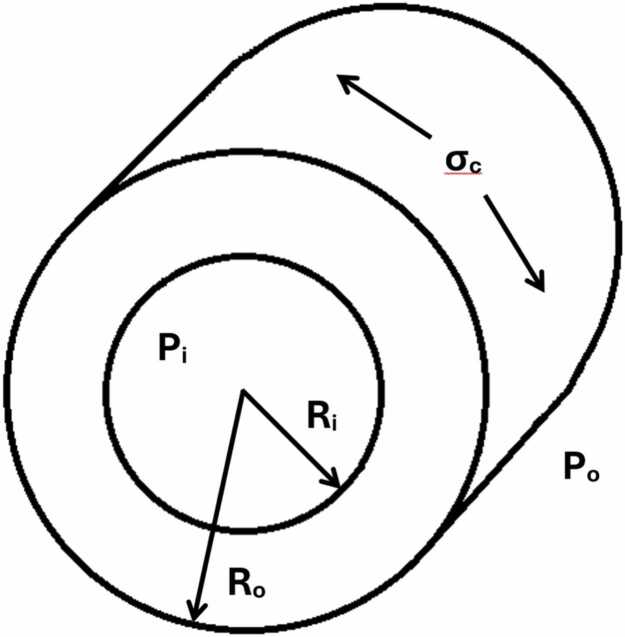 Figure 2
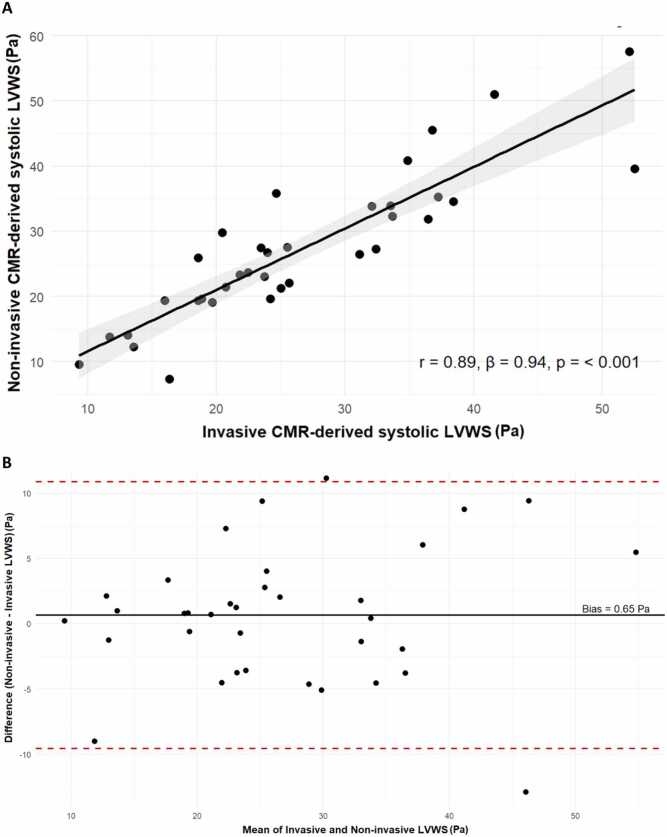 Figure 3
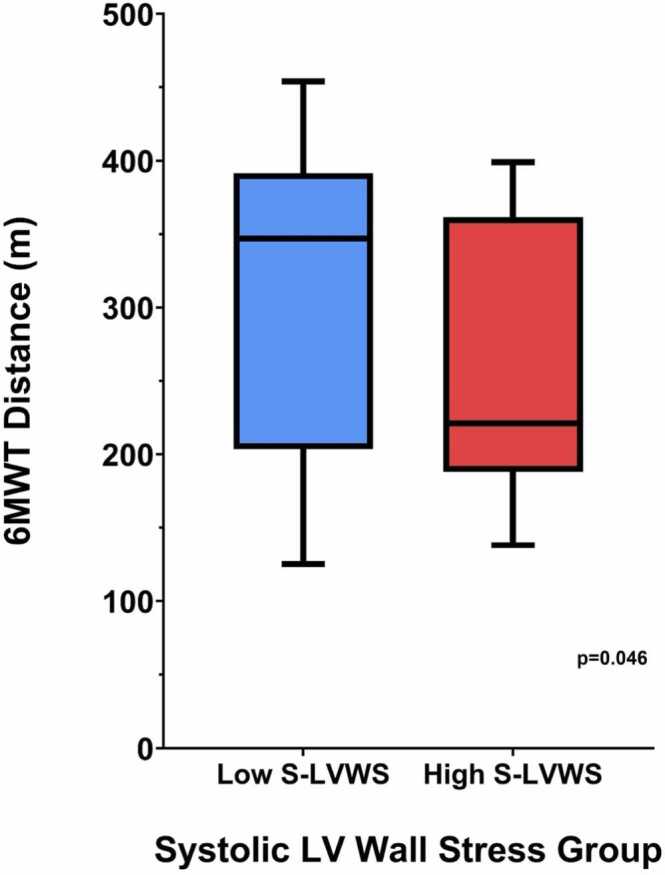 Figure 4
Peer Reviews
No public reviews on file for this paper yet. If you reviewed it on a platform where reviews are public (OpenReview, ICLR, NeurIPS, ICML), you can paste yours below so the community can read it here.
Videos
No videos yet. Explain this paper in a talk, walkthrough, or lecture? Add one.
Taxonomy
TopicsCardiac Valve Diseases and Treatments · Cardiovascular Function and Risk Factors · Cardiac Imaging and Diagnostics