Joint tissue plasticity in hemophilia: insights from the Joint Activity and Damage Exam ultrasound protocol
Parthiv Sheth, Khang Tong, Bilgimol Chumappumkal Joseph, Tina Manon-Jensen, Michael Glenzer, Isaac Nwi-Mozu, Peter Aguero, Bruno Steiner, Cindy Bailey, Doris V. Quon, Rebecca Kruse-Jarres, Euyhyun Lee, Morten Asser Karsdal, Lin Liu, Annette von Drygalski

TL;DR
This study uses ultrasound to track changes in hemophilic joints over time, revealing that tissue damage may be reversible, even in unhealthy joints.
Contribution
The study introduces longitudinal ultrasound measurements to show dynamic tissue plasticity and potential repair in hemophilic joints.
Findings
Unhealthy joints had thinner cartilage and more osteochondral changes at baseline.
Tissue plasticity was observed in both healthy and unhealthy joints, suggesting possible reversibility of damage.
Hemarthrosis was linked to cartilage thinning and increased PRO-C4 levels.
Abstract
Progressive arthropathy is a debilitating condition that affects hemophilic joints as a consequence of hemarthroses. However, our understanding of the trajectory of potentially destructive processes at the tissue level remains limited and requires longitudinal imaging studies. To longitudinally characterize ultrasonographic joint tissue changes in adults with hemophilia using the Joint Activity and Damage Exam (JADE) protocol, and to examine their relationships with joint health status, hemarthrosis, and serum biomarkers of tissue turnover. We prospectively studied adults with hemophilia (A or B) of any severity and associated arthropathy at 3 North American sites. We assessed joint health using the Hemophilia Joint Health Score (HJHS) and musculoskeletal ultrasound, as well as the Joint Activity and Damage Exam protocol for direct measurements of osteochondral alterations, cartilage,…
Genes, proteins, chemicals, diseases, species, mutations and cell lines named across the full text — each resolved to its canonical identifier and authoritative record.
Click any figure to enlarge with its caption.
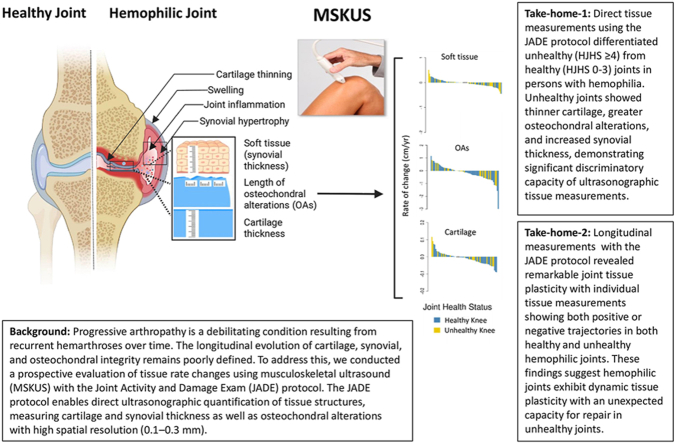 Figure 1
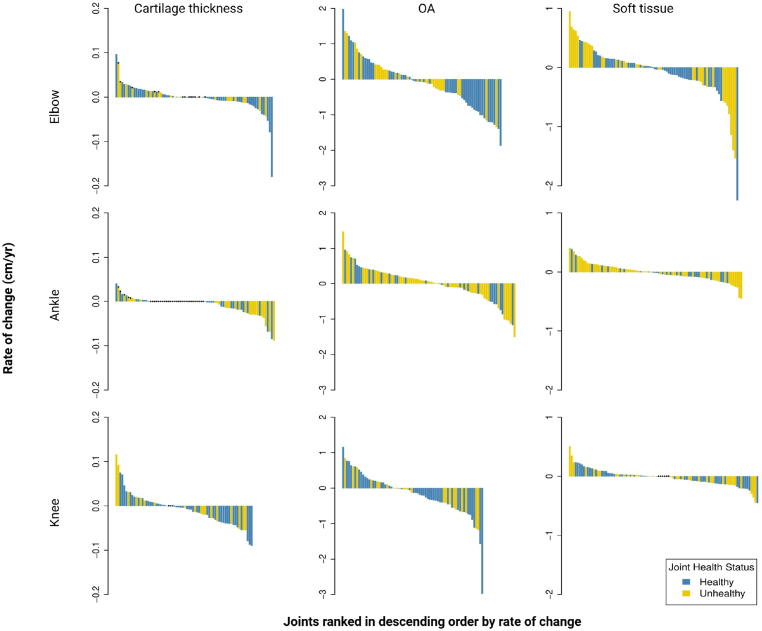 Figure 2
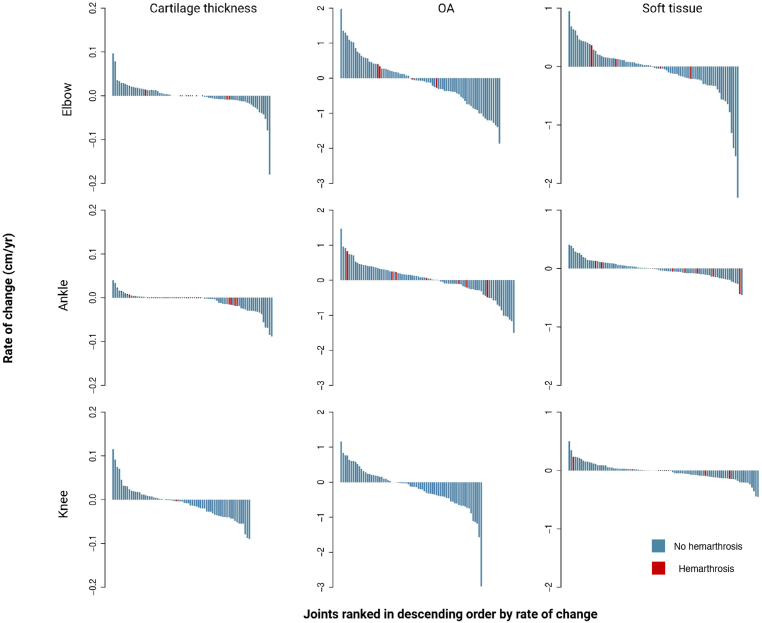 Figure 3
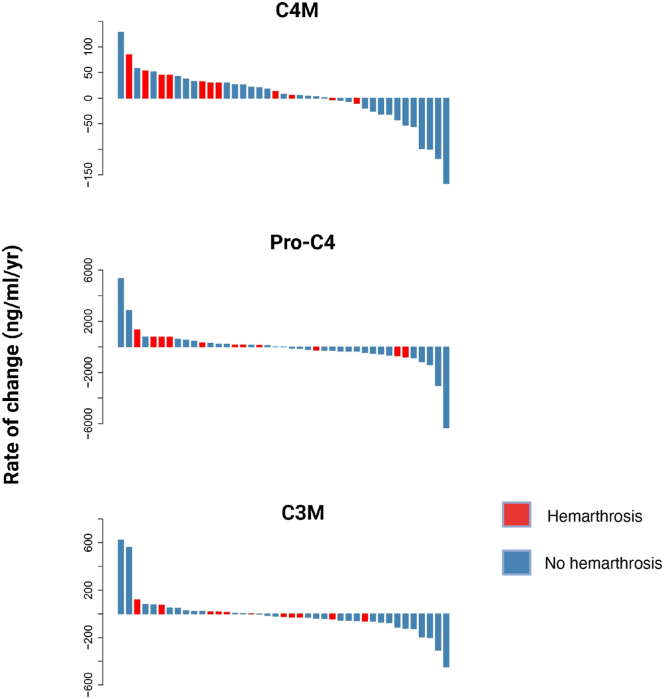 Figure 4
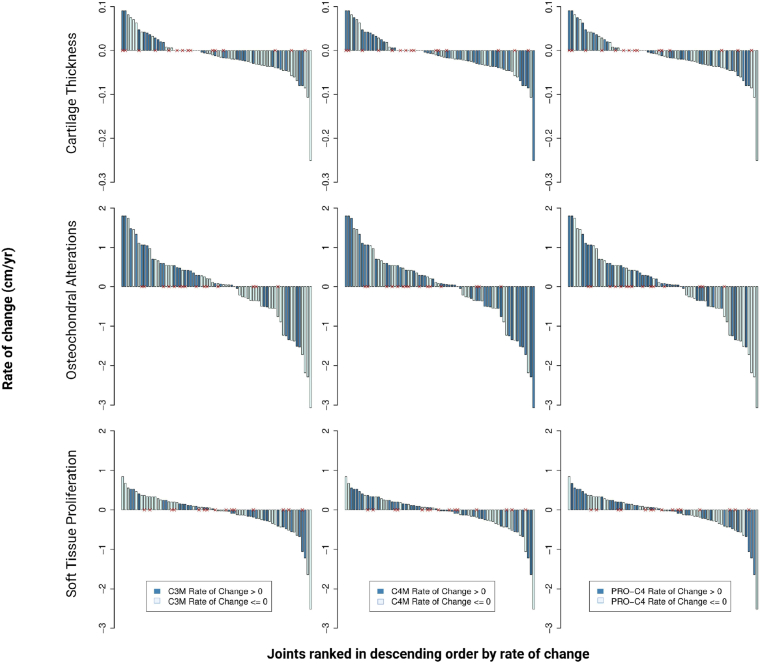 Figure 5
Peer Reviews
No public reviews on file for this paper yet. If you reviewed it on a platform where reviews are public (OpenReview, ICLR, NeurIPS, ICML), you can paste yours below so the community can read it here.
Videos
No videos yet. Explain this paper in a talk, walkthrough, or lecture? Add one.
Taxonomy
TopicsHemophilia Treatment and Research · Blood properties and coagulation · Tendon Structure and Treatment