Functional precision approach in patients with very high risk acute lymphoblastic leukaemia in India: a single-centre cohort study
Jasmeet Sidhu, Arijit Chakraborty, Parag Das, Fabio D. Steffen, Subhajit Kundu, Sangramjit Basu, Bhaswati Tarafdar, Tanima Dey, Abhirupa Kar, Mousumi Biswas, Ankita Das, Naveen Sivadasan, Pritha Dasgupta, Niharendu Ghara, Beat Bornhauser, Jean-Pierre Bourquin, Shekhar Krishnan

TL;DR
A study in India shows that using drug response profiling to guide treatment improves survival in children with very high-risk acute lymphoblastic leukemia.
Contribution
The study introduces a functional precision approach using drug response profiling to tailor therapy for very high-risk ALL patients.
Findings
Venetoclax and bortezomib improved early survival in very high-risk ALL patients when added to treatment.
Drug response profiling identified effective agents like panobinostat and venetoclax for VHR or relapsed ALL.
Venetoclax sensitivity was linked to measurable residual disease clearance in patients.
Abstract
Persistence of measurable residual disease (MRD) and high-risk cytogenetics are established predictors of relapse in childhood acute lymphoblastic leukaemia (ALL). Outcomes of children with ALL treated with the ICiCLe-ALL-2014 protocol at a single centre, between August 2013 and May 2023 were analysed. Co-culture ex-vivo drug response profiling (DRP) was performed on diagnostic or relapsed samples. Patients classified as very high risk (VHR) received DRP guided therapeutic modifications. Event free (EFS) and overall (OS) survival were compared across risk categories. Among 715 patients, at a median 55 (50–58) months, the 3-year EFS for standard-risk, intermediate-risk, high-risk B, T-ALL and VHR were 71% (64%–78%), 67% (58%–75%), 77% (70%–82%), 81% (71%–88%), and 38% (24%–52%) respectively (p < 0.0001). Persistent MRD at end of consolidation was associated with inferior EFS (40.3%, p…
Genes, proteins, chemicals, diseases, species, mutations and cell lines named across the full text — each resolved to its canonical identifier and authoritative record.
Click any figure to enlarge with its caption.
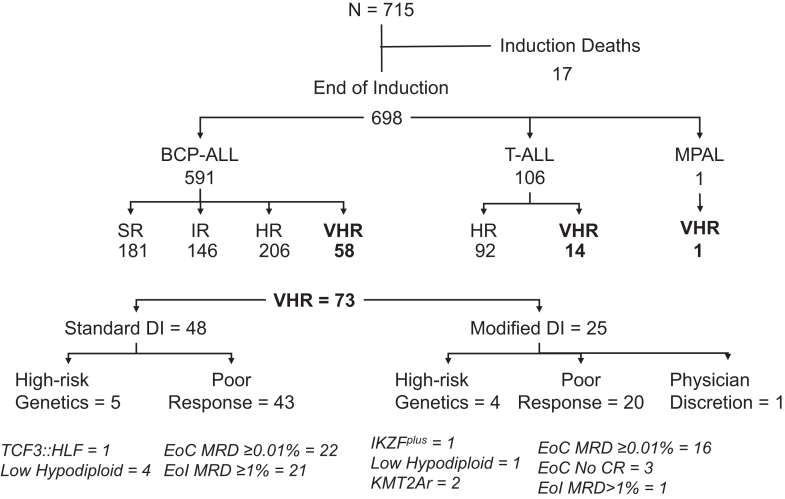 Figure 1
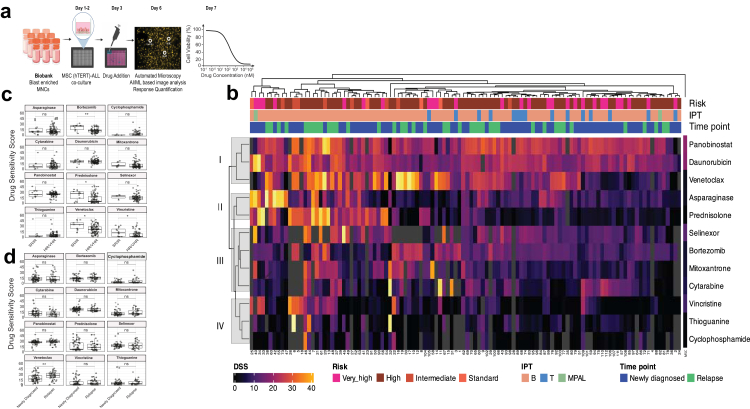 Figure 2
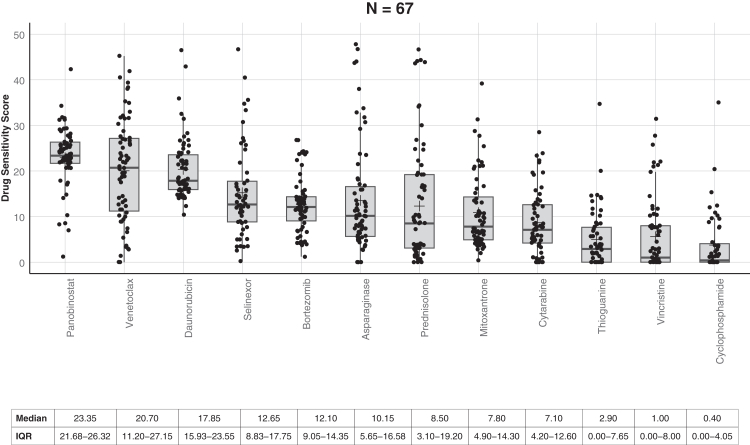 Figure 3
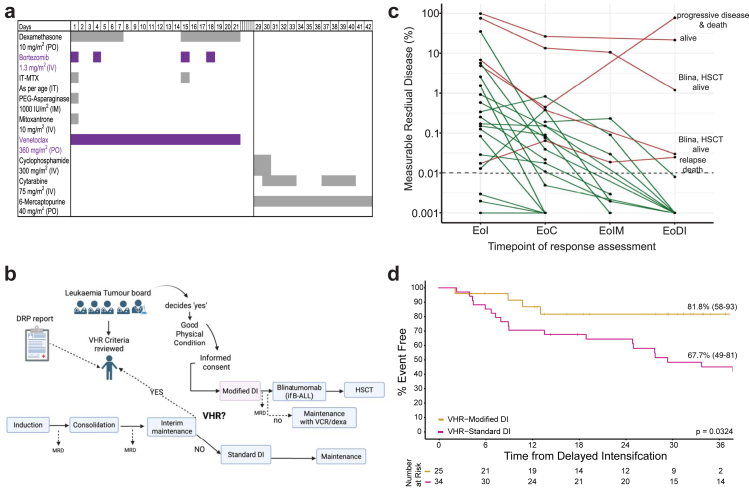 Figure 4
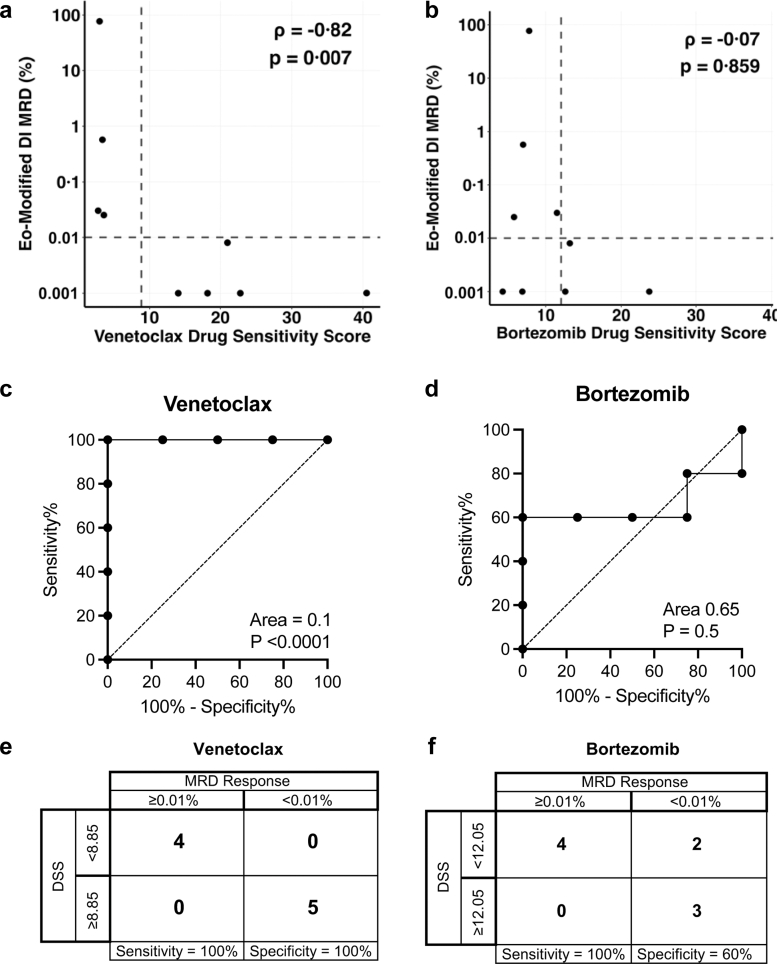 Figure 5
Peer Reviews
No public reviews on file for this paper yet. If you reviewed it on a platform where reviews are public (OpenReview, ICLR, NeurIPS, ICML), you can paste yours below so the community can read it here.
Videos
No videos yet. Explain this paper in a talk, walkthrough, or lecture? Add one.
Taxonomy
TopicsAcute Lymphoblastic Leukemia research · Acute Myeloid Leukemia Research · Chronic Lymphocytic Leukemia Research