Supramolecular helicity dependent osteogenesis and angiogenesis crosstalk of periodontal ligament stem cell
Zhuohang Deng, Meijun Li, Yifan Wang, Wenjing Li, Zijian Gong, Peiwen Liao, Shengzhen Luo, Minghua Liu, Xuliang Deng

TL;DR
This study shows how chiral fibrils can guide stem cells to regenerate bone and blood vessels together, using a new biomaterial design strategy.
Contribution
A chirality-driven biomaterial system is developed to synergistically enhance osteogenesis and angiogenesis via supramolecular helicity.
Findings
Left-handed fibrils promote osteogenic differentiation and pro-angiogenic secretion in PDLSCs.
Chiral topology activates integrin α5β1 and dual signaling pathways for bone and blood vessel formation.
The system effectively regenerates bone in calvarial and alveolar defect models.
Abstract
The two pillars supporting effective tissue regeneration are multipotent stem cells and matrix materials that direct differentiation. The chirality of the extracellular matrix is a key structural characteristic that affects stem cell fate. However, little is known about the effects of either molecular chirality or supramolecular helicity on the differentiation of periodontal ligament stem cells (PDLSCs), a safe and easily accessible stem cell source. Here, we constructed fibrils through the co-assembly of chiral amino acid derivative enantiomers (l/d-GC18) and a bridging pyrazine molecule. The helicity of the fibrils depends on both the molecular chirality of the amino acid and the stoichiometric ratio of the two components. Our results showed that molecular chirality and supramolecular helicity can act synergistically, with the left-handed fibrils assembled from l-GC18 and pyrazine…
Genes, proteins, chemicals, diseases, species, mutations and cell lines named across the full text — each resolved to its canonical identifier and authoritative record.
Click any figure to enlarge with its caption.
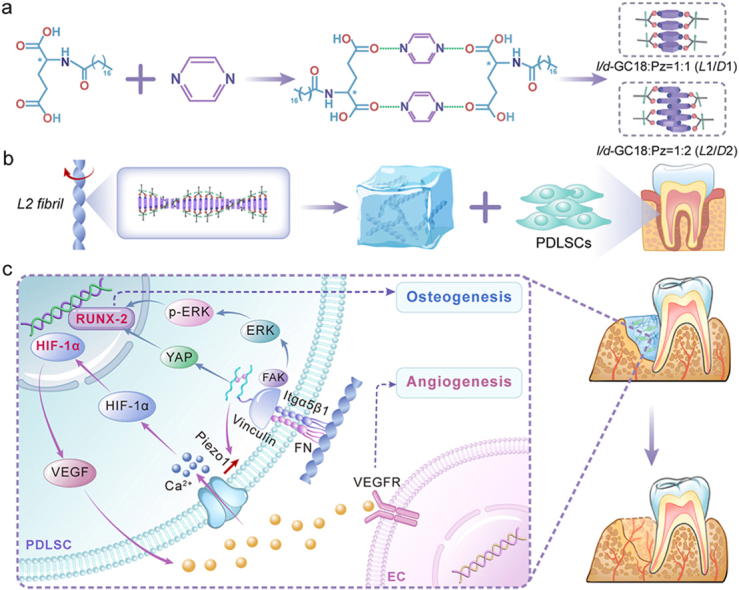 Figure 1
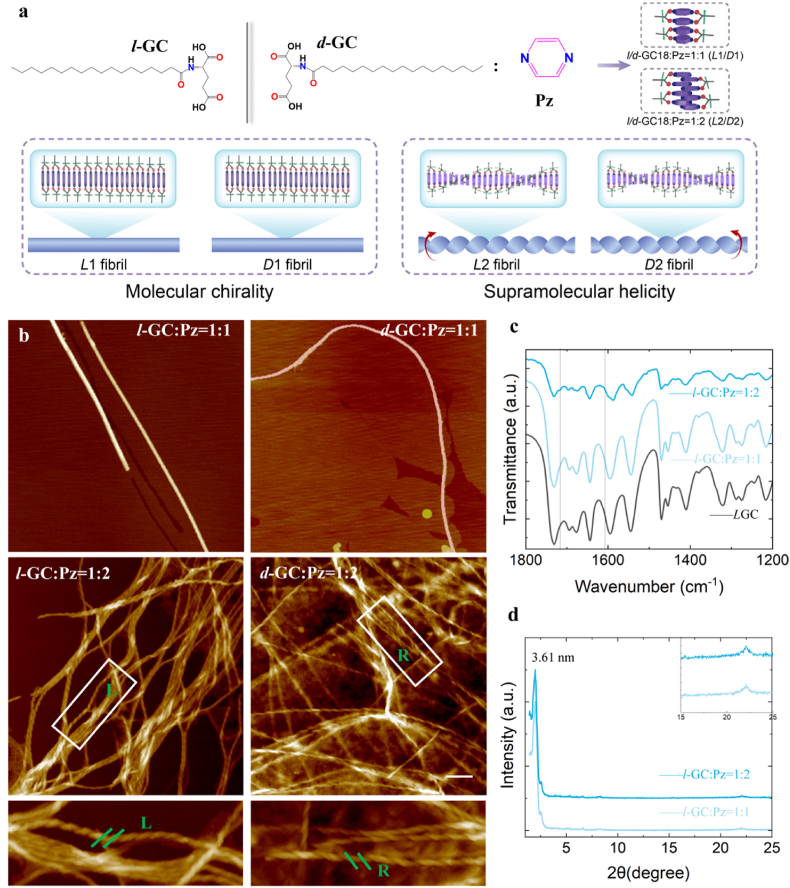 Figure 2
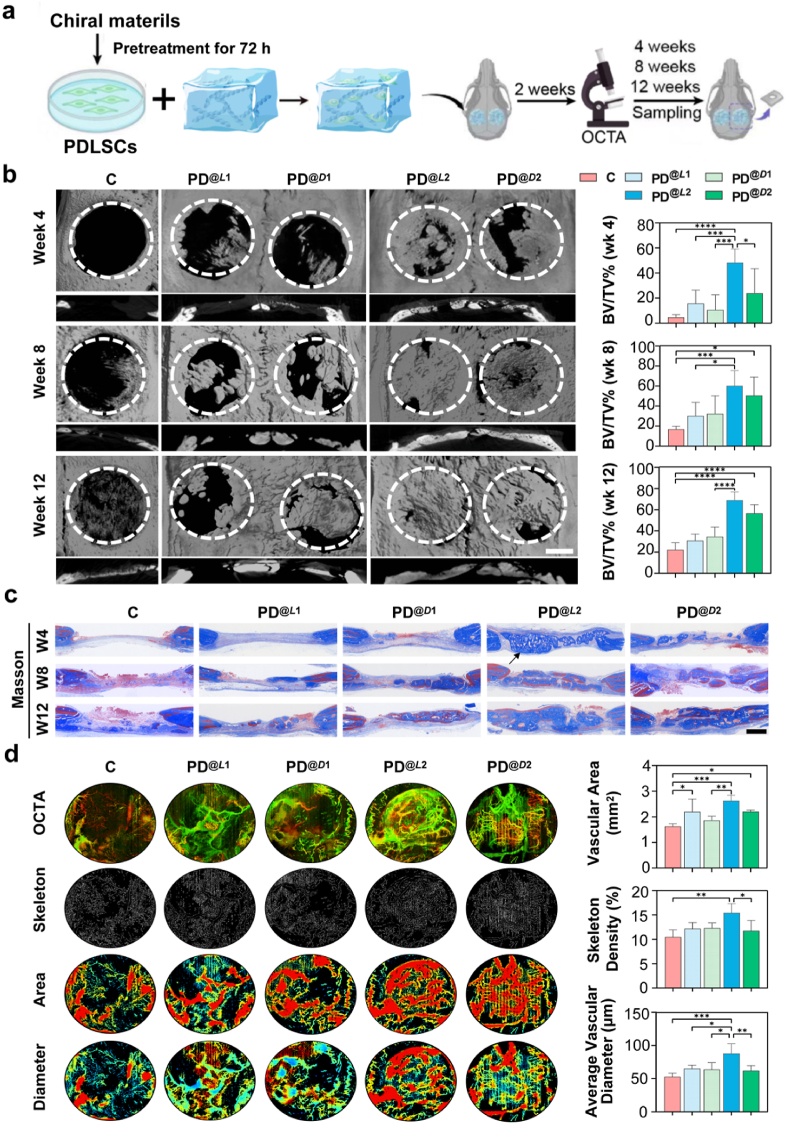 Figure 3
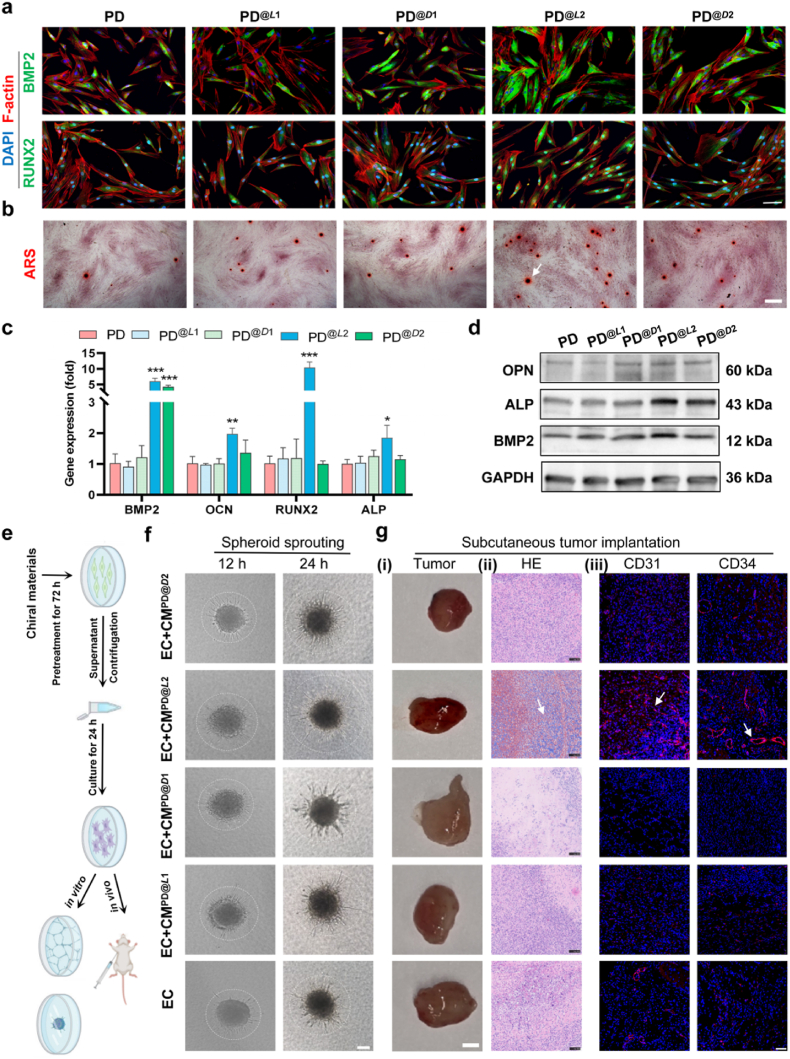 Figure 4
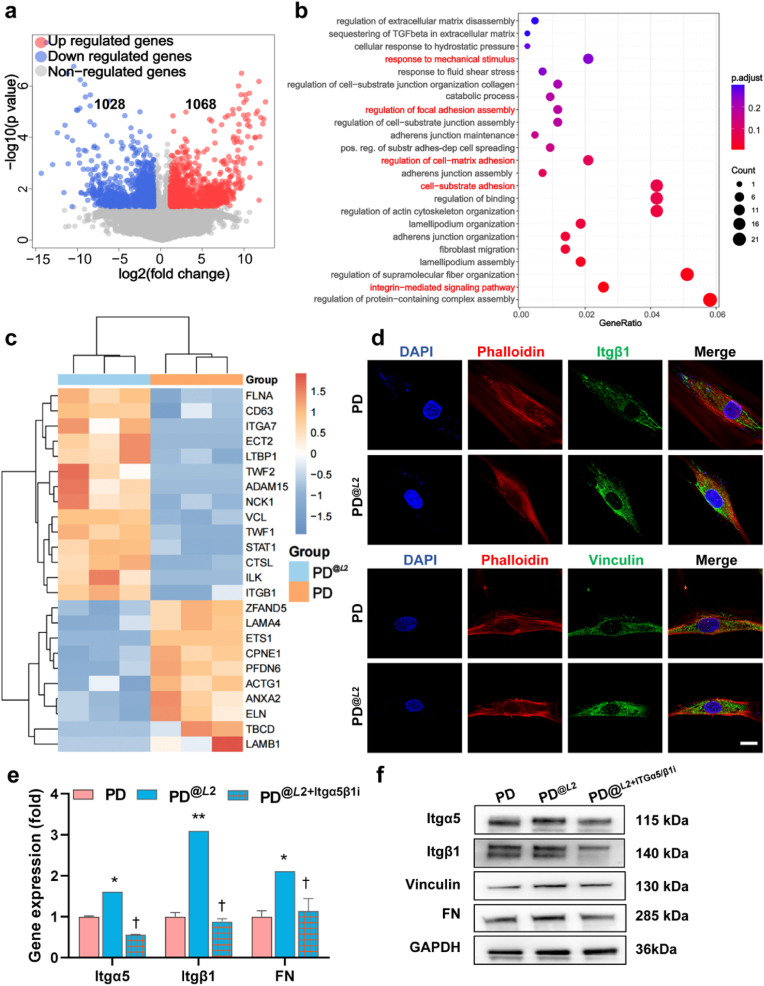 Figure 5
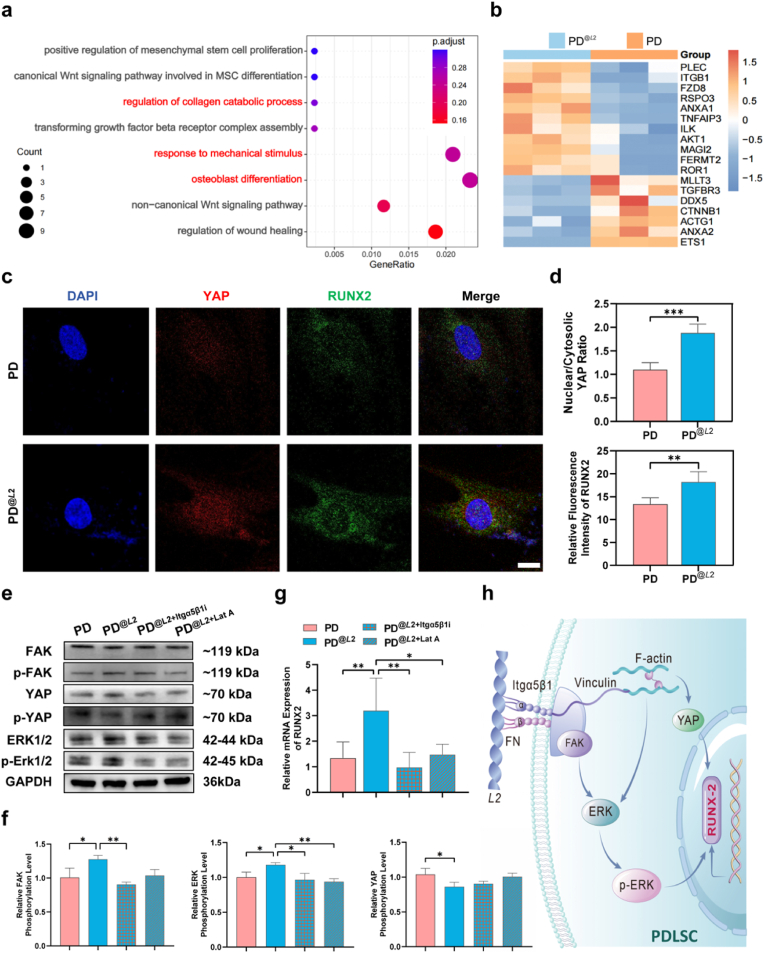 Figure 6
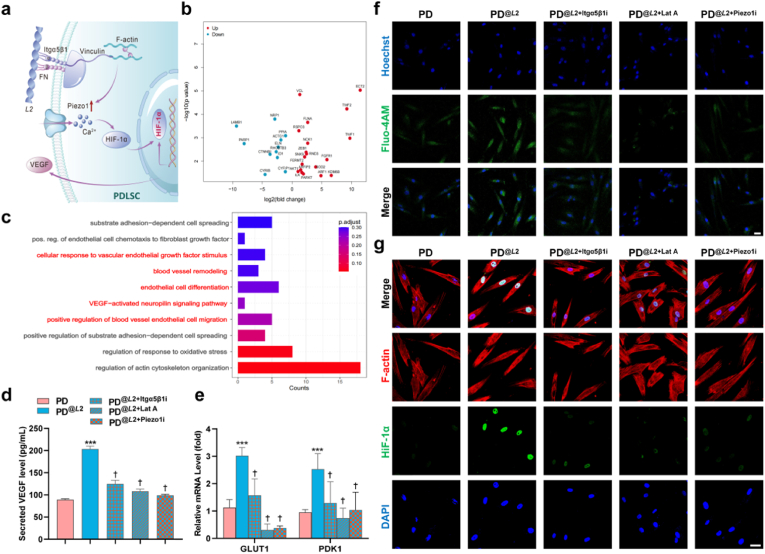 Figure 7
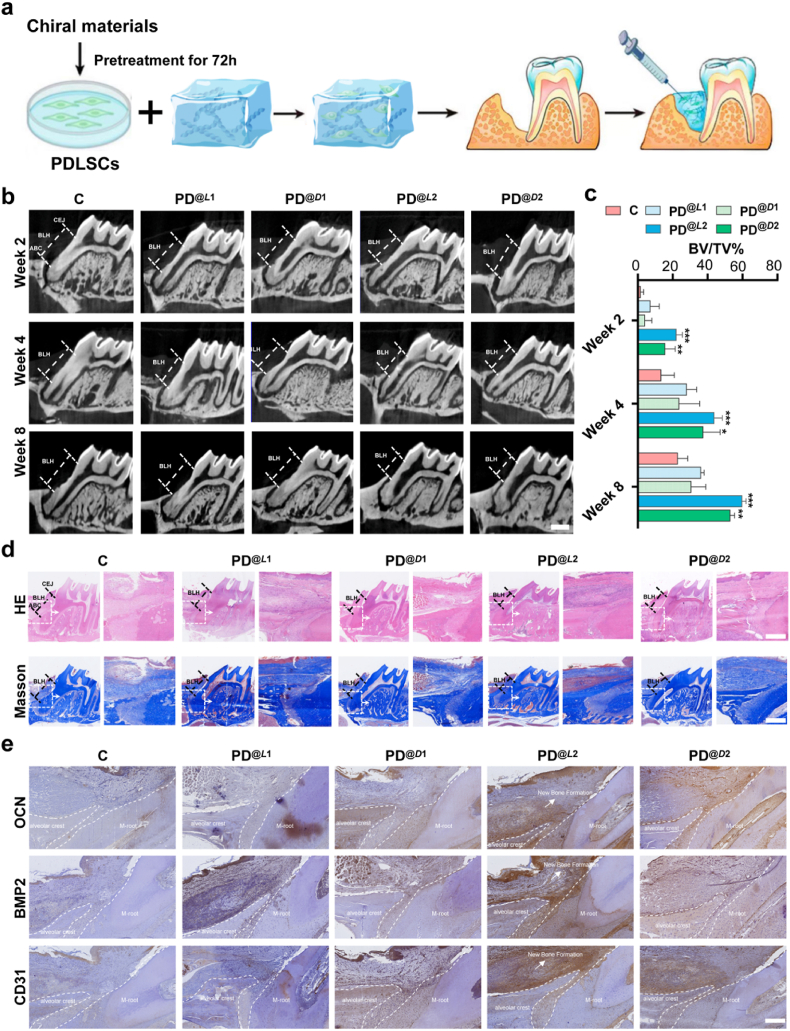 Figure 8
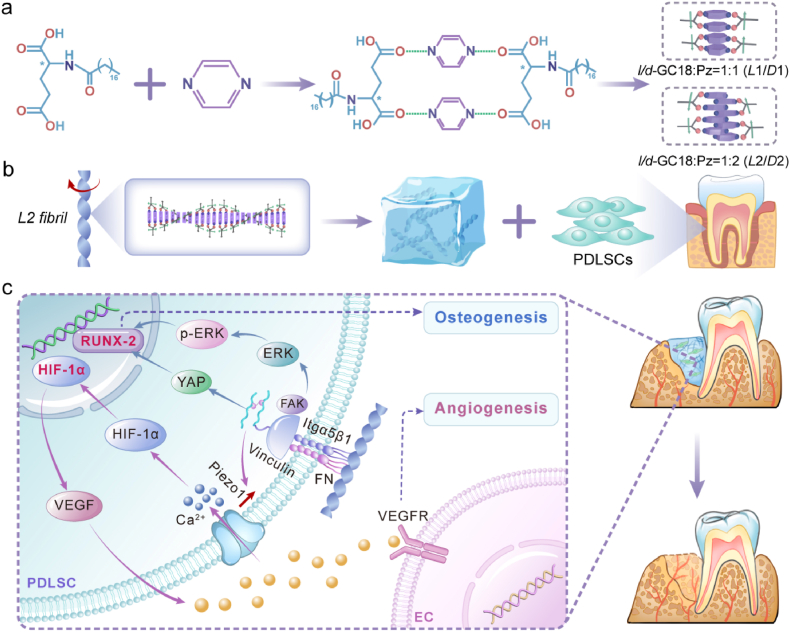 Figure 9
Peer Reviews
No public reviews on file for this paper yet. If you reviewed it on a platform where reviews are public (OpenReview, ICLR, NeurIPS, ICML), you can paste yours below so the community can read it here.
Videos
No videos yet. Explain this paper in a talk, walkthrough, or lecture? Add one.
Taxonomy
TopicsSupramolecular Self-Assembly in Materials · Polydiacetylene-based materials and applications · Hydrogels: synthesis, properties, applications