CoxMDS: multiple data splitting for high-dimensional mediation analysis with survival outcomes in epigenome-wide studies
Minhao Yao, Peixin Tian, Xihao Li, Shijia Bian, Gao Wang, Yian Gu, Ana Navas-Acien, Badri N Vardarajan, Daniel W Belsky, Gary W Miller, Andrea A Baccarelli, Zhonghua Liu

TL;DR
CoxMDS is a new method for analyzing how DNA methylation might mediate the effects of exposures like smoking on survival outcomes in diseases like cancer and Alzheimer's.
Contribution
CoxMDS introduces a multiple data splitting approach for high-dimensional mediation analysis that reliably controls false discovery rates in survival outcomes.
Findings
CoxMDS maintains finite-sample FDR control even with correlated or non-Gaussian mediators.
CoxMDS outperforms existing methods in statistical power through simulations.
CoxMDS identified CpG sites in DNA methylation data linked to smoking effects on cancer and Alzheimer's survival.
Abstract
Causal mediation analysis investigates whether the effect of an exposure on an outcome operates through intermediate variables known as mediators. Although progress has been made in high-dimensional mediation analysis, current methods do not reliably control the false discovery rate (FDR) in finite samples, especially when mediators are moderately to highly correlated or follow non-Gaussian distributions. These challenges frequently arise in DNA methylation studies. We introduce CoxMDS, a multiple data splitting method that uses Cox proportional hazards models to identify putative causal mediators for survival outcomes. CoxMDS ensures finite-sample FDR control even in the presence of correlated or non-Gaussian mediators. Through simulations, CoxMDS is shown to maintain FDR control and achieve higher statistical power compared with existing approaches. In applications to DNA methylation…
Genes, proteins, chemicals, diseases, species, mutations and cell lines named across the full text — each resolved to its canonical identifier and authoritative record.
Click any figure to enlarge with its caption.
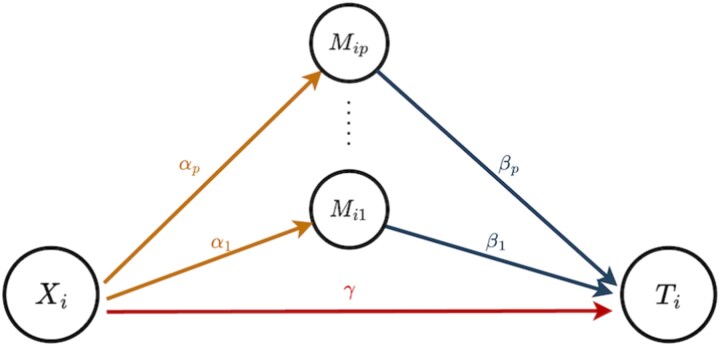 Figure 1
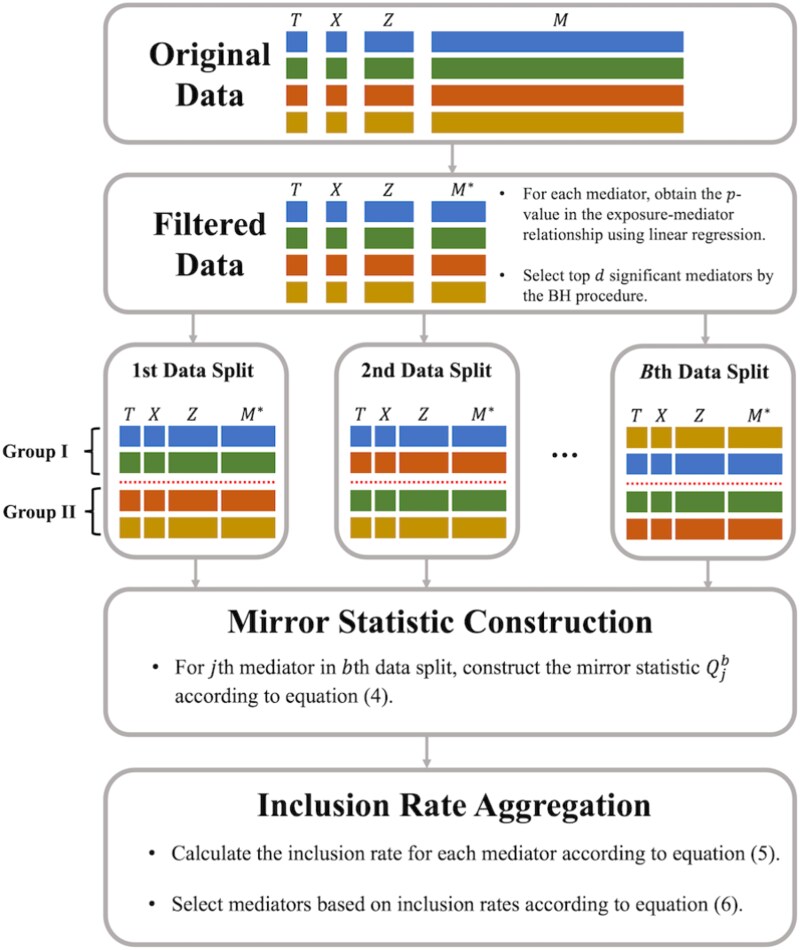 Figure 2
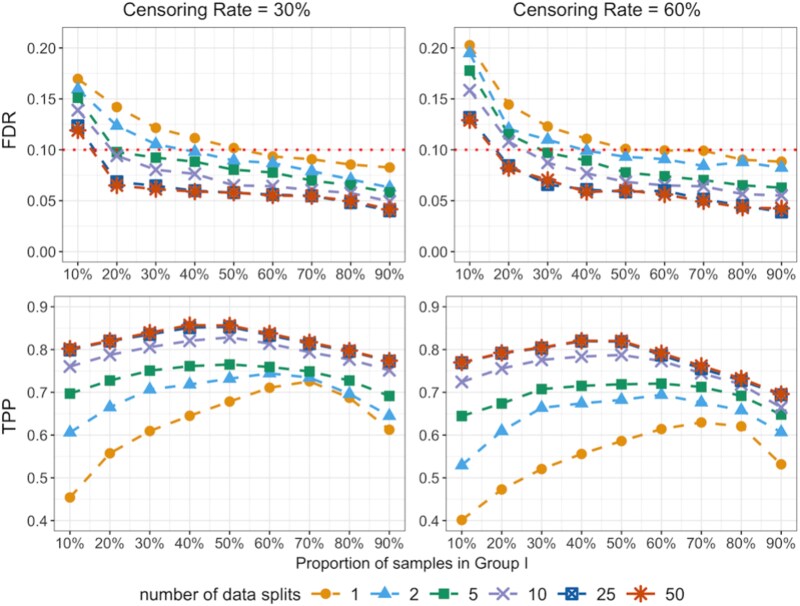 Figure 3
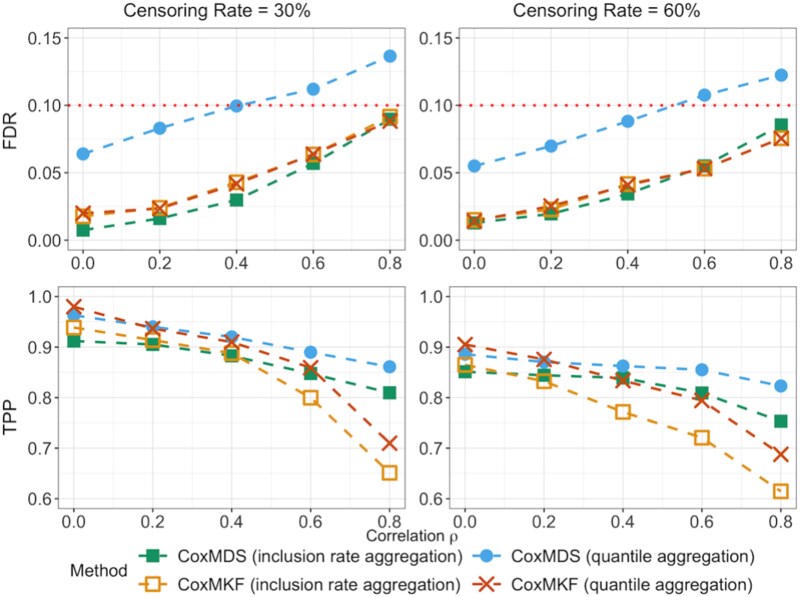 Figure 4
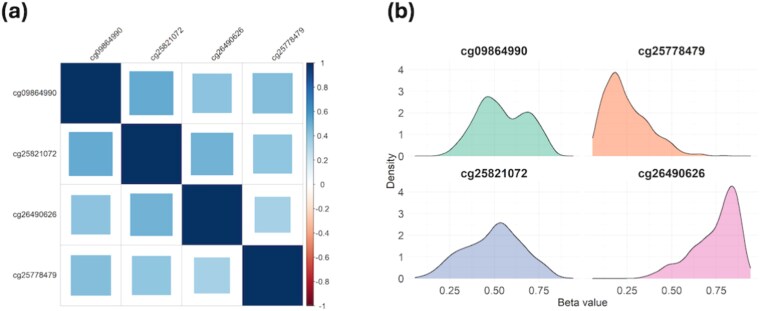 Figure 5
 Figure 6
Peer Reviews
No public reviews on file for this paper yet. If you reviewed it on a platform where reviews are public (OpenReview, ICLR, NeurIPS, ICML), you can paste yours below so the community can read it here.
Videos
No videos yet. Explain this paper in a talk, walkthrough, or lecture? Add one.
Taxonomy
TopicsAdvanced Causal Inference Techniques · Bayesian Modeling and Causal Inference · Epigenetics and DNA Methylation