Extending the Bicriterion Approach for Anticlustering: Exact and Hybrid Approaches
Martin Papenberg, Martin Breuer, Max Diekhoff, Nguyen K Tran, Gunnar W Klau

TL;DR
This paper improves anticlustering methods by combining exact algorithms with heuristics to achieve better data partitioning in psychology research.
Contribution
The paper introduces a hybrid anticlustering approach combining exact dispersion optimization with diversity heuristics.
Findings
A new exact algorithm for maximum dispersion scales well with large datasets.
BILS-Hybrid-All outperformed other methods in simulation and application tests.
Hybrid approaches maintain optimal dispersion while improving diversity.
Abstract
Numerous applications in psychological research require that a data set is partitioned via the inverse of a clustering criterion. This anticlustering seeks for high similarity between groups (maximum diversity) or high pairwise dissimilarity within groups (maximum dispersion). Brusco et al. (2020) proposed a bicriterion heuristic (BILS) that simultaneously seeks for maximum diversity and dispersion, introducing the bicriterion approach for anticlustering. We investigate if the bicriterion approach can be improved using exact algorithms that guarantee globally optimal criterion values. Despite the theoretical computational intractability of anticlustering, we present a new exact algorithm for maximum dispersion that scales to quite large data sets ( ). However, a fully exact bicriterion approach was only feasible for small data sets (about ). We therefore developed hybrid approaches…
Genes, proteins, chemicals, diseases, species, mutations and cell lines named across the full text — each resolved to its canonical identifier and authoritative record.
Click any figure to enlarge with its caption.
 Figure 1
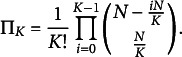 Figure 2
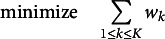 Figure 3
 Figure 4
 Figure 5
 Figure 6
 Figure 7
 Figure 8
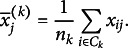 Figure 9
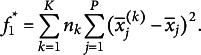 Figure 10
 Figure 11
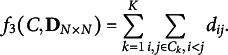 Figure 12
 Figure 13
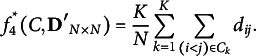 Figure 14
 Figure 15
 Figure 16
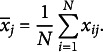 Figure 17
 Figure 18
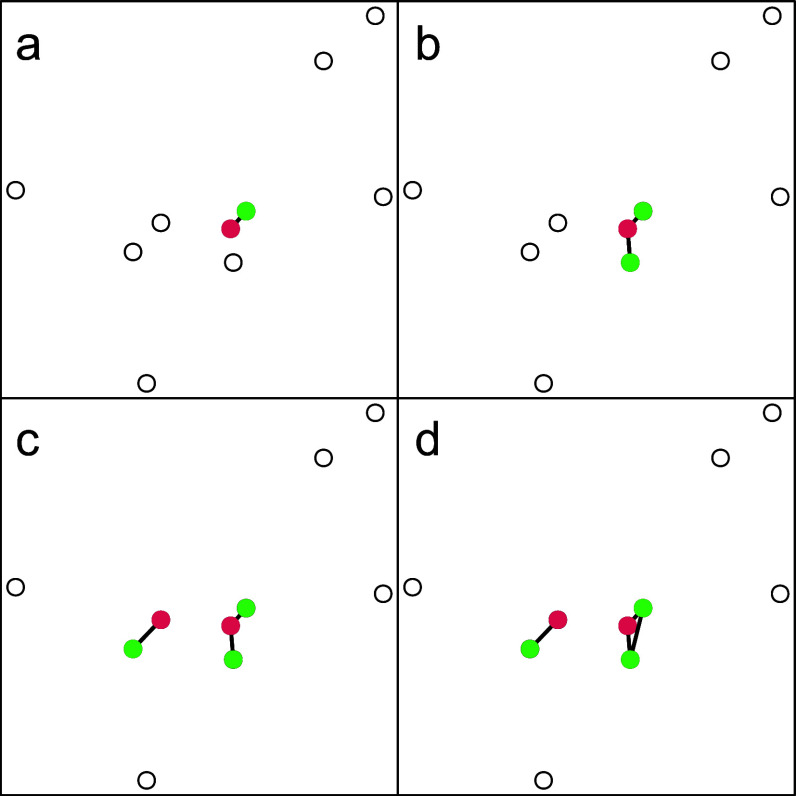 Figure 1
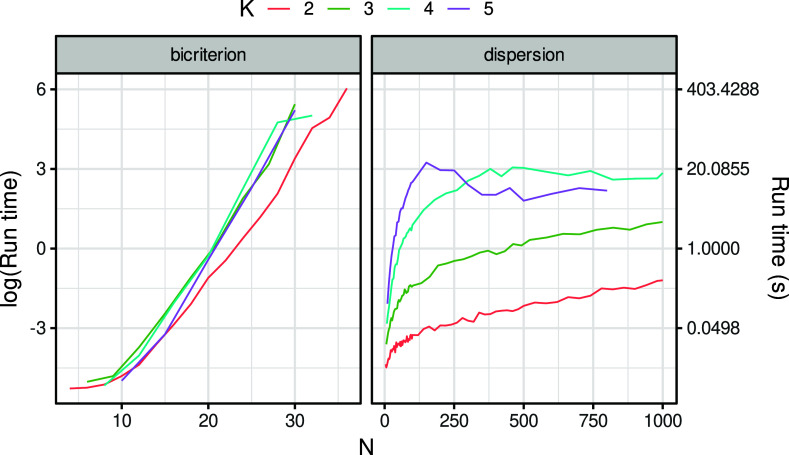 Figure 2
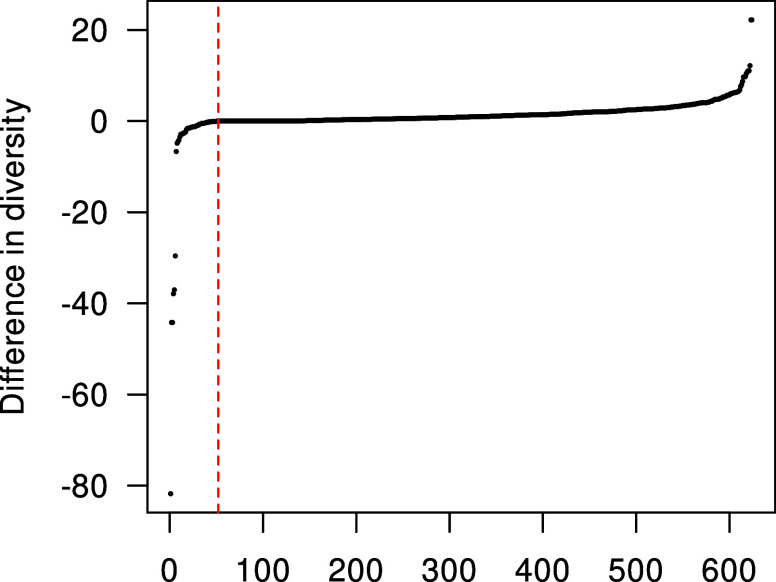 Figure 3
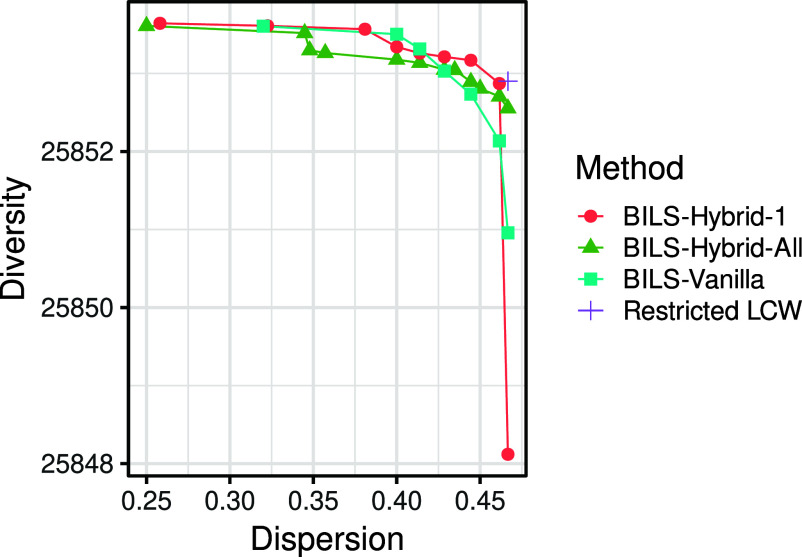 Figure 4
 Figure 23
 Figure 24
 Figure 25
 Figure 26
 Figure 27
 Figure 28
 Figure 29
 Figure 30
 Figure 31
 Figure 32
 Figure 33
 Figure 34
 Figure 35
 Figure 36
 Figure 37
 Figure 38
 Figure 39
 Figure 40
 Figure 41
 Figure 42
 Figure 43
 Figure 44
 Figure 45
 Figure 46
 Figure 47
 Figure 48
 Figure 49
 Figure 50
Peer Reviews
No public reviews on file for this paper yet. If you reviewed it on a platform where reviews are public (OpenReview, ICLR, NeurIPS, ICML), you can paste yours below so the community can read it here.
Videos
No videos yet. Explain this paper in a talk, walkthrough, or lecture? Add one.
Taxonomy
TopicsChemistry and Chemical Engineering