Skin-derived α-synuclein strains from PD, DLB, and MSA induce distinct intracellular pathology and neurodegeneration[image]
Anupam Raina, Wen Wang, Jose Carlos Gonzalez, Xiaohui Yan, Linda Overstreet-Wadiche, Jacques I. Wadiche, Chun-Li Zhang, Shu G. Chen

TL;DR
This study shows that α-synuclein strains from the skin of patients with different synucleinopathies cause distinct brain-like damage in lab cells.
Contribution
Demonstrates that skin-derived α-synuclein strains from PD, DLB, and MSA induce unique intracellular pathology and neurodegeneration in a human cell model.
Findings
Skin-derived α-synuclein strains from PD, DLB, and MSA induce intracellular α-synuclein inclusions in U251 cells.
PD strains are more bioactive and cause greater pathological burden and distinct inclusion morphology compared to DLB strains.
Skin-derived α-synuclein strains trigger neuronal inclusions and degeneration in induced neurons from U251 cells.
Abstract
α-Synuclein (αSyn) aggregates (“strains”) can be detected by seed amplification assays such as real-time quaking-induced conversion from the skin of patients with synucleinopathies including Parkinson’s disease (PD), dementia with Lewy bodies (DLB), and multiple system atrophy (MSA). However, whether skin-derived αSyn strains induce disease-specific pathology in a biological system is unknown. We have identified a human glioblastoma cell line U251 that readily forms intracellular αSyn inclusions upon seeding by exogenous αSyn seeds. These intracellular αSyn inclusions are detergent-insoluble and colocalize with phosphorylated-αSyn at serine 129 (p-αSyn), the pathological hallmark of synucleinopathies. We have engineered a Förster resonance energy transfer–based αSyn biosensor in U251 cells to characterize intracellular aggregation of αSyn and morphology of p-αSyn inclusions seeded by…
Genes, proteins, chemicals, diseases, species, mutations and cell lines named across the full text — each resolved to its canonical identifier and authoritative record.
Click any figure to enlarge with its caption.
 Figure 1
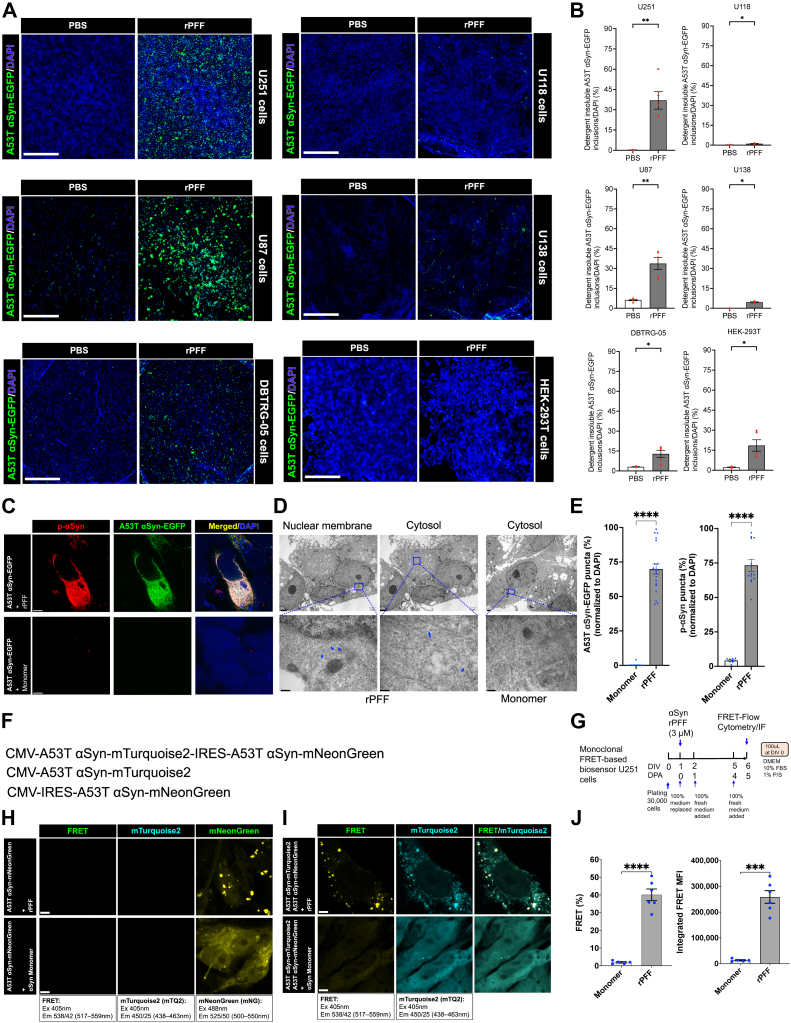 Figure 2
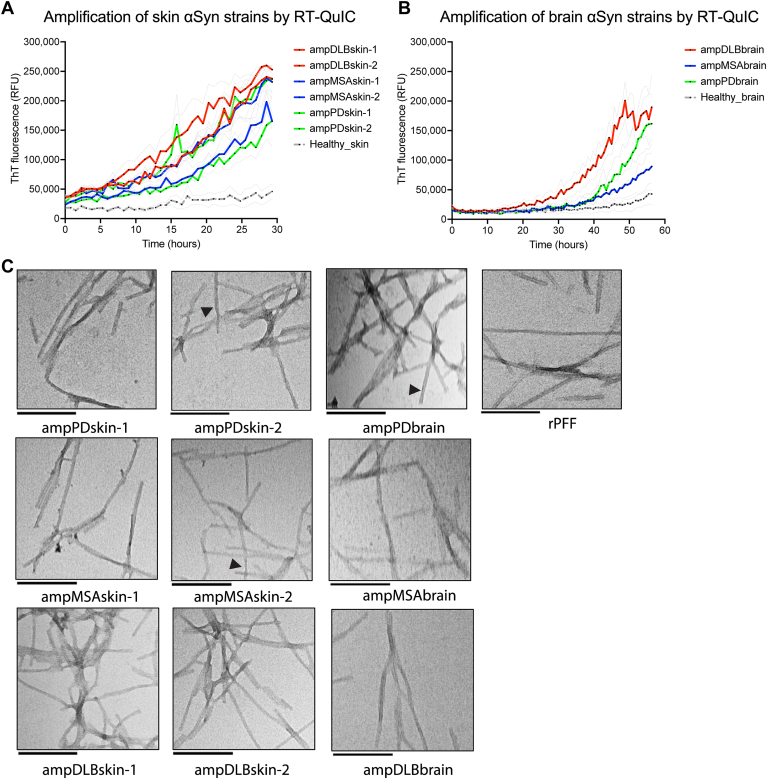 Figure 3
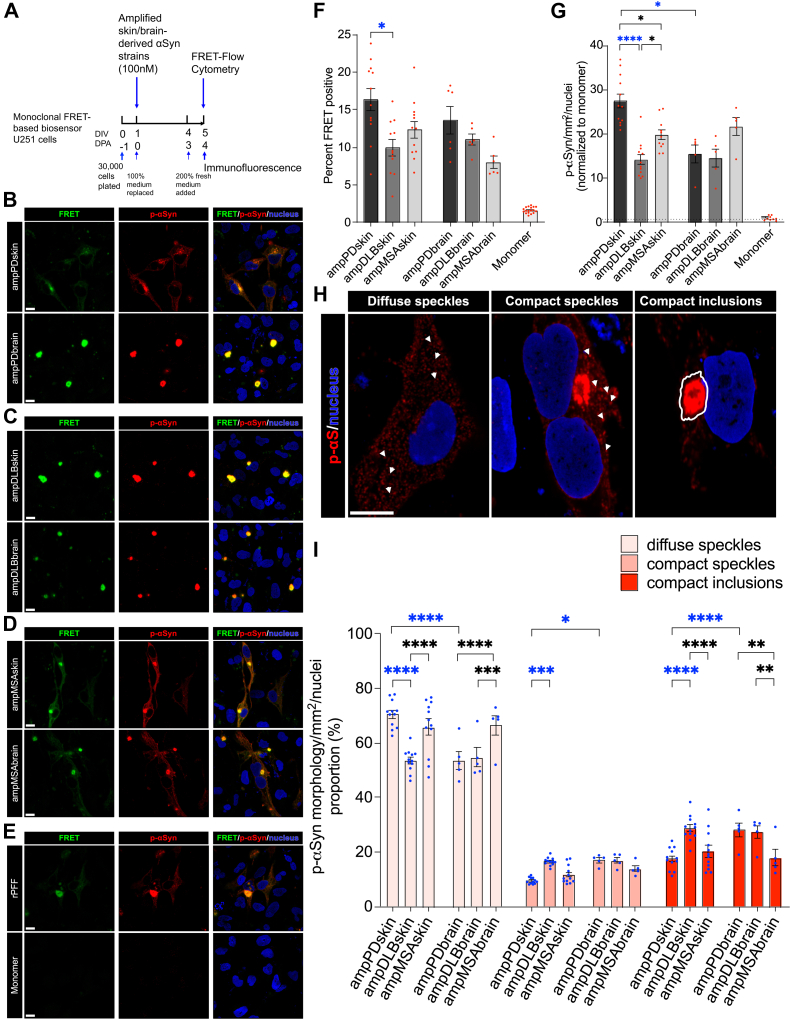 Figure 4
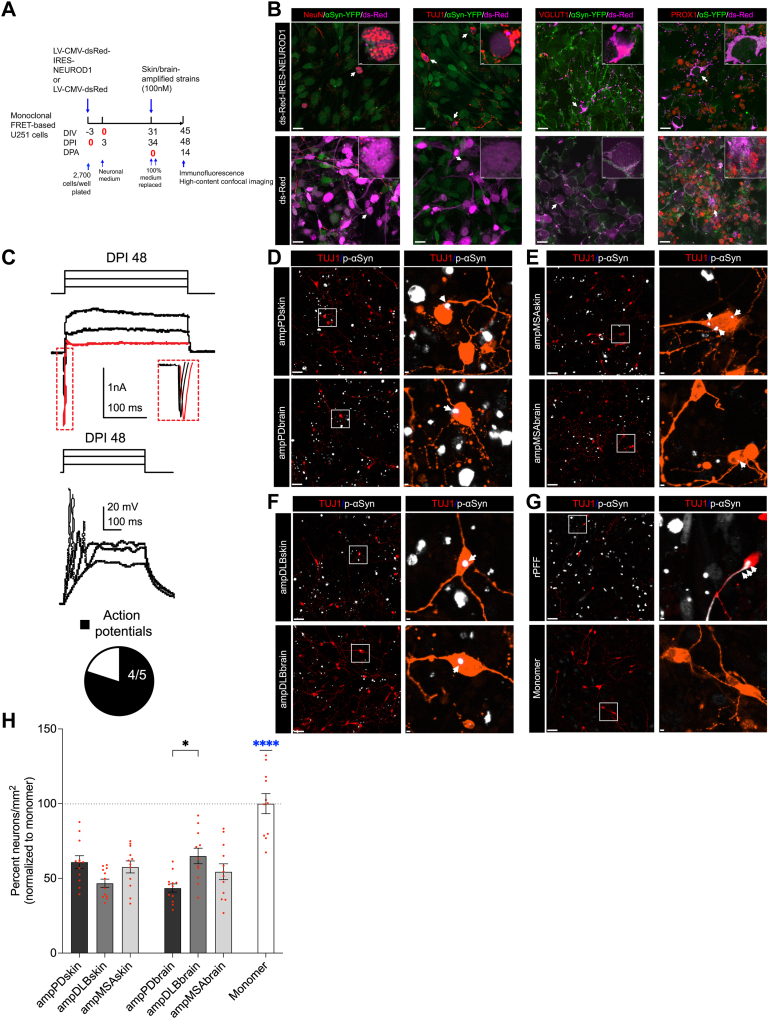 Figure 5
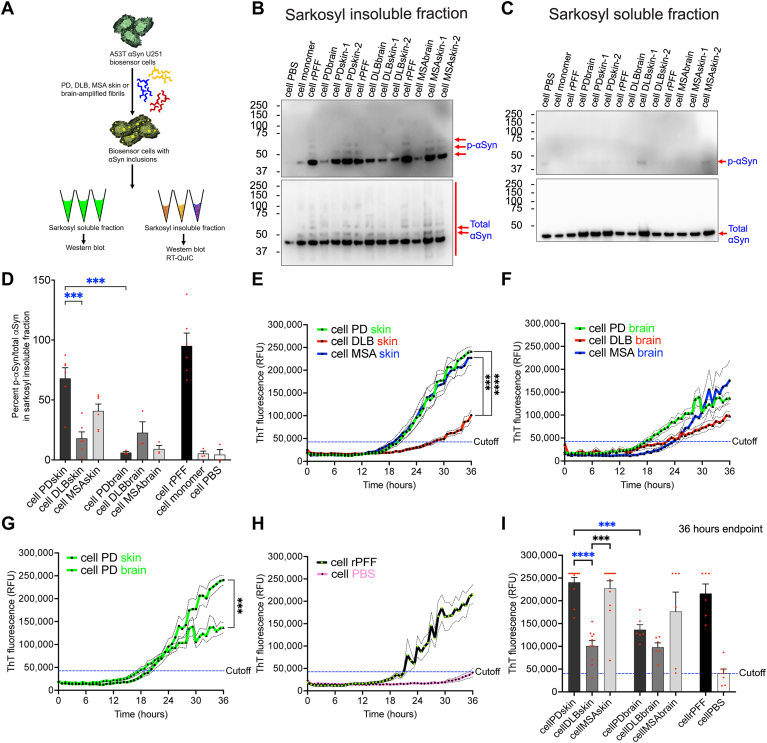 Figure 6
Peer Reviews
No public reviews on file for this paper yet. If you reviewed it on a platform where reviews are public (OpenReview, ICLR, NeurIPS, ICML), you can paste yours below so the community can read it here.
Videos
No videos yet. Explain this paper in a talk, walkthrough, or lecture? Add one.
Taxonomy
TopicsParkinson's Disease Mechanisms and Treatments · Neurological disorders and treatments · Genetic Neurodegenerative Diseases