Routine Invasive vs Conservative Management of NSTEMI in Elderly Patients: Updated Meta-Analysis of Randomized Trials
Abiodun Idowu, Olayinka Adebolu, Endurance Evbayekha, Kevin Bryan Lo, Emmanuel Akintoye, Emmanuel Otabor, Michael Hamilton, Festus Ibe, Mohammad Al-Madani, Sahil Banka

TL;DR
This study finds that an invasive approach for NSTEMI in elderly patients does not reduce mortality but may lower the risk of heart reinfarction and urgent revascularization.
Contribution
An updated meta-analysis comparing invasive and conservative strategies for NSTEMI in patients aged 70 or older.
Findings
Routine invasive strategy does not improve all-cause mortality in elderly NSTEMI patients.
Invasive strategy significantly reduces the risk of myocardial reinfarction and urgent revascularization.
No increased risk of cerebrovascular accident with the invasive approach in this population.
Abstract
Decision-making on managing non–ST-segment elevation myocardial infarction (NSTEMI) with routine invasive strategy or conservatively in elderly patients remains a question of much debate, given that these patients are often under-represented in clinical trials. In patients aged 70 years or more, is routine invasive strategy superior to conservative management of NSTEMI? We systematically reviewed multiple online databases to identify randomized controlled trials that evaluated the outcomes of invasive vs conservative strategies for NSTEMI in patients aged over 70 years. An inverse-variance weighting, frequentist meta-analysis was performed on data extracted from eligible studies. A total of 8 randomized controlled trials involving 3,275 patients (49.7% invasive-treated and 50.3% conservative-treated) were included. Routine invasive strategy was not superior to conservative management…
Genes, proteins, chemicals, diseases, species, mutations and cell lines named across the full text — each resolved to its canonical identifier and authoritative record.
Click any figure to enlarge with its caption.
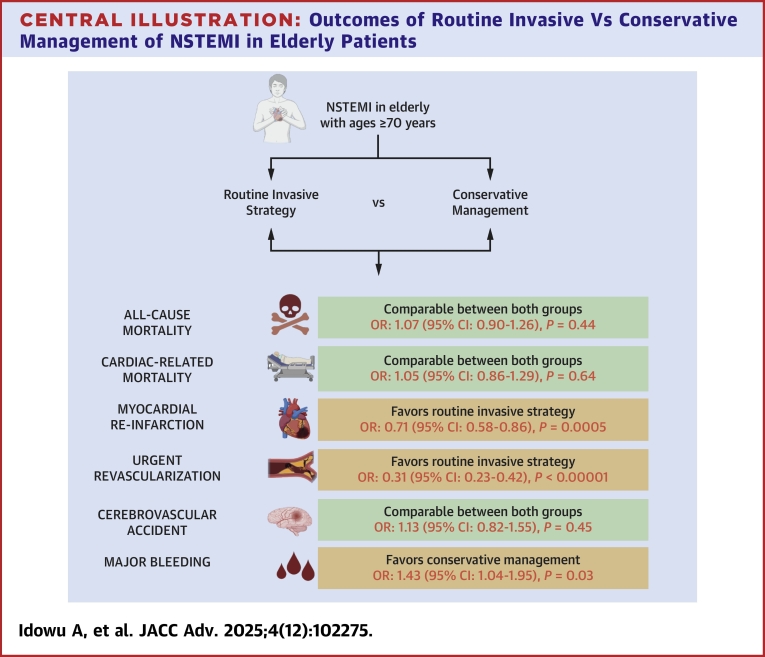 Figure 1
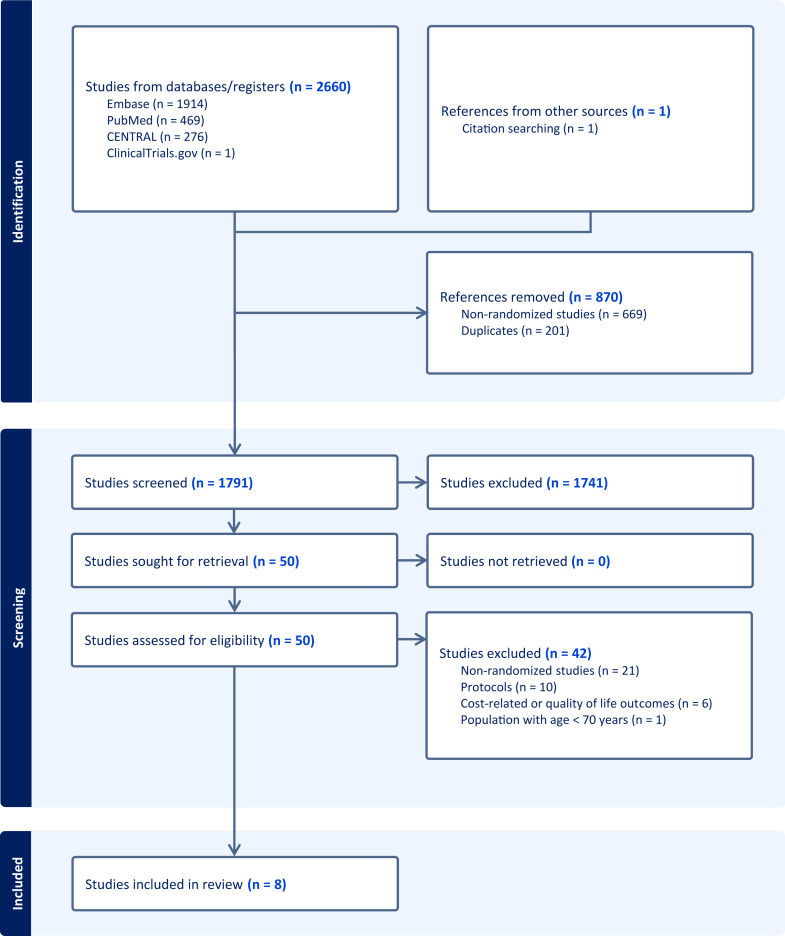 Figure 2
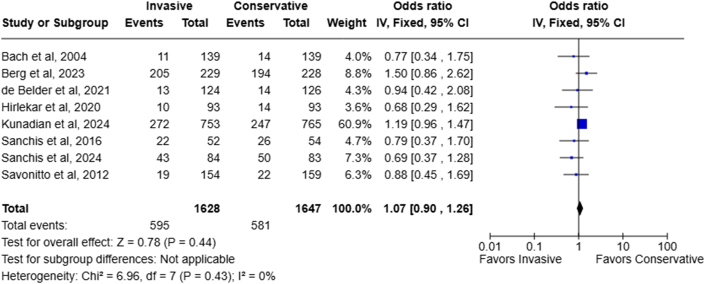 Figure 3
 Figure 4
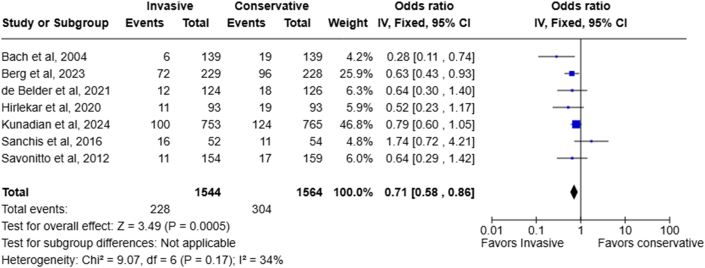 Figure 5
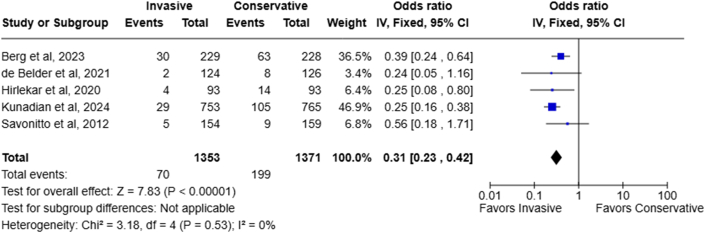 Figure 6
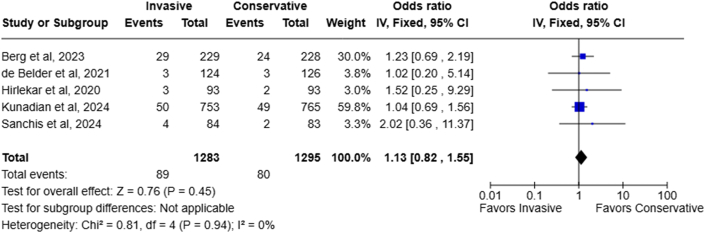 Figure 7
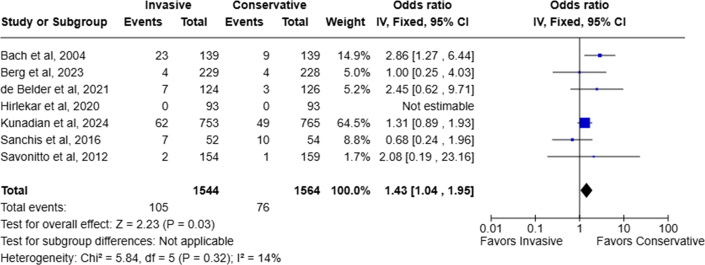 Figure 8
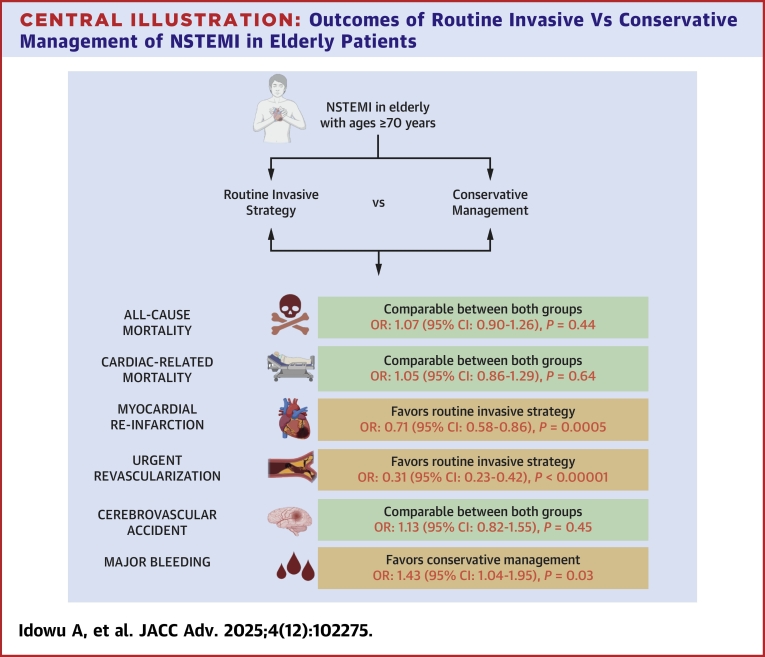 Figure 9
Peer Reviews
No public reviews on file for this paper yet. If you reviewed it on a platform where reviews are public (OpenReview, ICLR, NeurIPS, ICML), you can paste yours below so the community can read it here.
Videos
No videos yet. Explain this paper in a talk, walkthrough, or lecture? Add one.
Taxonomy
TopicsAcute Myocardial Infarction Research · Cardiovascular Function and Risk Factors · Heart Failure Treatment and Management